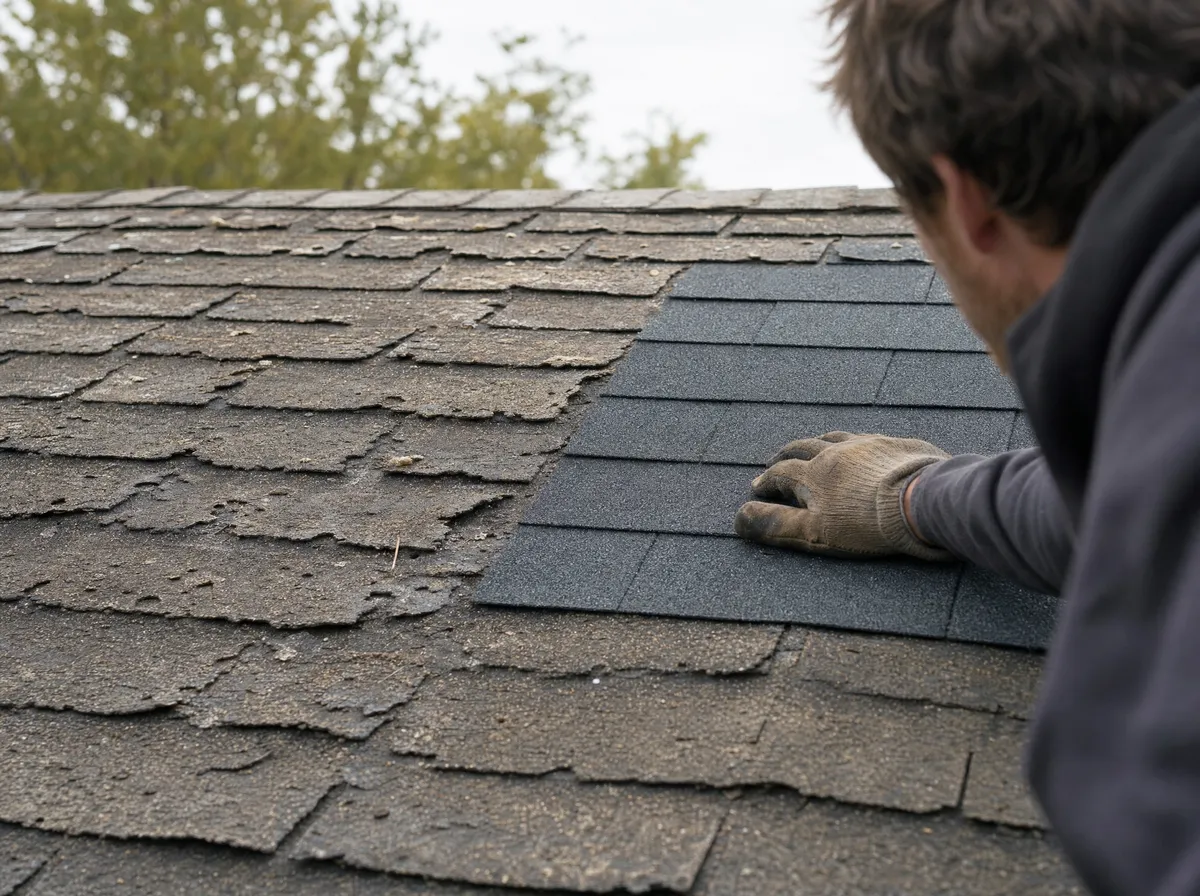
Here is the rule we use on every inspection. Repair the roof if it is under about 15 years old, the damage is in one place, and the decking is sound. Replace it if it is past 18 to 22 years on builder-grade shingles or 22 to 28 on laminated architecturals, if this is the second repair call in a few seasons, or if storm damage covers more than roughly a quarter of a slope. Everything in between comes down to one number: what each option costs per year of roof you actually get.
We turn down replacement jobs every week because the roof has five to eight good years left. We also talk homeowners out of a third repair every week because they are spending real money to buy months. This post is the math behind both conversations.
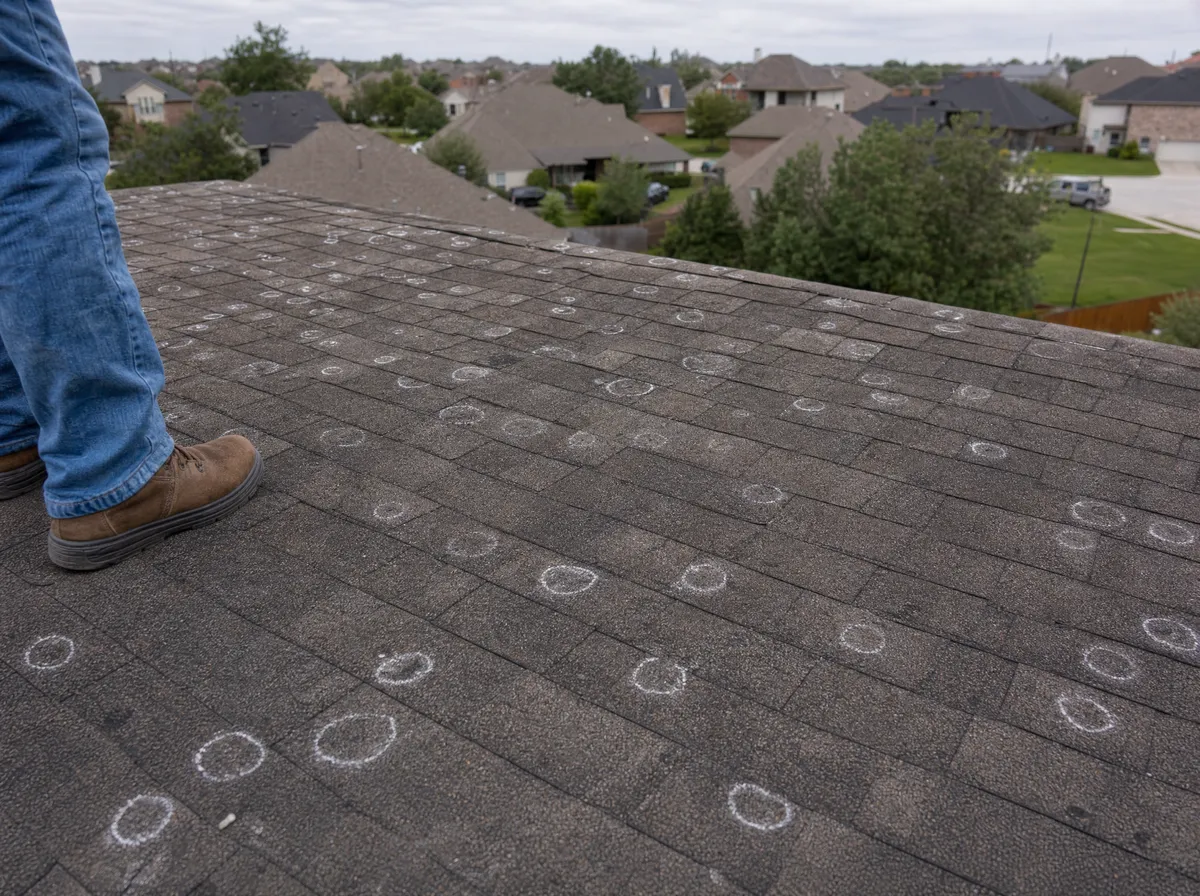 Compounding hail bruises across a slope. This is a replacement conversation, not a repair one.
age decides more than damage does.
Start with how long the roof was ever going to last. InterNACHI’s standard life expectancy chart gives 3-tab asphalt shingles 20 years and architectural asphalt 30, and then adds the sentence that matters for North Texas: “Hot climates drastically reduce asphalt shingle life,” and roofs in hail and tornado regions “may also experience a shorter-than-normal lifespan overall.”
DFW is both. The National Weather Service counts 20 days a year at or above 100 degrees and 46 thunderstorm days here, and the Insurance Information Institute logged 902 major hail events in Texas in 2025, more than any other state. So the brochure numbers do not survive contact with a Plano summer. The cutoffs we actually see on roofs: 18 to 22 years for 3-tab and first-generation architecturals, 22 to 28 for a laminated shingle like the original Landmark.
Once a roof is inside that window, every repair is a repair on borrowed time. The shingles you did not touch are failing at the same rate as the ones you replaced. That is the whole reason the second repair call is a replacement signal.
A repair on a 22-year-old roof is not a repair. It is a deposit on a replacement you have not scheduled yet.
the four failure patterns that end the repair conversation.
When we walk a roof, we are looking for four specific things, and the count matters more than any single one.
- Granule loss concentrated on the south and west slopes. UV bake. If your gutters carry more than a quarter inch of granules after a normal rain, the fiberglass mat is exposed.
- Thermal cracking along the laminate seams. Heat fatigue from the 100-degree days. The shingle is brittle and will not seal back down after it is lifted for a repair.
- Hail bruises stacked on older bruises. Compounding impact from two or three springs. The mat under the bruise is fractured, and a fourth storm totals it anyway.
- Nail pops at the ridge or rakes. Decking movement. The fasteners are backing out because the wood under them has changed.
If two of the four are present across more than 25 percent of the field, repairs will not hold, and we say so in writing. One pattern in one area on a roof under 15 is a repair. The hard stop is decking: if the OSB feels soft underfoot or the attic shows daylight at the nail penetrations, no amount of patching saves it.
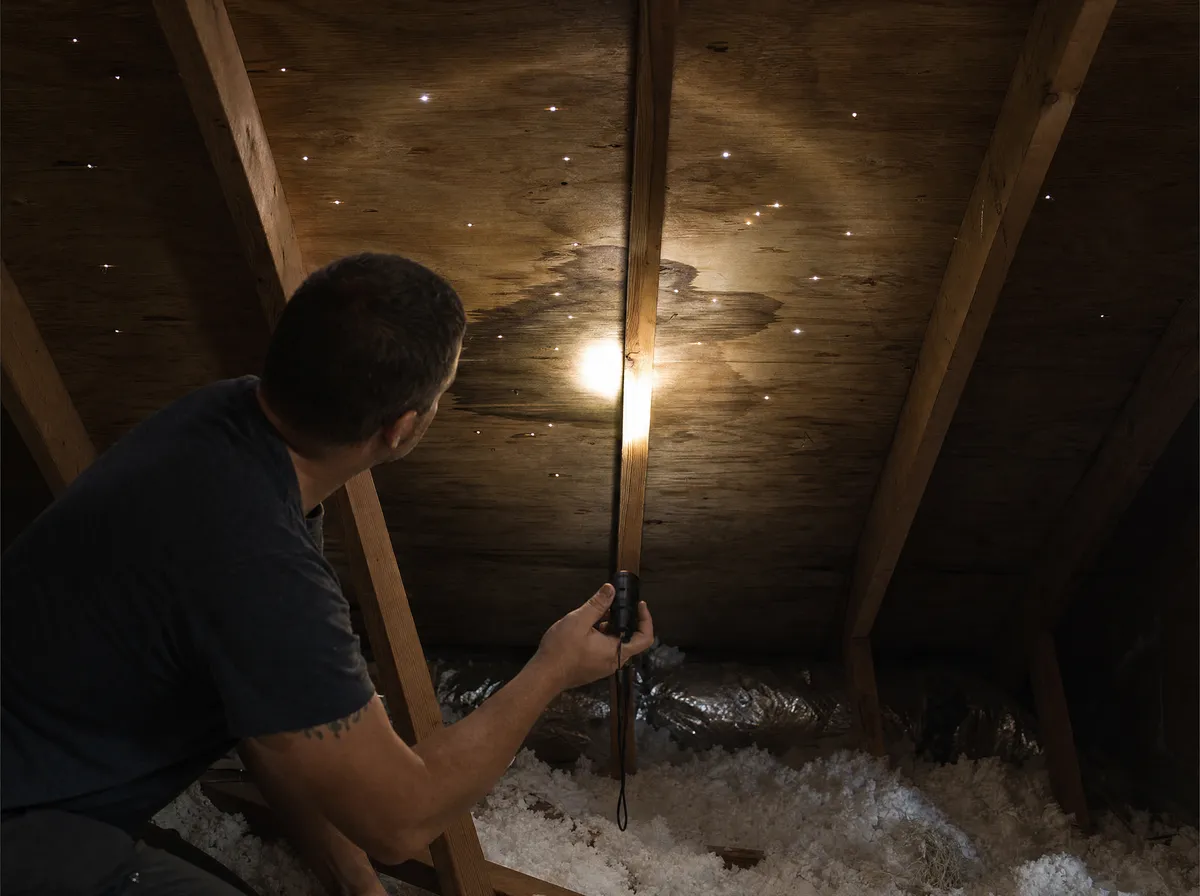 The attic tells the truth. Daylight at the nails or soft decking ends the repair discussion.
the cost-per-year math nobody runs.
Homeowners compare the two invoices. The invoices are not comparable. Compare what each one buys.
A typical DFW repair runs a few hundred dollars to roughly $2,000: a boot, a run of ridge cap, a dozen wind-creased shingles, a flashing reseal. A full replacement on the homes we actually see runs $14,500 to $32,000, and the Dallas roof cost guide breaks that down by size and shingle tier. For a national yardstick, NerdWallet puts replacement at $9,500 on average with a range of $5,800 to $46,000.
Now divide by years.
| Roof | Option | Cost | Years it realistically buys | Cost per year |
|---|---|---|---|---|
| 9-year-old architectural, one leaking pipe boot | Repair | $450 | 12+ (rest of the roof’s life) | ~$40 |
| 16-year-old architectural, wind creasing on one slope | Repair | $1,400 | 4 to 6 | ~$280 |
| 21-year-old 3-tab, second leak in two years | Repair | $1,600 | 1, maybe 2 | ~$1,000+ |
| Same 21-year-old roof, 2,400 sq ft | Replace (Landmark) | $18,000 | 22 to 28 | ~$700 |
| Same roof | Replace (Class 4) | $21,000 | 22 to 28, plus the windstorm premium discount | ~$800 before the discount |
The first row is an easy repair. The third row is the trap: the cheapest invoice on the page is the most expensive roof per year on the page, and the $1,600 does not come back when you replace it eighteen months later. Bottom line: below about 15 years, repair almost always wins. Past 20, replacement almost always wins. The 15-to-20 window is where the inspection earns its keep.
the 25 percent rule turns a repair claim into a replacement.
If a storm caused the damage, insurance changes the decision, and one rule decides which way. Texas Department of Insurance rules under 28 TAC 21.1006 let carriers require roughly 25 percent of a slope to be storm damaged before they approve replacing that slope instead of spot repairing it. Adjusters score a 10 by 10 foot test square and count strikes.
That single threshold is why two neighbors with the same storm get different letters. It is also why documentation of every slope matters more than the argument about any one of them. We cover the rule in full in the Texas 25 percent rule guide, and the filing sequence in how to file a roof insurance claim in Texas.
Two rules from TDI’s own page on insurance and your roof frame the whole thing. First, “your insurance company won’t pay for a new roof just because it’s old or worn out.” Age is the homeowner’s problem. Second, “as roofs age, some companies will switch to actual cash value,” which means an older roof that does get approved may be paid at depreciated value. Read your declarations page before the next storm, not after.
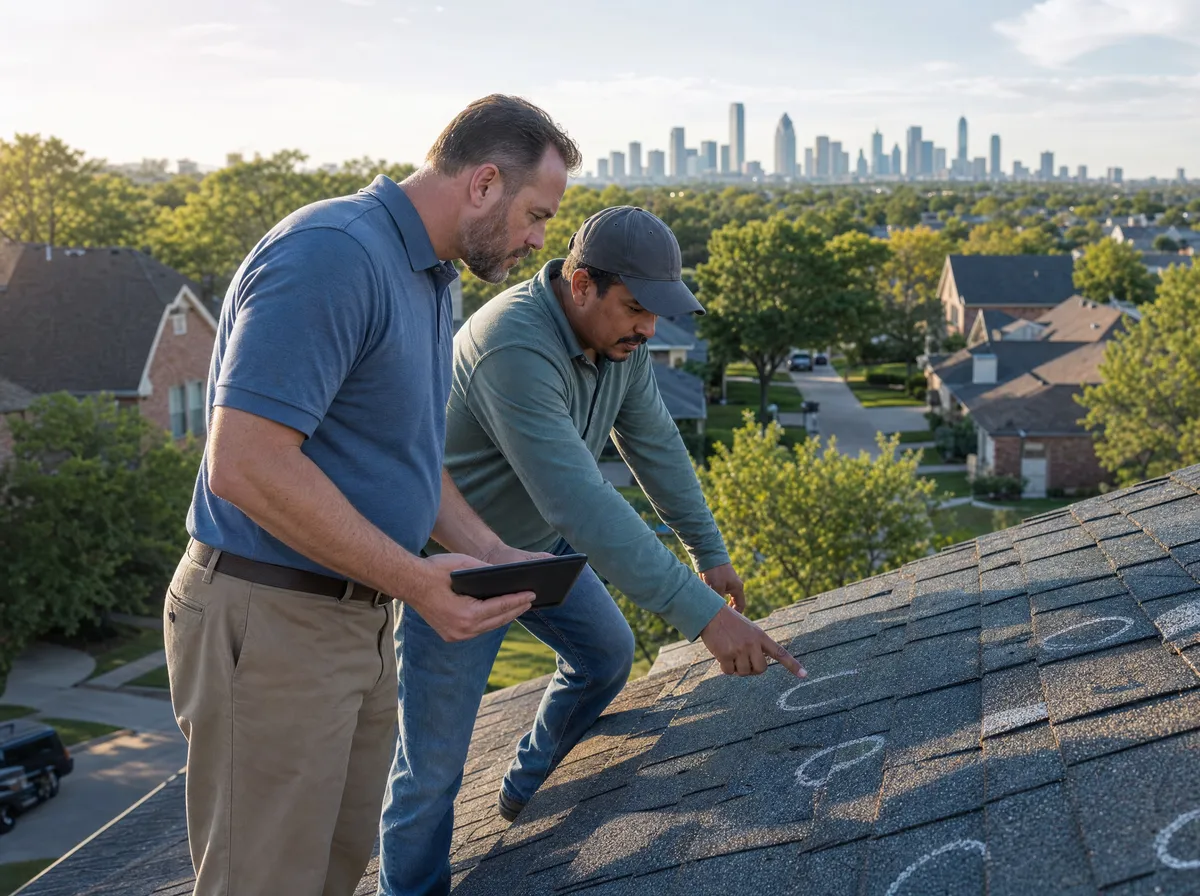 The adjuster meeting is where repair-versus-replacement gets decided on a storm claim. Every slope, documented.
when we tell you to repair (and mean it).
We say repair a lot. Here is exactly when:
- The roof is under 15 and the damage is local. One pipe boot. A ridge cap section. Wind creasing on a single slope after a straight-line event. That is a roof repair, and we will price it as one.
- The leak is a flashing or penetration failure, not a shingle failure. Chimney counter flashing, a skylight curb, a satellite mount somebody drilled through the field. The shingles are fine. Fix the detail.
- You are selling inside two years and the roof passes inspection. A clean repair and an honest disclosure beats a replacement you will not enjoy.
- The storm damage is real but under the carrier’s threshold. A partial-slope repair claim is still a claim. We document it the same way.
And here is when we will not: a repair on a roof showing two of the four failure patterns, a third repair in three years, or any repair over soft decking. In those cases we would rather lose the small job than sign our name to it.
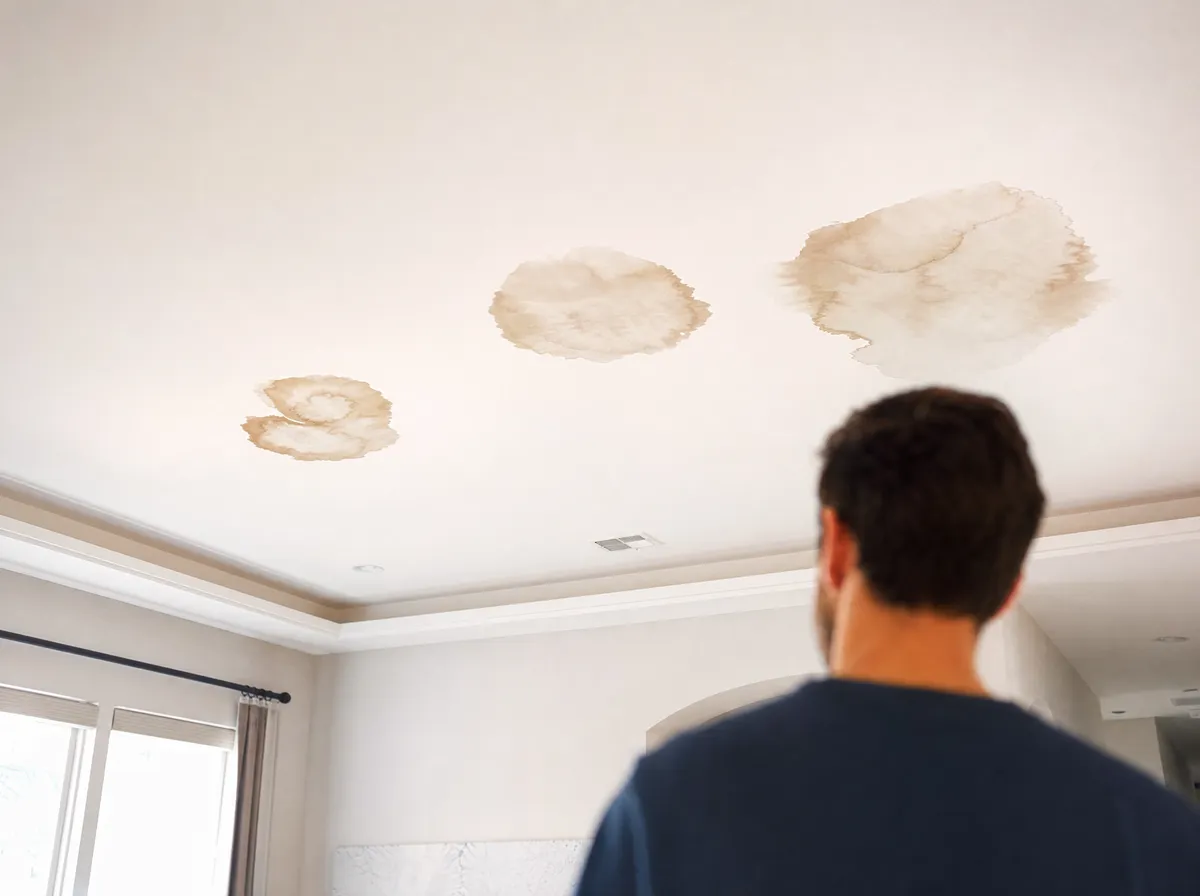 Three stains in three rooms is not three repairs. It is a roof that has stopped working as a system.
how the decision gets made on a roof raiders inspection.
The inspection is free, and it ends with a written answer, not a pitch. A crew lead walks every slope and the attic, photographs the four failure patterns wherever they appear, probes the decking, and pulls the NOAA hail swath for your address if a storm is involved. You get the photos and the call in writing: repair, replace, or file a claim and let the test squares decide.
If it is a replacement, the full scope, timeline, and the $14,500 to $32,000 pricing logic are on our roof replacement page, and the free roof cost calculator gives you a satellite-measured number before we climb. If it is a repair, it is priced as a repair, and we will tell you what the rest of the roof has left so the next call is not a surprise.
We would rather tell you your roof is fine than sell you one you do not need. That is how we still have the phone number of everyone we have ever told that.
Call (214) 326-3106 to schedule, or start with signs your roof needs replacement and how long a roof lasts in Texas if you want to size up your own roof first.
frequently asked questions.
Should I repair or replace my roof? Repair under about 15 years with isolated damage and sound decking. Replace past 18 to 22 years on builder-grade shingles or 22 to 28 on laminated architecturals, on a second repair in a few seasons, or when storm damage covers more than roughly 25 percent of a slope.
How do I know if my roof needs repair or replacement? Count the four failure patterns: south and west granule loss, thermal cracking at seams, stacked hail bruises, and nail pops at the ridge or rakes. Two of four across more than a quarter of the roof means replacement.
Can you patch a roof instead of replacing it? Yes, when the roof has life left. Patching a 22-year-old roof buys months because the surrounding shingles are failing at the same rate.
How much does roof repair cost compared to replacement in DFW? Repairs run a few hundred to roughly $2,000. Replacement runs $14,500 to $32,000 on typical DFW homes. Compare cost per year of roof, not the invoices.
Will insurance pay for a repair or a replacement? Insurance pays for storm damage, not age. Whether it is written as repair or replacement depends on how much of each slope is damaged, with Texas carriers able to require roughly 25 percent of a slope.
Is it worth repairing a 20 year old roof? Rarely. In DFW sun and hail a 20-year-old asphalt roof is at or past its practical life, so repair money is usually better spent as a deposit on the replacement.