Commercial flat roofing in Dallas is a different trade than residential. The buyer is a property manager or owner who needs documentation, predictable scheduling around tenants, and a contractor that can carry a portfolio over years, not one install. We’re CertainTeed ShingleMaster certified (top 3 percent of US roofers) and family-owned in Plano, see all credentials. Mahmoud Abu Saad and Sara Bannat run Roof Raiders, read why we started. Since 2022 we’ve registered every roof we install with CertainTeed at the highest tier our ShingleMaster certification unlocks, ranking us in the top 3 percent of US roofers, and that same discipline carries over to our commercial TPO, EPDM, and mod-bit work where NDL warranties depend on registration paperwork getting filed correctly.
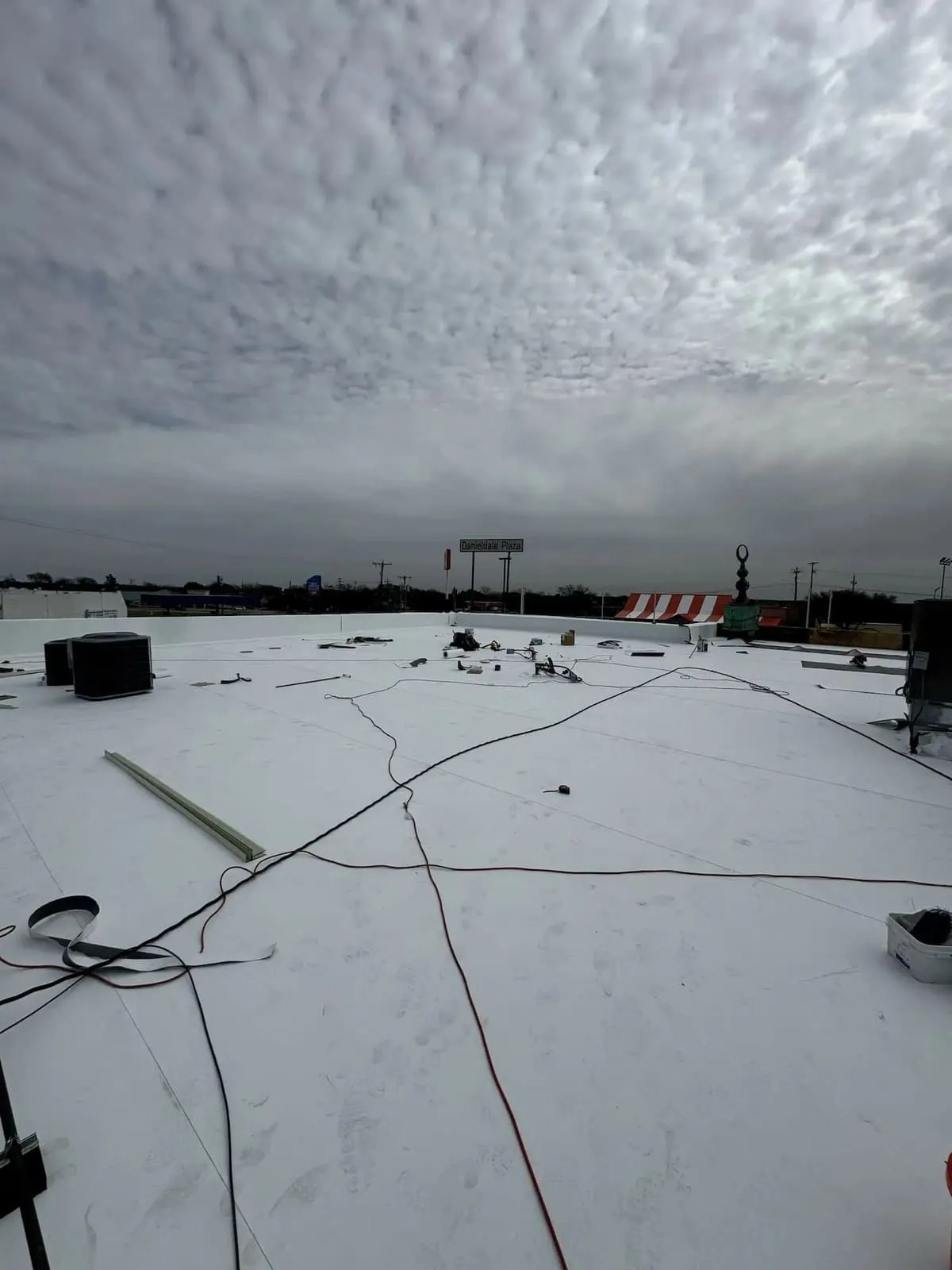
the three flat roof systems in dallas, ranked by use case.
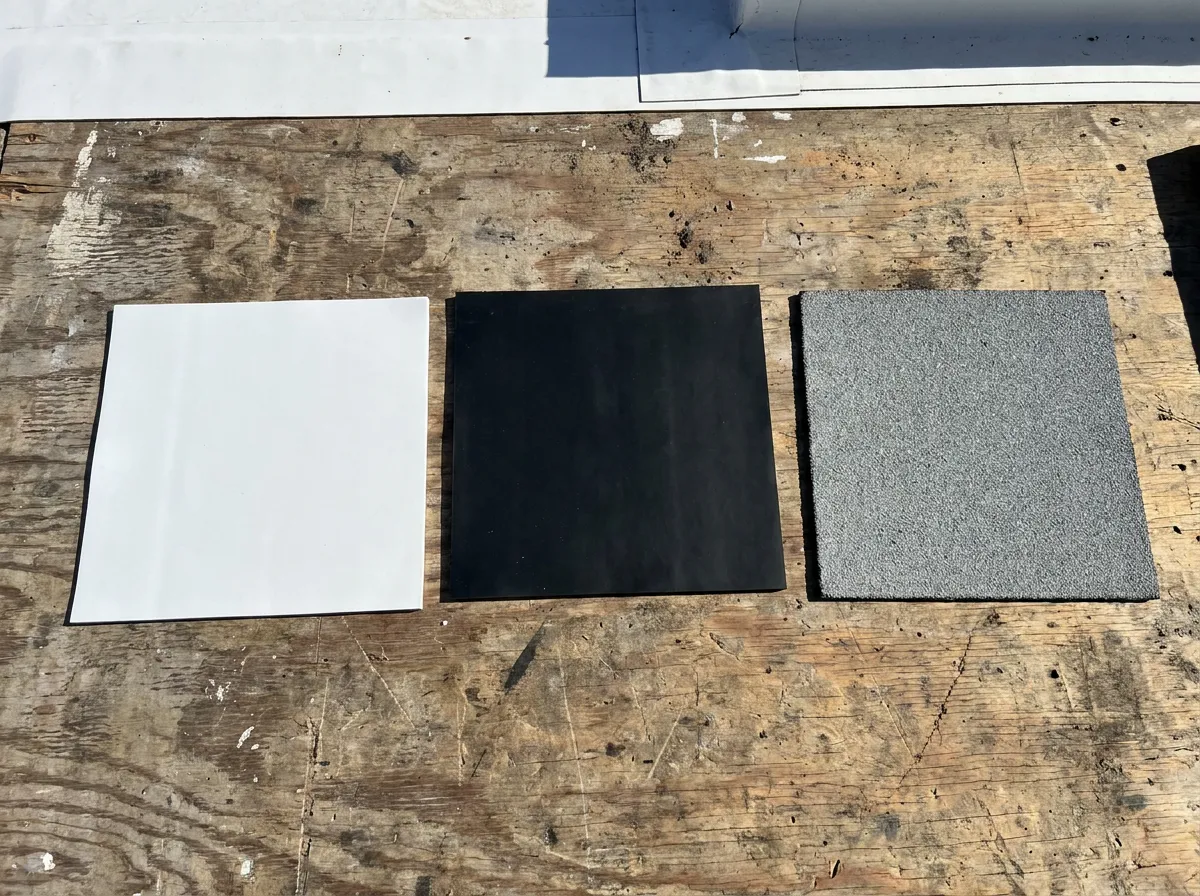
There are three systems we install on flat commercial buildings in DFW, and the right answer depends on substrate age, hail exposure, and how much detail work the roof has. Here’s how we rank them by use case.
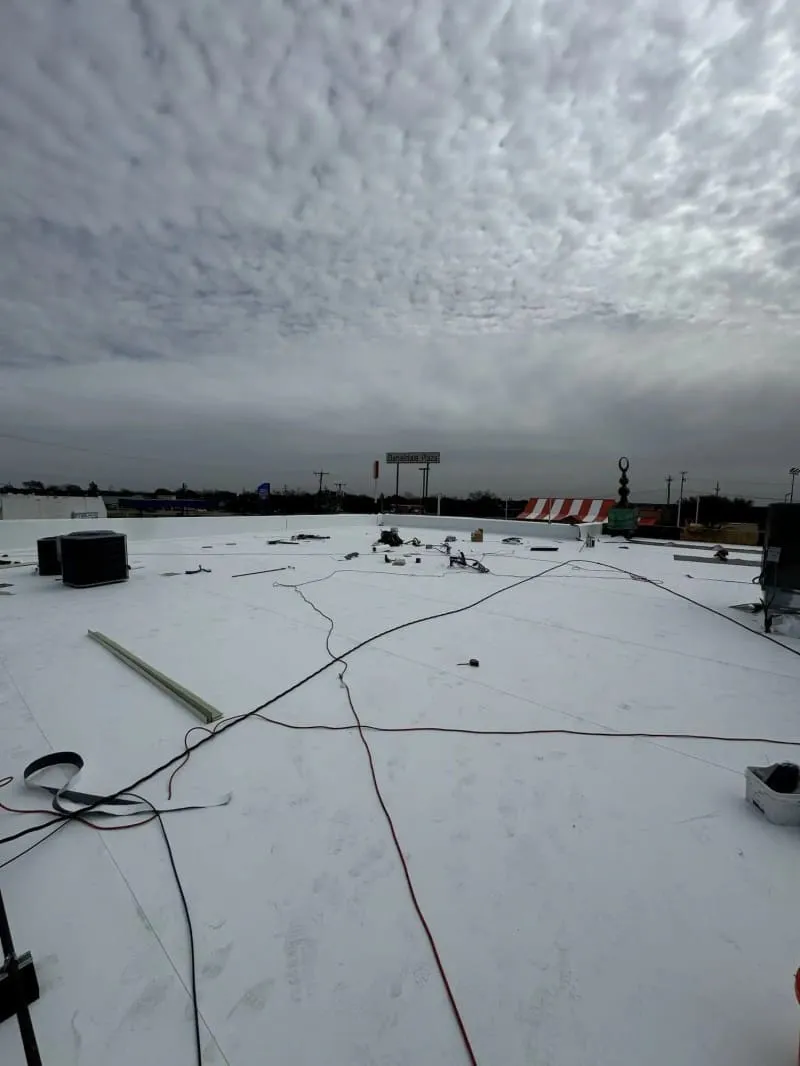
TPO single-ply membrane is the default for new construction and most retrofits. The white surface reflects solar gain (we’ve measured 30 to 40 degree drops in attic temps on Plano retrofits), heat-welded seams outperform glued seams over 20 years, and warranty options run 20 to 30 years. Best on clean substrates with reasonable drainage.
EPDM rubber roofing is the traditional flat roof system. Still the right call for older commercial buildings where the substrate is uneven, drainage is questionable, or the deck won’t take a single-ply fastening pattern cleanly. EPDM ages slower than people think when it’s installed right. For a deeper side-by-side, read our guide on TPO vs EPDM for Dallas commercial roofs.
Modified bitumen is what we reach for when the roof has complex penetrations, pitch transitions, or parapet walls that single-ply can’t detail cleanly. Two-ply mod-bit with a granulated cap is bulletproof on the right building.
| System | Best for | Lifespan | Cost per sq ft | Hail tolerance |
|---|---|---|---|---|
| TPO 60mil | New builds, clean retrofits, reflective roofs | 20 to 25 years | $8 to $12 | Moderate |
| TPO 80mil | North Dallas, Plano, Frisco hail belt | 25 to 30 years | $10 to $14 | High, NDL-eligible |
| EPDM | Older substrates, irregular decks | 20 to 30 years | $7 to $11 | Moderate |
| Modified bitumen | Heavy penetrations, parapet detailing | 15 to 20 years | $9 to $13 | High |
Call (214) 326-3106 for a free inspection.
tpo membrane thickness, when 60mil isn’t enough.
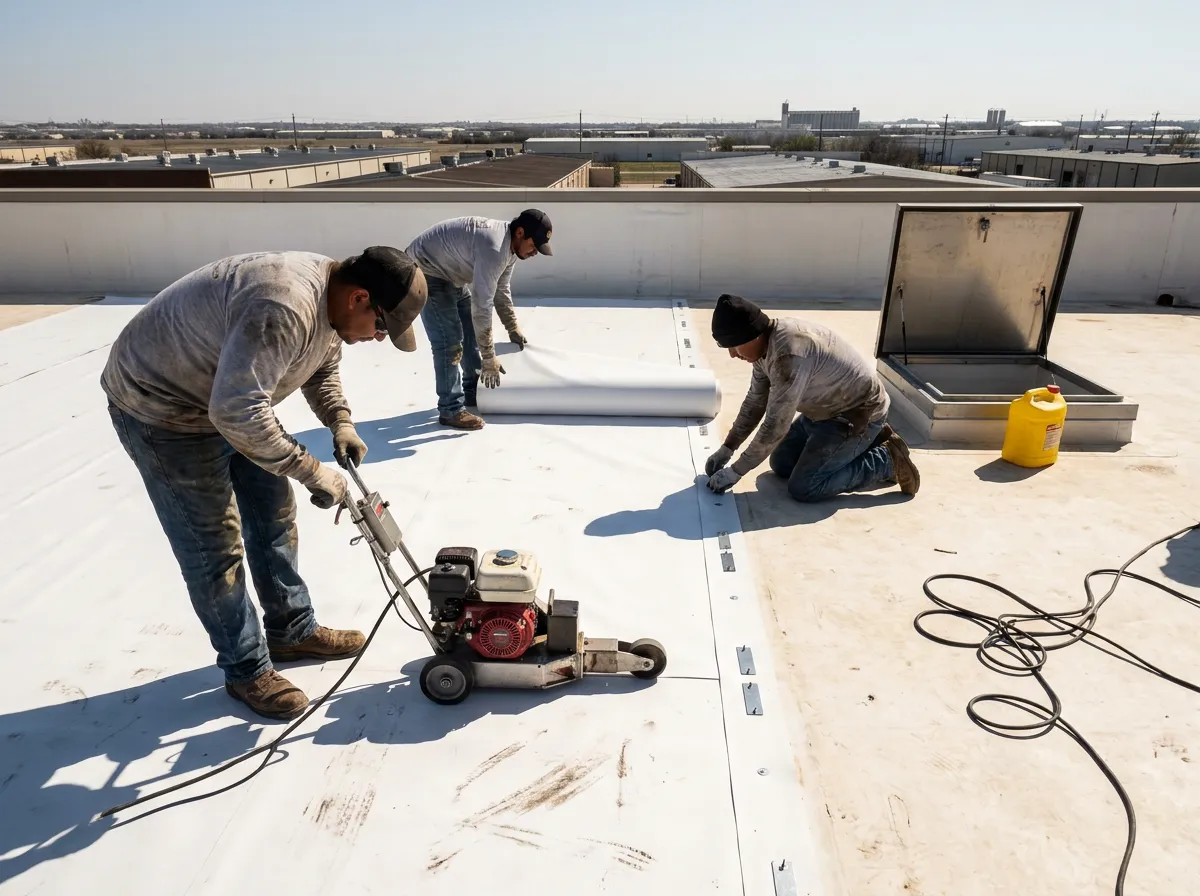
The 60mil vs 80mil decision gets glossed over by contractors selling on price. It matters. 60mil TPO is the right spec for portfolios in lower-hail-exposure submarkets and for buildings where the budget needs to win. It carries 20-year manufacturer warranties on most carriers and installs the same as 80mil from a labor standpoint.
80mil is what we spec north of LBJ, through Plano, Frisco, McKinney, and Prosper, where the hail belt has chewed up 60mil membranes inside 5 to 7 years on multiple portfolios we’ve inherited from other contractors. The 80mil membrane resists puncture from hail bruising, foot traffic during HVAC service, and dropped tools during rooftop unit changeouts.
If you want an NDL (No Dollar Limit) warranty, most manufacturer carriers require 80mil membrane, matching insulation R-value (R-20 minimum on most current specs), and certified installers on the seams. We pull NDLs on roughly 70 percent of our commercial TPO jobs. That’s the warranty that actually protects the owner’s balance sheet, and we review the spec sheet on every NDL submission before it goes to the carrier.
the texas 25 percent rule, what carriers actually require.
Commercial flat roof claims in Texas live and die by 28 TAC 21.1006, the section of the Texas Insurance Code that lets carriers require 25 percent of total roof area to show storm-related damage before they’ll approve a full replacement instead of patch repairs. On a 20,000 sq ft TPO roof that’s 5,000 sq ft of documented bruising, punctures, or membrane separation. Most adjusters will scope the obvious damage and stop there. We don’t.
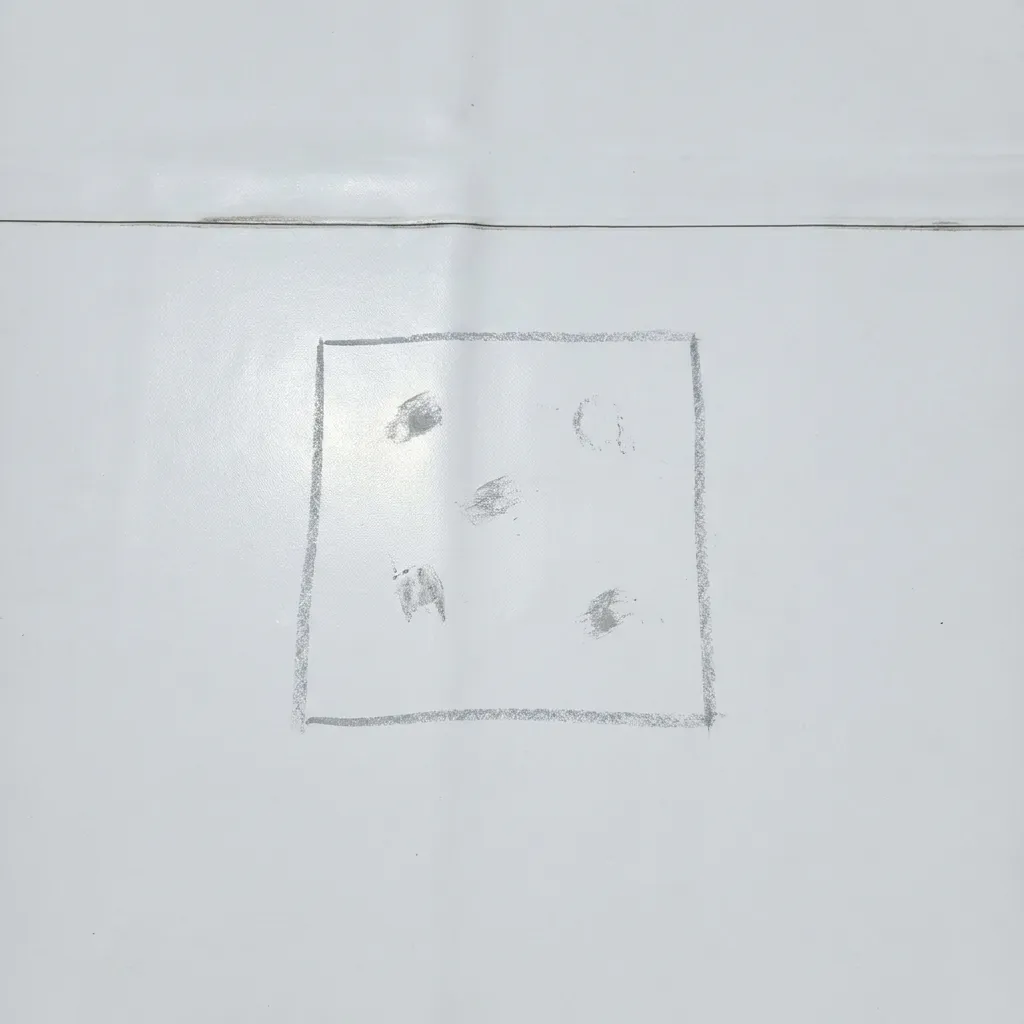
When we walk a commercial claim, we grid the roof into sections, chalk the test squares the same way the adjuster does, and document every hit with timestamped photos, moisture meter readings on the insulation underneath, and core samples where the membrane shows bruising but isn’t punctured yet. Hail bruising compromises the seam welds even when the membrane looks intact from above, and that’s the documentation that crosses the 25 percent threshold legitimately. We file the supplement with the carrier directly so the property manager isn’t translating roofing language back and forth. Our crew lead meets the adjuster on the roof, walks the scope photo by photo, and we get tapered insulation, wet membrane removal, and code-required upgrades approved on roughly 80 percent of the supplements we file.
dfw weather and the storm timeline carriers honor.
DFW averages 38 inches of rain per year with the heaviest cells between April and June, and commercial flat roofs catch every inch of it. Ponding becomes a covered claim issue, hail bruising compromises seam welds, and wet insulation rots the substrate from underneath. The storm dates Texas commercial carriers honor on supplements right now are May 28 2023, April 9 2024, May 23 2024, and June 17 2024. If your building took hits on any of those dates and the claim is still open or hasn’t been filed, the documentation window is still active under most policy language. The hail belt runs US-75 from McKinney south through Plano, Frisco, and Richardson, then bends west toward Carrollton and Lewisville. Buildings on that corridor get hit roughly every 18 to 24 months on a long enough timeline.
the property manager workflow we run.
We built our commercial side around how property managers actually work, not how roofers prefer to work. Here’s the cycle on a typical portfolio engagement.
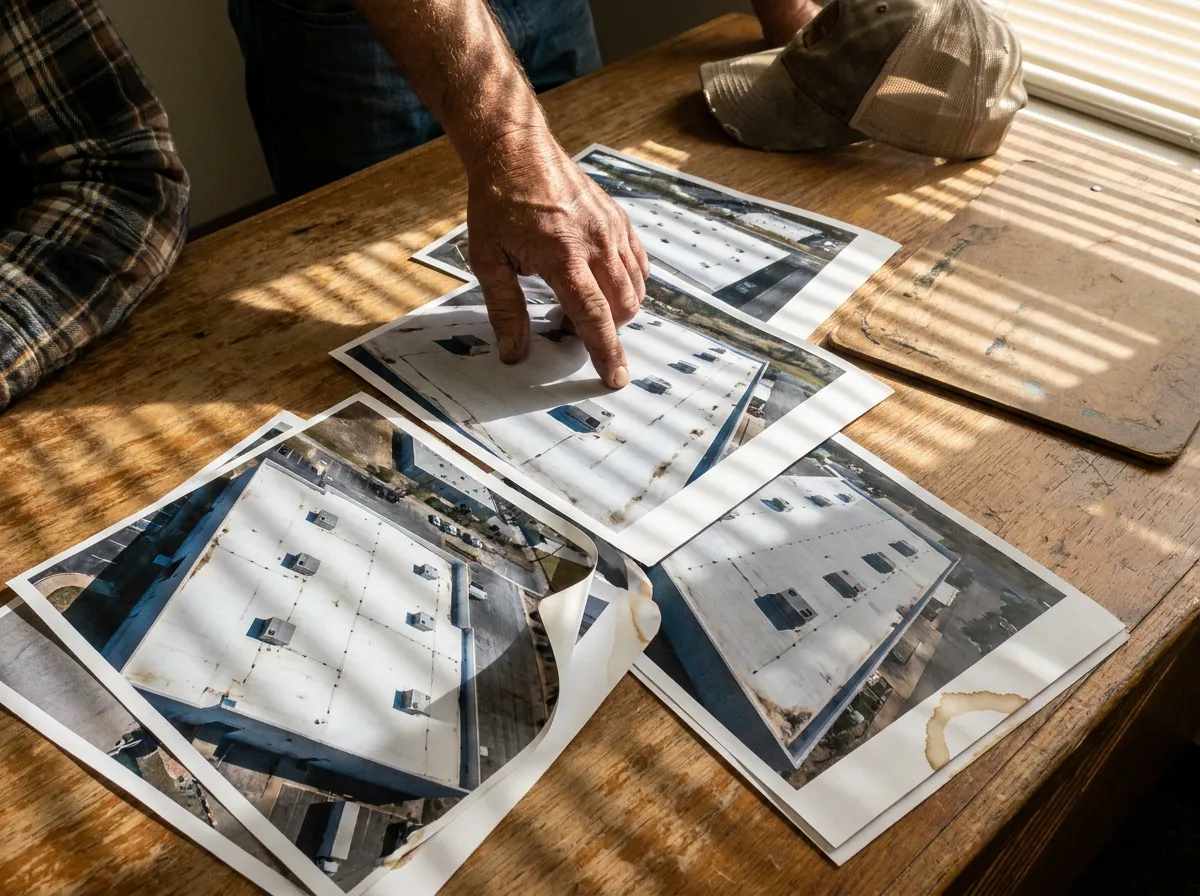
Onboarding inventory. Every roof in the portfolio gets a drone flight, a walking inspection, a photo log, and a life-expectancy estimate. You get a single PDF per building plus a master spreadsheet that ranks the portfolio by remaining useful life. That document drives capex planning for the next 3 to 5 years.
Monthly status reporting. Each month you get a status memo formatted for tenant communications and owner updates. Open work orders, completed scopes, photos, insurance claim status if any. The format is something you can forward without rewriting.
COIs on file, refreshed annually. Certificates of insurance naming the property owner and the management company as additional insured, on file with your accounting team before the first invoice clears. We refresh annually without you asking.
Single point of contact. Sara owns the relationship. One email, one phone, one person who knows your portfolio. Carrier supplements get handled directly between us and the adjuster so you’re not in the middle.
Call (214) 326-3106 for a free inspection.
the rapid roof response process.
We run a 6-step protocol on every commercial engagement, branded Rapid Roof Response because property managers calling at 2am after a hail cell rolled through Lakewood or Preston Hollow need to know exactly what happens next. This walks the buyer from first call to warranty registration without the gaps where most contractors lose the relationship.
- First-call dispatch within 60 minutes. Sara answers, takes the building address and the nature of the call (leak, storm, scheduled inspection), and dispatches a crew lead or drone operator. For active leaks we tarp the same day.
- Drone and walking inspection inside 48 hours. Every roof gets aerial mapping plus a walking inspection. We chalk test squares, measure substrate, pull core samples on suspected wet insulation, and document everything with timestamped photos.
- Written scope and fixed quote inside 4 business days. You get a scoped PDF with system options, ROI math (repair vs recoat vs replace), warranty tier, and a fixed price. Not a placeholder estimate that changes mid-job.
- Install scheduled around tenants. Off-hours, weekends, or phased sections so the building stays operational. Parking lot logistics, dumpster placement, and crew staging coordinated with the property manager before the first truck rolls.
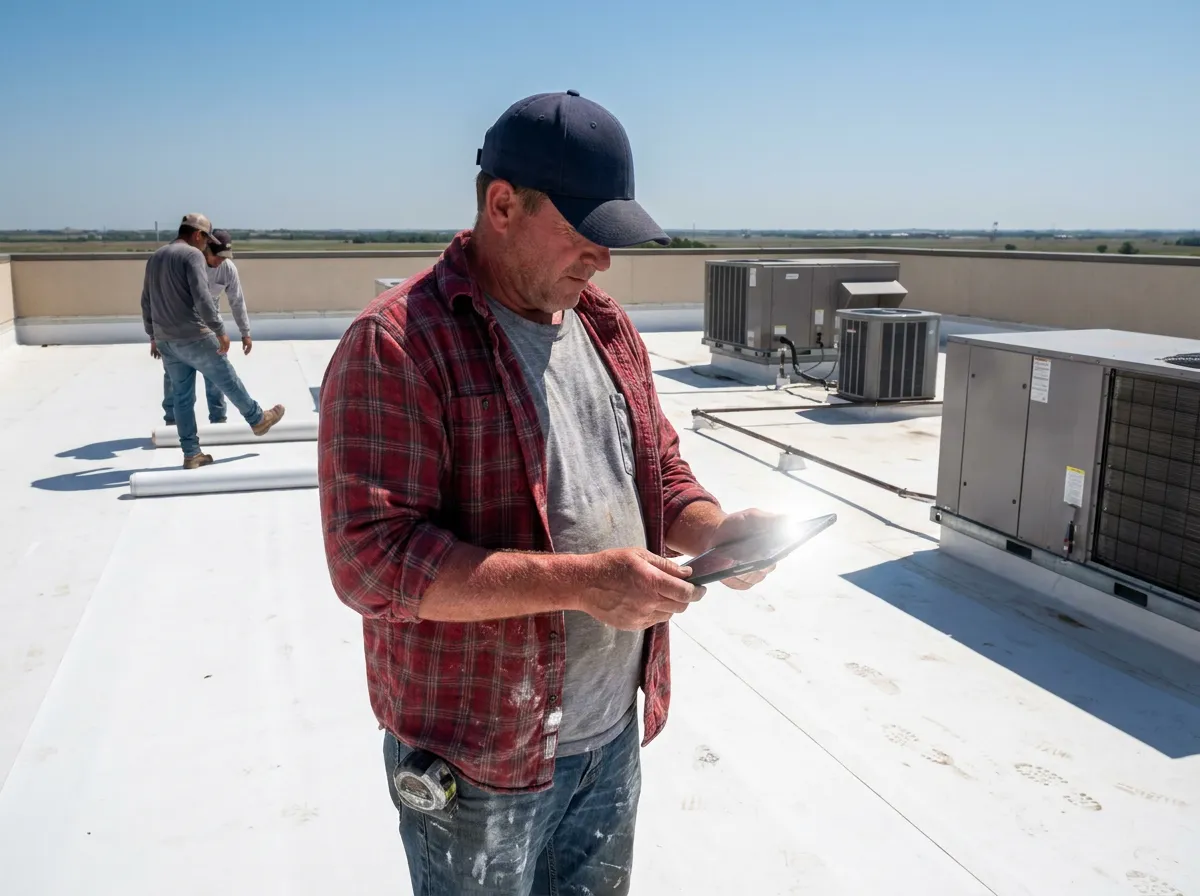
- Tear-off and dry-in same day, daily QC photos. The building stays watertight overnight even if the membrane install runs into a second day. Crew lead uploads end-of-day photos to your portfolio file. The crew lead spot-checks heat-weld seams on every TPO job.
- Warranty registration filed within 30 days. Every qualifying TPO system gets registered with the manufacturer at the highest NDL tier the spec allows. Paperwork copied to your accounting team. Year-one and year-five inspections built into the relationship.
tenant disruption: how we work around occupied buildings.
Occupied buildings drive the schedule, not the other way around. We run off-hours and weekend installs on retail strips with daytime foot traffic, and we phase larger office buildings by section so only one wing is under tear-off at a time. Tear-off and dry-in happen the same day so the building stays watertight overnight, even if the membrane install runs the next morning.
Parking lot logistics get planned before the first dumpster shows up. We mark off the staging area with cones, coordinate dumpster placement with your property manager, and run debris control so nothing lands in a tenant’s parking stall or storefront. The crew lead checks in with the property manager every morning before work starts and again at end of day.
dfw neighborhoods we serve.
Our commercial portfolio work runs across the entire DFW metro, with concentration in the submarkets where property managers and owners hold the densest commercial real estate.
- Dallas: Lakewood, Preston Hollow, Highland Park, University Park, Uptown
- Bishop Arts, Oak Lawn, Lake Highlands, Casa Linda
- M Streets, Knox Henderson, Bluffview, Devonshire
- Plano: Stonebriar, Willow Bend, Preston Meadow, Legacy West, Carpenter Park
- Frisco: Phillips Creek Ranch, Frisco Lakes, Starwood, The Trails of West Frisco
- McKinney and Allen: Watters Creek, Twin Creeks, Tucker Hill, Whitley Place, Adriatica, Trinity Falls
- Highland Park: Old Highland Park, Volk Estates, Beverly Drive, Armstrong Parkway
- Retail strips and office parks: Carrollton, Coppell, Lewisville, Flower Mound, Grapevine
- Keller, Southlake, Fort Worth, Arlington
- Grand Prairie, Mira Lagos, Lakeridge, Westchester
Property managers holding buildings in Dallas, Plano, Irving, Richardson, Fort Worth, or Arlington can start with the service-area page for that city.
If your building is inside Loop 12 or anywhere in Collin, Dallas, Denton, or Tarrant county, we cover it.
what a commercial flat roof actually costs in dallas.
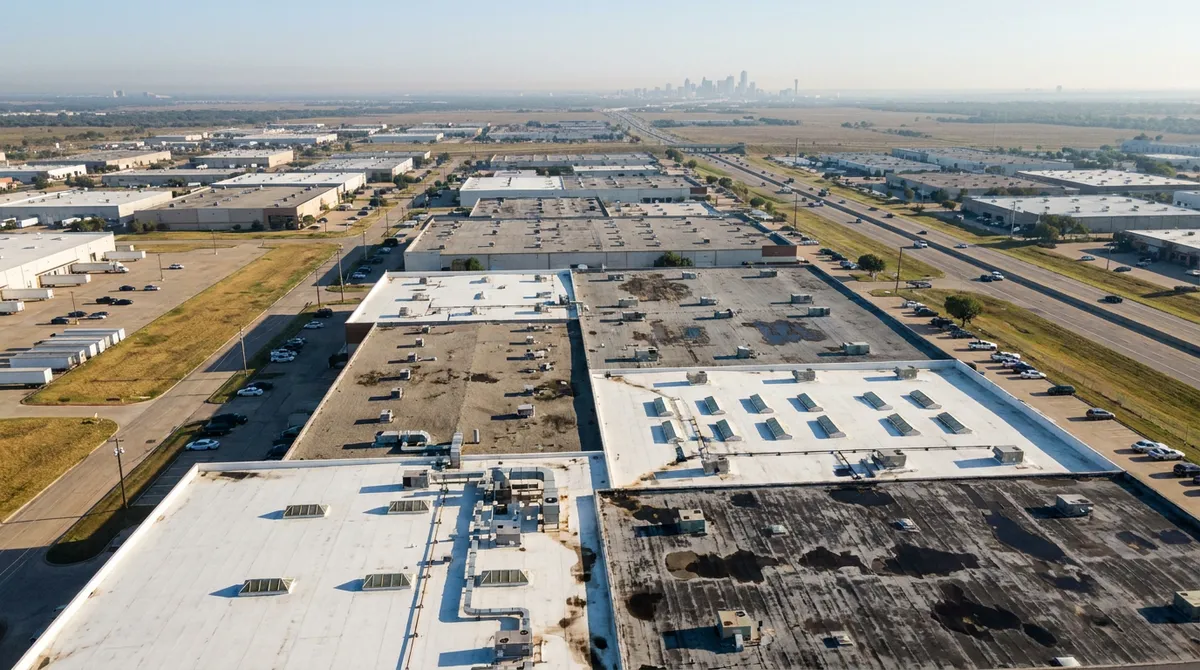
Full TPO replacement in Dallas runs $8 to $14 per sq ft, depending on substrate condition, insulation R-value, and roof access. Recoats and silicone restoration systems run $2 to $5 per sq ft on a sound membrane. EPDM and mod-bit fall in similar ranges, with the spread driven mostly by detail work (penetrations, parapets, drains, scuppers).
The biggest cost drivers we see on Dallas commercial jobs are wet insulation that needs tear-out (adds $1.50 to $3 per sq ft), tapered insulation packages to fix ponding ($2 to $4 per sq ft added), and crane access on tall or tight buildings. We give fixed quotes after the site assessment so the owner isn’t absorbing surprise change orders mid-job. Run the free roof cost calculator for a directional number before we walk the roof.
Call (214) 326-3106 for a free inspection.
payment plans, real numbers.
Commercial owners need numbers that pencil out before capex committees, not vague ranges. A 2,400 sq ft Plano replacement with Landmark Pro runs roughly $22,000. Scale that up to a 20,000 sq ft TPO 80mil replacement on a Preston Hollow office building at $11 per sq ft and you’re looking at roughly $220,000 total, and a 5,000 sq ft retail strip recoat at $3.50 per sq ft runs $17,500. On qualified projects we offer an in-house payment plan. A larger upfront deposit gets the work started and the balance is split over flexible terms depending on the size of the project. Cash jobs are always welcome, and covered insurance claims pay for most storm work after the deductible. Sara walks the payment structure with your accounting team before we lock the contract. Details on our payment plans page.

anti-storm-chaser warning.
After every major North Texas storm, out-of-state crews flood Plano and Frisco driveways with door-knock flyers and “free roof” promises. The pattern hits commercial properties just as hard as residential. They sign you to an ACV-only contract, take the first carrier check, and disappear before the supplement gets filed. The tapered insulation upgrade never makes it into the scope, the wet membrane never gets removed, the seam welds never get probed, and the warranty paperwork never gets filed with the manufacturer. Six months later when a leak shows up over tenant space, the phone number on the contract is dead, the LLC is dissolved, and you’re carrying a roof with no documented chain of installation and no warranty to call against. We’ve inherited dozens of these jobs across DFW. The remediation cost on a botched storm-chaser install runs 60 to 80 percent of what a clean install would have cost in the first place. If a crew can’t show you a Texas-based business address, a CertainTeed certification number, COIs naming your management company, and a registered warranty filing protocol, don’t sign.
Call (214) 326-3106 for a free inspection.
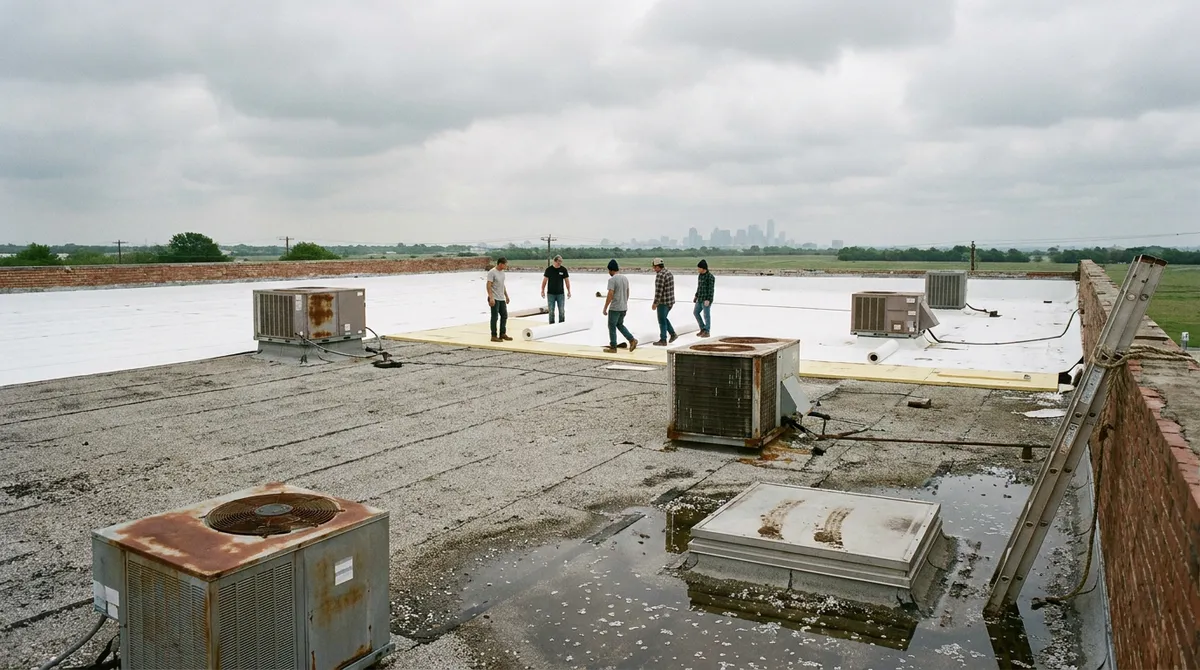
“I highly recommend Roof Raiders for any commercial roofing needs. Their work, customer service, and professionalism were excellent, and I’m confident the roof will last for years to come.” Qais Khalil, verified Google review
Ready for a portfolio walk or a single-building quote? Call (214) 326-3106 or schedule online. Drone inspection and written scope back to you inside 4 business days, fixed quote with system options and ROI math. Sara answers the phone, a crew lead walks the roof, and the warranty paperwork gets filed before the final invoice clears.
What's included
- TPO single-ply membrane systems (60 mil and 80 mil)
- EPDM rubber roofing for older flat substrates
- Modified bitumen for complex penetrations and parapet detailing
- Flat roof repair, recoating, and ponding remediation
- Drone-documented portfolio inventories with life-expectancy per roof
- Monthly status reporting suitable for tenant communications
- COIs naming property owner and management company as additional insured
- NDL (No Dollar Limit) warranty packages on qualifying TPO systems
- Tapered insulation packages to correct ponding and meet R-20 spec
- Carrier supplement handling and adjuster meetings on storm claims
How it works
- Portfolio inventory. Drone and walking inspection of every roof in the portfolio with photo log and life-expectancy estimate per building, delivered as a single PDF per building plus a master spreadsheet.
- System proposal. TPO, EPDM, or mod-bit sized to substrate, hail exposure, and tenant mix, with ROI math for repair vs recoat vs full replacement and a fixed quote, not a placeholder estimate.
- Phased install scheduling. Off-hours and weekend scheduling, tear-off and dry-in same day, dumpster and parking logistics coordinated with property manager before the first truck rolls.
- Install and quality control. Heat-welded seams probed, fasteners patterned to manufacturer spec, daily photo log uploaded to the portfolio file, crew lead checks in with property manager morning and end of day.
- Monthly reporting and COI refresh. Status reports formatted for tenant and owner communications, COIs refreshed annually without you asking, single point of contact through Sara.
- Warranty registration. Every qualifying TPO system registered with the manufacturer at the highest NDL tier the spec allows, paperwork filed within 30 days of substantial completion, copy emailed to your accounting team.