Roofing in Fort Worth, TX, Storm Damage and Hail Repair
55 minutes from our Plano HQ. Same ShingleMaster certified crews, same insurance claim documentation, same family-owned standard you would get if our office was on your street.


Fort Worth sits about 55 minutes west of our Plano shop, and it is one of the most storm-active roofing markets we cover. When you need roofing fort worth homeowners can actually trust, you are usually calling because a recent cell rolled through, your gutters are full of granules, and your insurance app is asking for photos you do not have. We work Fort Worth roofs from the brick Tudors off Camp Bowie to the new builds north of Heritage Trace, and the pattern is consistent. This city gets hit hard, it gets hit often, and the gap between a documented roof and a denied claim usually comes down to who climbed up there first. Fort Worth’s mix of mature tree canopy in Tanglewood and Rivercrest, exposed western elevations in Westover Hills, and dense builder-grade subdivisions out by Alliance creates eight or nine distinct roofing micro-markets inside one city limit. We treat each of them on its own terms, because the wind exposure, the HOA rules, the shingle history, and the carrier behavior all change once you cross Loop 820 or drop south of I-30. Whether you are chasing down a hail damage roof repair dallas estimate after the last cell or you have been putting off a full replacement since the 2023 season, the next few sections walk through how we approach Fort Worth, what your roof is probably telling you, and what the claim process actually looks like inside Tarrant County.
fort worth sits at the western anchor of dfw.
Fort Worth is the western half of the DFW metroplex, and it behaves differently than Dallas does on a roofing call. The city is wrapped by I-820 as a loop, sliced east to west by I-30, and cut north to south by I-35W, with the Chisholm Trail Parkway running parallel on the south side. When a storm cell builds in Parker or Hood County and tracks east, it usually reaches the western Fort Worth ZIPs first, 76107, 76116, and the edge of 76109, before it crosses 820 and works into Tanglewood and TCU. That west-side first-impact pattern is why we keep our Fort Worth route weighted toward Camp Bowie, Hulen, and Bryant Irvin instead of trying to cover the whole city evenly.
The arterials that matter for our crews are Camp Bowie Boulevard running west from downtown out through Ridglea, Hulen Street running north to south from I-30 down past Hulen Mall, Bryant Irvin Road serving Mira Vista and the Overton South pocket, and University Drive cutting through TCU and Berkeley Place. East of downtown the Trinity River bends through the city and creates a natural divide where roofing styles shift from older bungalows in Fairmount and Ryan Place to the newer Eastside developments. Downtown itself is mostly commercial, but the ring of historic neighborhoods around it, Mistletoe Heights, Berkeley, Park Hill, all share the same 1920s to 1940s rafter framing that needs a careful inspection before any replacement spec gets written.
North of 820 the city changes character again. Alliance, Heritage, and the new subdivisions off Highway 287 are dominated by builder-grade architectural shingles installed between roughly 2005 and 2018, which means a lot of those roofs are now in their late-life window even before storm impact gets factored in. South Fort Worth, Wedgwood and the Westcreek area down toward Burleson, has a similar housing-decade profile but with more mature trees and tighter lot lines that affect how we stage materials. Knowing which Fort Worth you are calling from tells us most of what we need before we ever pull up to the curb.
fort worth roofing corridors and hail patterns.
Fort Worth does not get hit evenly. The cells track in repeating patterns, and after enough seasons you start seeing the same corridors show up on the inspection list. Here is how we break the city down corridor by corridor, with the cross streets and signals that tell us which roofs to look at first. Treat the storm references below as orientation, not a substitute for your own carrier record. Always pull your specific date of loss from the NOAA Storm Events Database before you file.
- Camp Bowie Boulevard from University Drive west to I-820. This is the spine of the Ridglea and Arlington Heights claim activity. The 2024 spring season tracked large hail along this stretch and into the Tudor and ranch roofs between Bryant Irvin and Hulen. We see a lot of older 3-tab and early architectural shingles in this corridor that fail the lift test on first inspection.
- University Drive from I-30 south through TCU to Berry Street. The March 16 2023 storm put golf-ball to baseball-size stones through the TCU corridor and the Berkeley Place blocks east of University. Roofs here range from 1930s slate-look composite to 2010s architectural, and carrier filing volume in 76109 stayed elevated for weeks after that event.
- Hulen Street from I-30 south to Hulen Mall and on to Sycamore School Road. This corridor runs through the Wedgwood subdivisions east of Hulen between Trail Lake and Granbury Road. South-facing and southwest-facing slopes tend to take the heaviest bruising here, which is consistent with the southwest to northeast track most North Texas cells follow.
- Bryant Irvin Road from I-20 north to Camp Bowie West. Mira Vista, Overton South, and the gated sections east of Bryant Irvin all sit in this corridor. Spring 2024 hail left soft-metal bruising on vents, turbines, and gutters here, and that soft-metal marker is often what a carrier uses to justify full slope replacement.
- I-30 corridor from downtown west through Ridglea Hills to the 820 split. This stretch caught crossfire from multiple 2024 cells. The town of Westover Hills sits just north of I-30 along this section, and the high-pitch, large-footprint roofs there are some of the most expensive replacement specs we write anywhere in Fort Worth.
- Highway 287 corridor from I-820 north through Heritage and Alliance. This is the newer-construction belt. Roofs are mostly 2005 to 2018 architectural, and builder-grade shingles in their late-life window almost always test as totaled once impact gets layered on top of UV degradation.
- East Loop 820 from Meadowbrook south to I-30. Less famous than the west-side corridors, but the Eastside subdivisions here pick up real damage from the same systems. We get a steady stream of storm damage roof repair dallas calls out of this corridor that the bigger storm-chaser outfits skip because the homes are smaller and the tickets are lower.
When you call us out for an inspection, we already know which corridor you are in and roughly which seasons your roof has lived through. That context shapes what we look for on the slopes and what we write up in the report.
housing stock and carrier behavior in fort worth.
Fort Worth’s housing stock spans a full century, and that matters for roofing because every decade brought a different framing standard, a different decking spec, and a different shingle technology. The historic neighborhoods inside Loop 820, Mistletoe Heights, Berkeley Place, Park Hill, Ryan Place, and Fairmount, were built largely between 1910 and 1945 with full-dimension lumber rafters, plank decking, and original slate or wood-shake roofs that have since been replaced once or twice with composition shingle. Tanglewood, Rivercrest, which traces back to 1918, and the town of Westover Hills filled in through the early-to-mid twentieth century with larger architect-designed homes that often carry complex roof geometry, multiple dormers, and steep pitches that drive the replacement cost up. The 1960s through 1980s built out Wedgwood, Ridglea Hills, and most of southwest Fort Worth with ranch and split-level homes on plywood decking, while Mira Vista came later, developing as a gated golf community from the late 1980s forward. Alliance, Heritage, and the far north Fort Worth subdivisions are mostly 2005 to 2018 builder construction with OSB decking and architectural composition shingle.
What this means for a replacement spec is that the designer-grade neighborhoods like Tanglewood and Westover Hills almost always call for an upgraded shingle, often CertainTeed Landmark Pro, Presidential, or a true designer profile, while the builder-grade subdivisions north of 820 are usually a straight architectural replacement with a focus on ventilation correction and underlayment upgrade. We do not write the same spec for a Rivercrest Tudor and an Alliance starter home, and you should not accept a contractor who quotes them the same way either. The roof on a 1940s Tanglewood home has several times the cut-up complexity of a modern Alliance roof, and the labor hours, the waste factor, and the flashing detail all reflect that.
Carrier behavior in Fort Worth is shaped heavily by the Texas 25 percent rule, codified at Texas Insurance Code 28 TAC 21.1006, which requires a carrier to replace a roof slope once more than 25 percent of that slope is damaged. State Farm, Allstate, USAA, Farmers, and Travelers all file high volume here, and the heavy 2023 and 2024 seasons pushed all of them into tighter inspection protocols. Some carriers now send field adjusters with drone-imagery requirements, some send ladder assists from third-party vendors, and a few have moved toward virtual inspections that lean more on the homeowner’s own documentation. That 25 percent threshold is what separates a slope replacement from a partial or a full roof, and getting an accurate impact count on each slope is the single most important thing a contractor does on the inspection. We mark, photograph, and chalk every impact, and we hand that documentation to the adjuster before they ever set their own ladder.
how a hail claim works in fort worth.
If you have never filed a roof claim in Tarrant County, the process can feel opaque, so here is the honest version, start to finish, with the Texas legal guardrails marked where they apply.
- Free contractor inspection and documentation. We climb the roof, chalk every impact slope by slope, photograph each one with a scale reference, and document soft-metal bruising on vents, turbines, gutters, and flashing. We write a report describing the damage we find. We do not tell you whether to file. That decision is yours and your carrier’s, and we encourage you to confirm your date of loss against the NOAA Storm Events Database first.
- You file the claim with your carrier directly. You call your insurance company, give them the date of loss, and request an inspection. We cannot file it for you, and we are not allowed to negotiate it on your behalf. Texas Insurance Code 4102.163 reserves claim negotiation for a licensed public adjuster. We are roofers, not public adjusters, so we document and we advise, but we do not work your claim against the carrier.
- Carrier adjuster inspection and scope of loss. The adjuster runs an independent inspection and writes a scope of loss. We meet them on the roof when we can so we can walk them through the impact count and the photos we already pulled. The adjuster then issues a settlement based on that scope, usually within a few days by email or mail.
- Supplement and final replacement. If the carrier’s scope misses code-required items, ridge ventilation, decking replacement, drip edge, or ice and water shield in the valleys, we submit a documented supplement. Once the scope is final, we schedule the build. You pay your deductible directly to us when the job starts.
From first inspection to installation the cycle usually runs three to eight weeks, depending on how backed up the carrier’s adjusters are after a major event. In the busiest stretches of the 2024 season we saw cycle times push closer to ten weeks because the inspection queues were jammed across the whole metroplex.
fort worth building department and code.
The City of Fort Worth’s Development Services Department handles every residential roofing permit, and the Permit Center sits on the lower level of City Hall in the downtown government core, off Throckmorton Street. We pull every permit ourselves as the contractor of record, and we never ask a homeowner to pull theirs. That request is a red flag from any contractor who makes it. Fort Worth enforces the International Residential Code with local amendments, and the two sections that matter most for roofing are IRC R806 for attic ventilation and IRC R905 for roof covering.
R806 governs the net free vent area calculation, the ratio of intake ventilation at the soffit to exhaust at the ridge. A lot of the older Fort Worth homes we replace run well under code on intake because the original soffit vents were undersized or blown-in insulation later choked the airflow path. When we replace a roof we bring the ventilation back to code and document the correction for the permit inspection. R905 governs shingle attachment, underlayment, and ice and water shield at valleys and penetrations. We run synthetic underlayment on every job and install ice and water shield in the valleys and around all penetrations whether or not the manufacturer requires it for warranty, because Fort Worth’s wind-driven rain after a hail event produces enough secondary water exposure that the extra membrane pays for itself the first time a vent boot weeps.
Permit inspections in Fort Worth usually land within a few business days of completion. We schedule the inspection, meet the city inspector on site, and we do not issue a final invoice until the permit closes. Any contractor who finishes a roof and disappears before the inspection is leaving an open permit on your property record, and that can complicate a future sale or refinance.
hoa rules and shingle profiles.
Several Fort Worth neighborhoods enforce HOA architectural standards that dictate which shingle you can install, and ignoring those standards can put you in violation and force a re-roof on your own dime. Tanglewood, Rivercrest and its country club estates, the town of Westover Hills, Mira Vista, and parts of the TCU and Berkeley Place area all run approved-shingle lists or architectural review committees that sign off on color and profile before a single bundle goes up.
The profiles that clear review most often are CertainTeed Landmark, Landmark Pro, and Presidential TL, GAF Timberline HDZ and Grand Sequoia, and Owens Corning TruDefinition Duration and Berkshire. For the designer-grade streets we usually spec Presidential or Grand Sequoia, since the deeper shadow line and heavier weight match the architectural character of those homes. Color matters as much as profile here. Weathered wood, charcoal, and Atlantic blue are the colors that clear most Fort Worth committees, while brighter blends tend to get bounced. We submit the sample and the color to the architectural committee and wait for written approval before we order materials. That is the step a lot of contractors skip, and the homeowner is the one who pays for it.
If your home is not inside an HOA neighborhood you have more room on profile and color, and we walk you through the shingle roofing dallas options based on your roof’s pitch, your home’s style, and your budget. For owners who want a longer service life or a different look, we also install standing seam metal roofing dallas and other metal roofing dallas profiles, both of which carry their own HOA approval hurdles that we work through case by case.
neighborhoods we work most in fort worth.
- Tanglewood. Established largely in the 1940s and 1950s, large lots, mature tree canopy, designer-grade shingle specs. Took direct hail from the March 16 2023 system.
- Westover Hills. An incorporated town entirely encircled by Fort Worth, just north of I-30, with large architect-designed homes, complex roof geometry, and premium replacement specs.
- Rivercrest. Country club neighborhood off Camp Bowie dating to 1918, mature housing stock, strict HOA approval, frequent Presidential profile specs.
- TCU/Berkeley Place. A mix of 1920s through 1950s homes around the university that took a direct hit from the March 16 2023 storm.
- Mira Vista. Gated golf community off Bryant Irvin developed from the late 1980s, large footprints, repeated soft-metal bruising on southwest slopes.
- Alliance/Heritage. North Fort Worth builder construction from roughly 2005 forward, architectural composition replacement is the standard spec.
- Wedgwood. Southwest Fort Worth ranch and split-level homes, south-facing slopes that bruise heaviest in the typical southwest-track cell.
- Ridglea Hills. Camp Bowie corridor neighborhood, 1950s through 1970s housing, regular ladder calls every storm season.
fort worth landmarks.
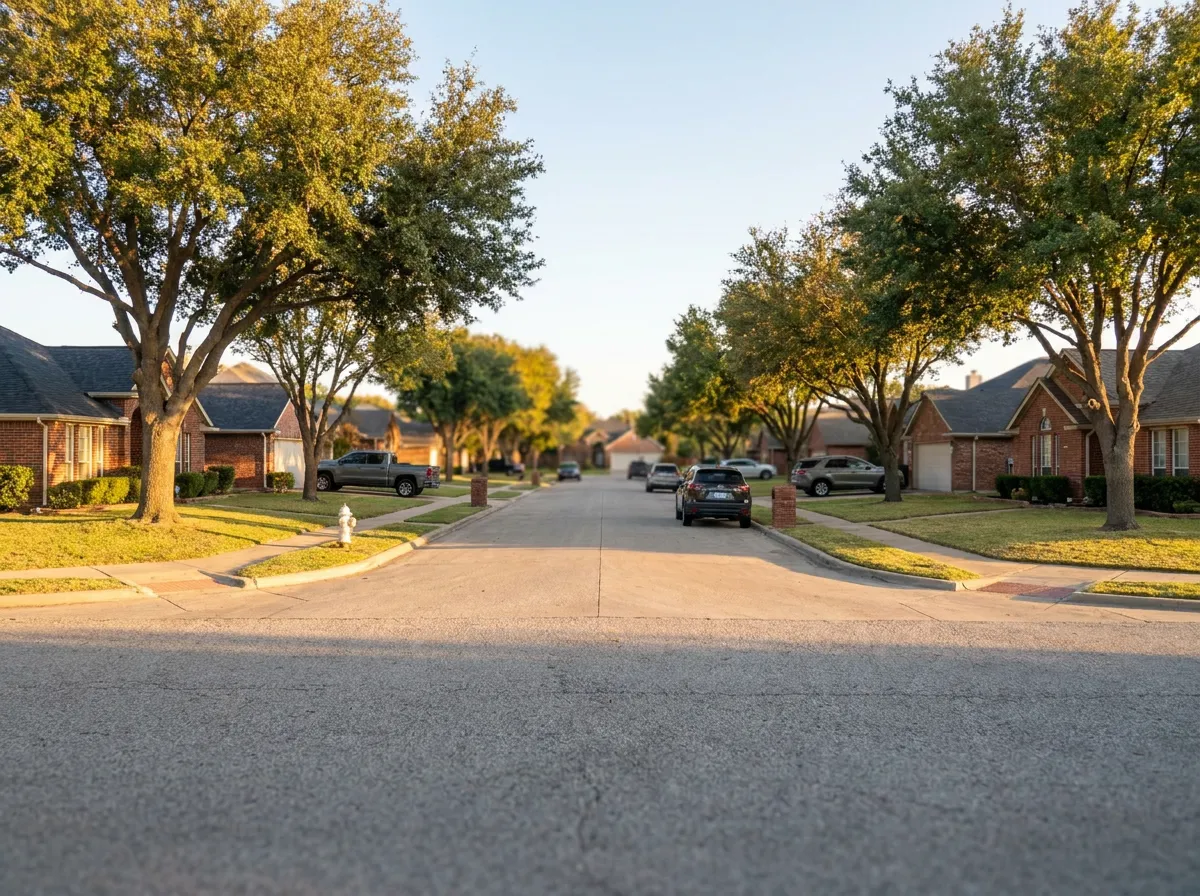 Fort Worth re-roof permits run through the city building department, and most homes here carry architectural asphalt shingle.
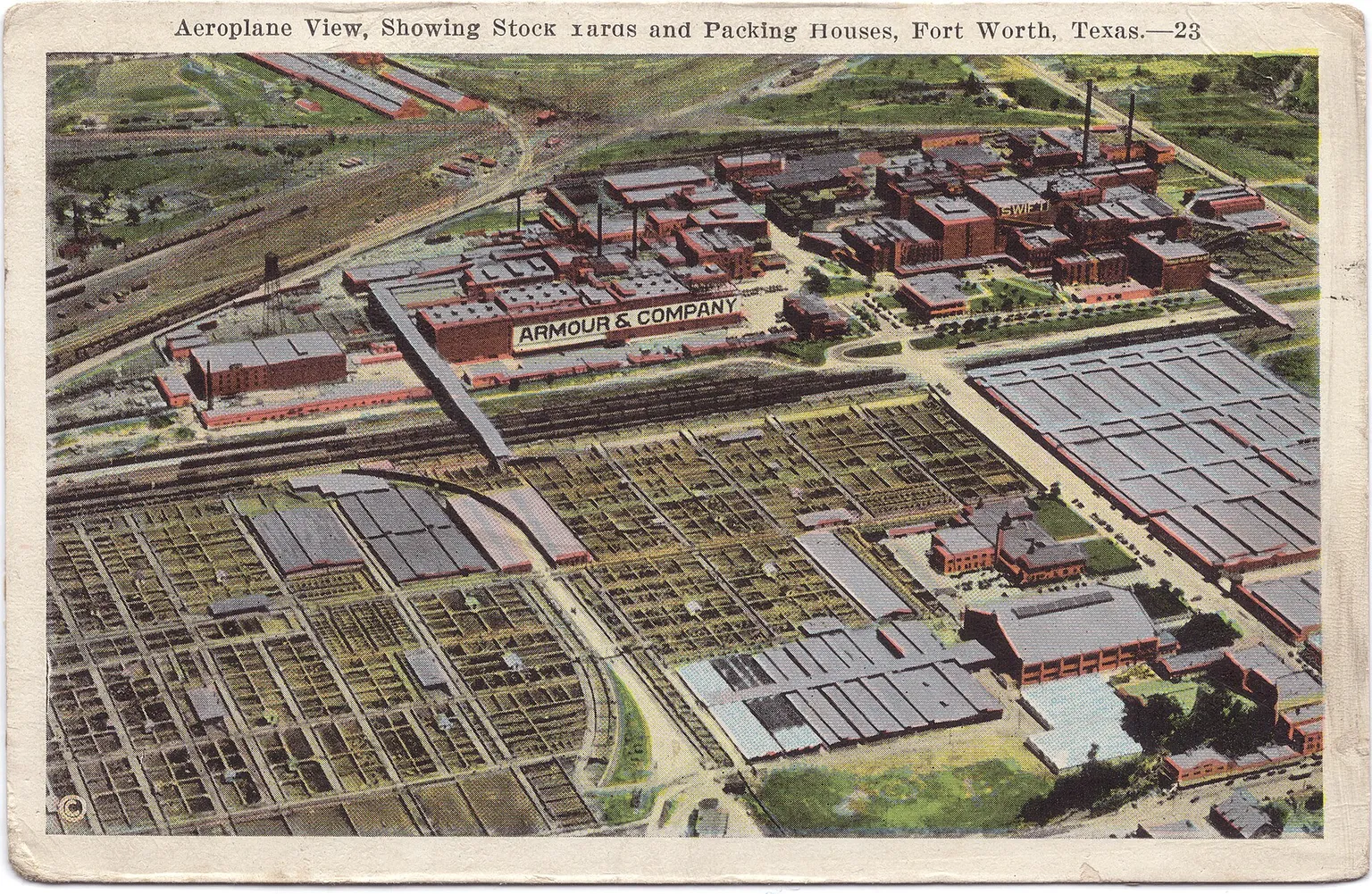 The Fort Worth Stockyards historic district lies just north of downtown off Main Street and 28th.
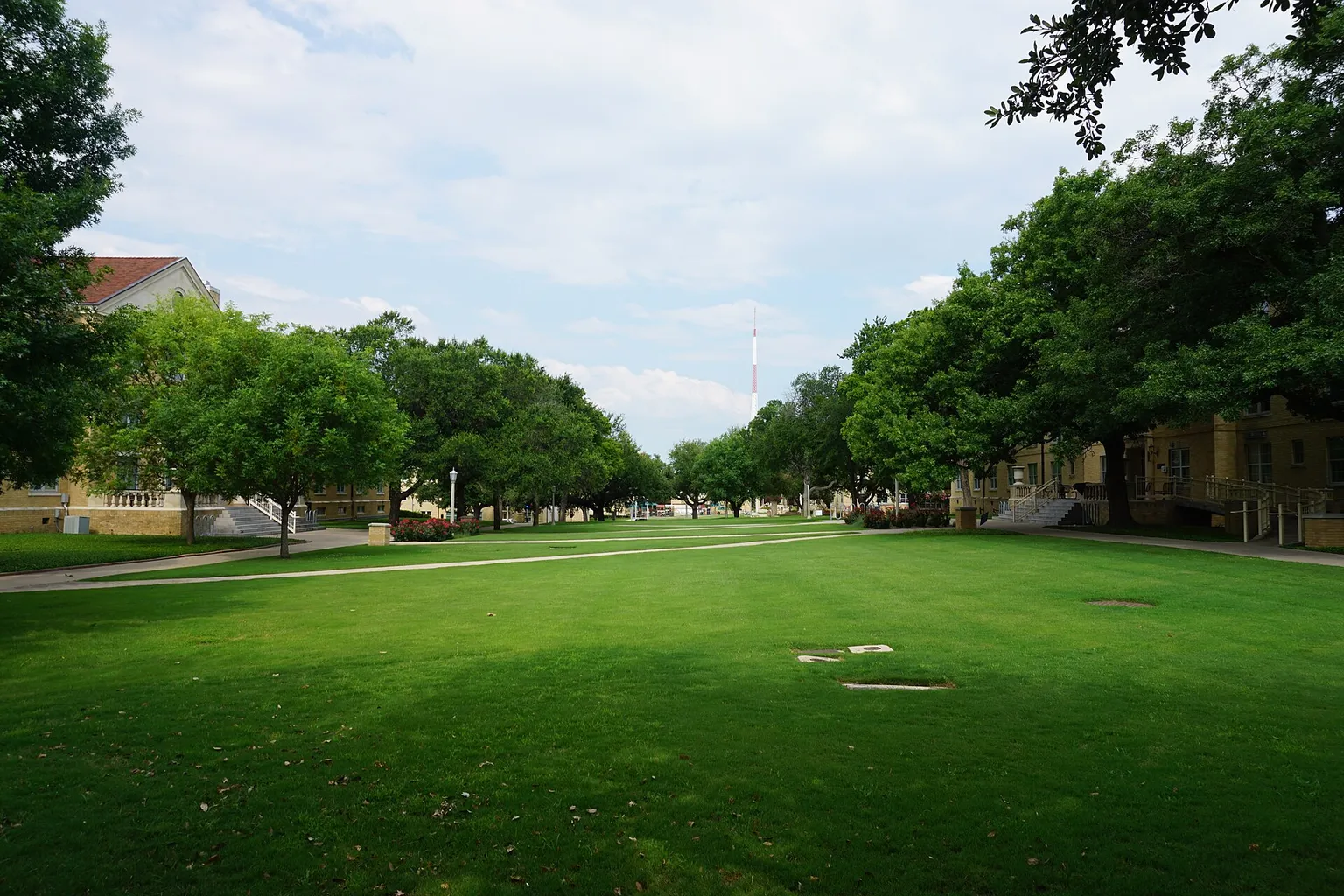 The Texas Christian University campus sits near Berkeley Place and the University Drive corridor.
who you are hiring.
Roof Raiders & Co. is a family business, owned and run by Mahmoud Abu Saad and Sara Bannat out of Plano. Sara started the company in 2022 after she was laid off at 40 weeks pregnant, and the two of them built it around the standard they wanted on their own family’s roof. Mahmoud came up through the trades and runs the crews. Sara handles the office, the claim documentation, and the customer side, so when you call our number you reach an owner, not a call center routing your lead to whichever crew happens to be closest. Mahmoud carries the CertainTeed ShingleMaster credential, which puts us in roughly the top 3 percent of roofers nationally and requires ongoing training, installation audits, and a clean complaint record to keep. That credential is what lets us extend the SureStart Plus warranty on CertainTeed shingles, covering material and labor for the full warranty term rather than just the material-defect coverage most contractors stop at. Roof Raiders is also a Goldman Sachs 10,000 Small Businesses Preferred Vendor, runs OSHA-compliant crews, and sits at 5.0 stars on Google with 24/7 storm response. We do not subcontract to whoever bids cheapest. We run our own installation teams, and A Roof Raiders foreman is on every Fort Worth job we take. If you want to see the work in person before you hire us, we will point you to a recent job in your corridor so you can drive by and judge it yourself.
ready to get started.
If your Fort Worth roof has been through any of the recent North Texas hail seasons and you want a documented inspection with photo evidence and a written report, call us at (214) 326-3106 or run our free roof cost calculator for a starting number on replacement. Before you file, pull your date of loss from the NOAA Storm Events Database so your claim lines up with a verified event. If cost is the holdup, we offer an in-house payment plan on qualified projects, and you can learn more about how we run our crews.
We also serve the surrounding cities, Arlington TX, Grand Prairie TX, and Keller TX, and we can pair a Fort Worth inspection with a nearby property if you have rental units or family in the area. For commercial buildings, our commercial roofing dallas team handles flat membrane, TPO, and modified bitumen, and we run roof inspection dallas reports for property managers and real estate transactions across Tarrant County. Whatever your roof needs, we will climb it, document it, and tell you the truth about what we find.
Fort Worth hail history
Fort Worth sits in one of the most hail-prone corners of North Texas, and the city has a long record of damaging spring events. The March 16 2023 storm dropped golf-ball to baseball-size hail across the TCU, Tanglewood, and Arlington Heights corridors, and the 2024 spring season brought repeat impacts through Tarrant County, with large hail reported again across Arlington Heights and the TCU area. North Texas hail season generally runs March through June, and the western Fort Worth ZIPs tend to take first impact when cells build in Parker and Hood County and track east. Homeowners should confirm their own date of loss against the NOAA Storm Events Database before they file.
Neighborhoods we serve in Fort Worth
- Tanglewood
- Westover Hills
- Rivercrest
- TCU/Berkeley Place
- Mira Vista
- Alliance/Heritage
- Wedgwood
- Ridglea Hills
Fort Worth on the map
What We Do
Roof replacement, storm damage, and insurance claims, handled end-to-end.
DFW homes take a beating from hail every spring. Our six service lines cover everything from the first leak call to your final depreciation payment.

Hail Damage Roof Repair
Full insurance claim assistance from inspection through final depreciation payment. CertainTeed materials, ShingleMaster install.
Learn more

Full Roof Replacement
Full tear-off to bare deck with CertainTeed Landmark through Class 4 impact systems and the registered 5-Star warranty. In house payment plans on qualified projects.
Learn more

Emergency Roof Repair
Active leak? We answer 24/7 and dispatch a tarping crew the same day. Permanent repair scheduled within days.
Learn more

Residential & Commercial Roofing
CertainTeed Landmark, Landmark Pro, Presidential, and full TPO/EPDM commercial systems across DFW.
Learn more
Insurance Claim Assistance
We meet your adjuster on the roof and document full replacement scope with multi-page photo reports.
Learn more

Solar + Multi-Trade
Solar panel detach-attach during roof replacement. Gutters, fencing, siding, and windows from one trusted contractor.
Learn more
52+ 5-Star Google Reviews and Counting
52+ Five-Star
Google Reviews
ShingleMaster
Top 3% of US roofers
Goldman Sachs
10KSB Preferred Vendor

Shiraz Ali
Reasonable price. Roof Raiders were amazing. They were quick and reasonably priced. Their team is experienced and very knowledgeable. I would highly recommend for any roof repairs.

Ali Q
Local Guide·
Excellent experience all around. I strongly recommend!

Ali Qasim
Local Guide·
I couldn't be happier with the service I received. Mo was professional and responsive.
Fort Worth homeowners, schedule your free inspection.
Free inspection. No pressure. ShingleMaster certified.