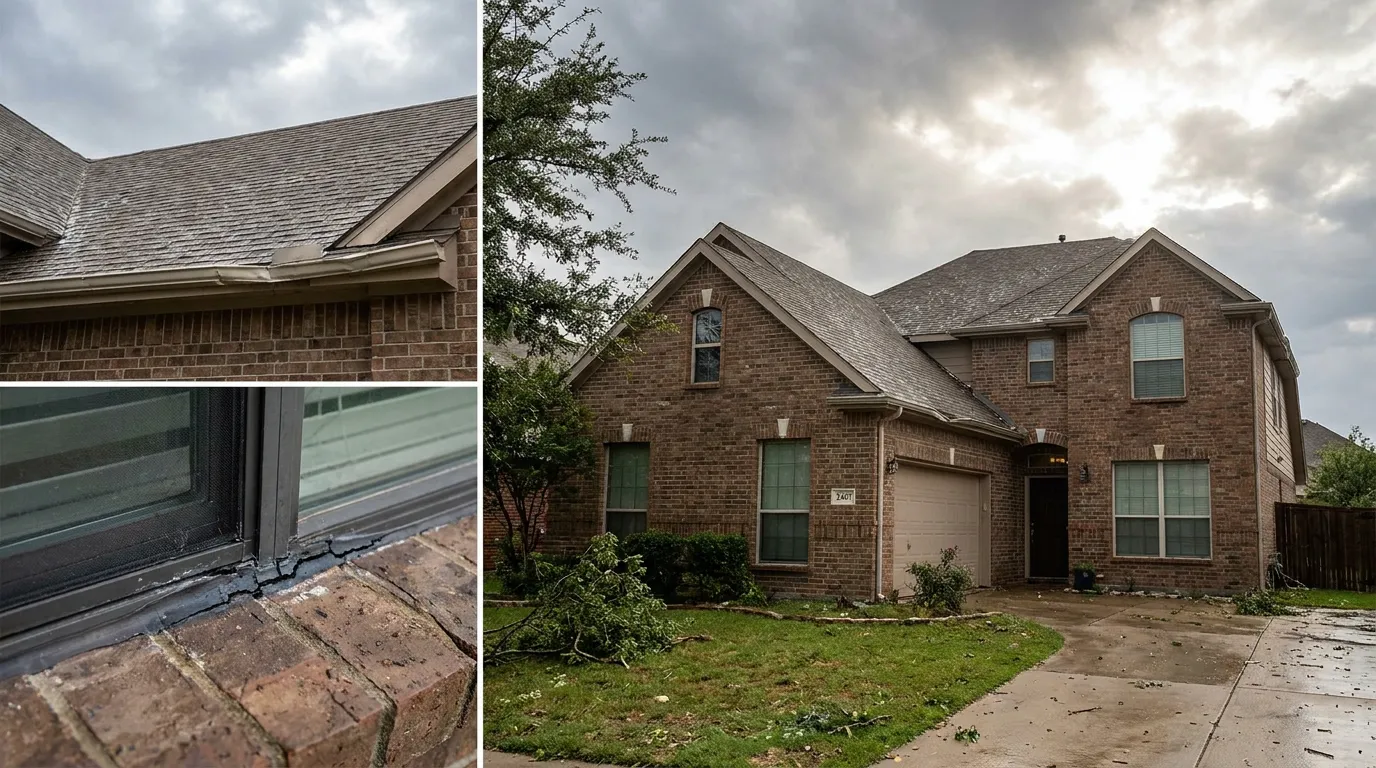
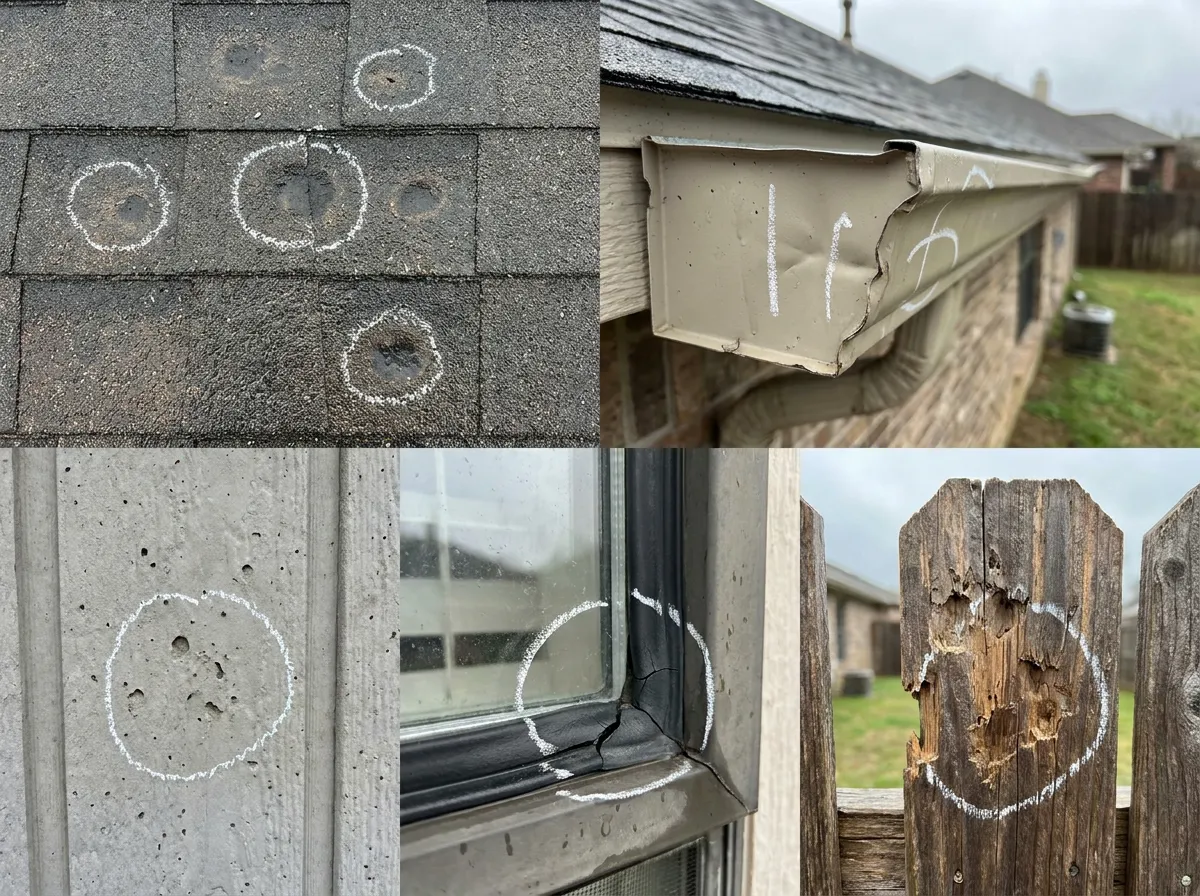
When a single DFW storm cell rolls through Lakewood, Preston Hollow, or West Plano, it rarely damages just one part of your house. The same hailstones that bruise your shingles also dent your gutter aprons, crack your window seals, splinter your fence pickets, and pound your siding into a pin-cushion of impact marks. If you file a roof-only claim, you leave thousands of dollars on the table and end up paying out of pocket for the rest. We rebuild all of it under one supplemented claim, one project manager, and one crew schedule. We’re CertainTeed ShingleMaster certified (top 3 percent of US roofers) and family-owned in Plano, see all credentials.
Call (214) 326-3106 for a free multi-trade inspection.
what makes restoration different from a single-trade storm repair.
A single-trade storm repair is what most homeowners get by accident. The adjuster shows up, walks the roof, writes a scope for shingles, and leaves. You sign with the first roofer who knocks, they replace the roof, and six months later you notice your gutters are leaking, your window seals are fogging, and your fence is sagging where the hail caved in the pickets. Now you’re paying cash for repairs the storm actually caused, because the original claim never documented them.
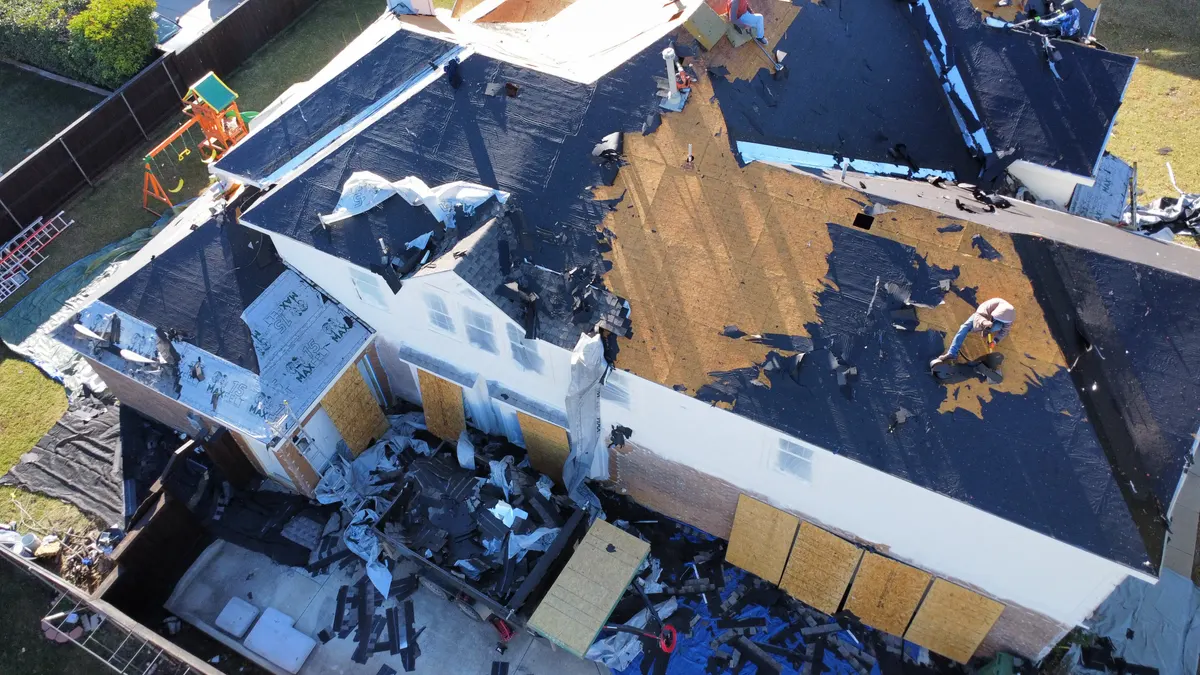
Restoration flips that. We inspect every trade the storm could’ve touched on the first visit. Roof, siding on all four elevations, gutter runs and downspouts, every window with dated photos of the glazing and frame, and every fence section. Then we hand you and your carrier a single scope that covers everything, with photo evidence tagged by trade and elevation. When the adjuster walks the property, our project manager walks with them and points out the damage they’d otherwise miss.
The difference at the end of the claim is real money. A roof-only scope in Plano runs $14,000 to $22,000 for a typical 28 square home. A documented restoration on the same house with siding, gutters, three damaged windows, and 80 linear feet of fence usually settles between $32,000 and $48,000 net to the project. Same storm, same house, four times the documented loss because we found it and they didn’t.
the 5 trades we restore after a dfw storm.
Hail and straight-line wind don’t read property lines or trade boundaries. Here’s what we look at on every restoration walk, what carriers typically miss, and what the scope value tends to land at on a 2,800 sq ft DFW home.
| Trade | How often it’s damaged | What adjusters miss first | Typical scope value |
|---|---|---|---|
| Roof | 95% of restoration claims | Drip edge, ice-and-water shield, ridge vent (25% rule items) | $14,000 to $22,000 |
| Siding | 80% of hail restoration claims | Back and side elevations, J-channel, soffit and fascia | $8,000 to $18,000 |
| Gutters | 90% of restoration claims | Downspouts, gutter aprons, the dent count per linear foot | $1,800 to $4,500 |
| Windows | 40% of restoration claims | Broken thermal seals, screen frames, sill flashing | $600 to $1,400 per window |
| Fence | 55% of restoration claims | Wind-shifted posts, hail-cratered pickets on stained wood | $2,500 to $7,000 |
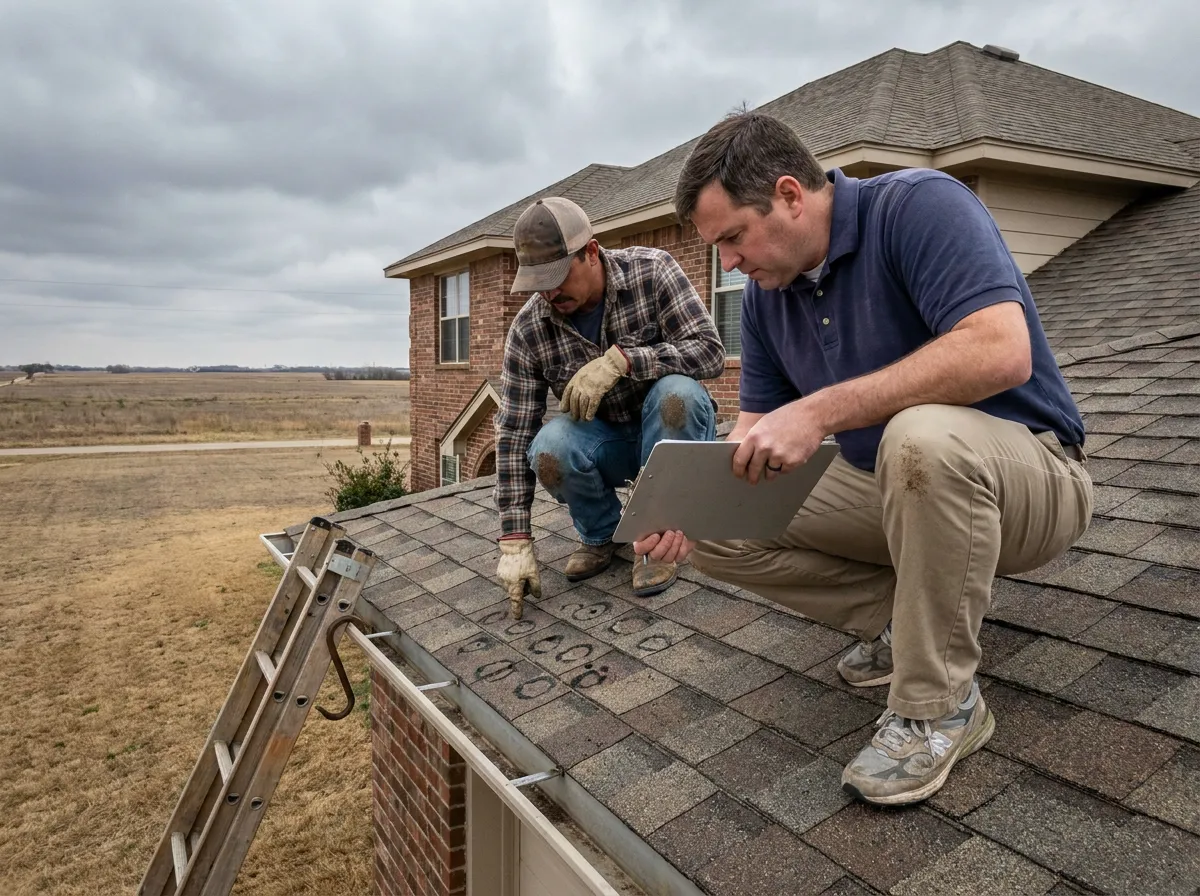
Roof goes first because it’s almost always damaged and because dried-in matters. Siding gets missed most often because adjusters walk the front elevation, see no damage, and skip the back. Gutters get dismissed as cosmetic until we count 40 impact dents in a 10-foot run with a chalk test. Windows fail the seal first, then fog months later. Fence damage gets written off as old age until we show the carrier the splinter pattern on the impact side.
the 24-hour playbook after a major dfw storm.
The first 24 hours after a storm decide how much of your claim survives. Carriers want fresh, dated, geo-tagged evidence. Our crews run this playbook on every active storm cell.
Hour 0 to 1. Stay inside until the cell passes. Once it’s safe, walk the perimeter with your phone and shoot wide photos of every elevation, the yard for hail size reference, and any obvious damage. Don’t climb the roof. If water is coming through a ceiling, get a bucket under it and shoot video of the active leak.
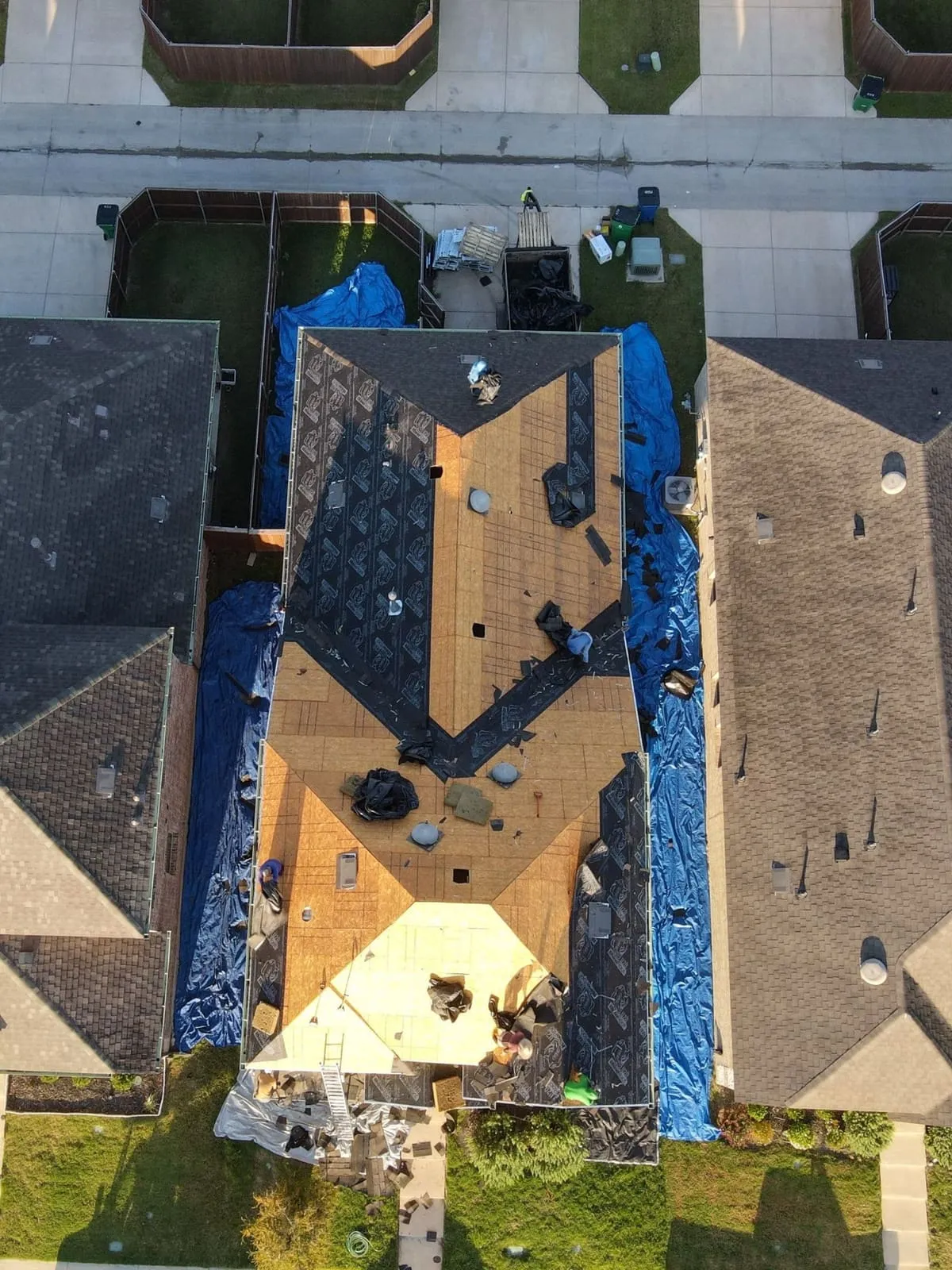
Hour 6 to 12. Call us at (214) 326-3106. If you have an active leak, we dispatch a tarp crew with synthetic underlayment and 1x4 furring strips, secured properly, never just thrown over and weighted with bricks. A bad tarp is worse than no tarp because it traps moisture under the deck.
Hour 12 to 24. We schedule the multi-trade inspection, usually same day for major storms. Two technicians, one on the roof and one on the elevations, full photo set in 60 to 90 minutes.
Hour 24 to 48. You file with your carrier using our scope and photo packet. Most homeowners file too early with too little documentation and then can’t get the carrier to reopen for missed trades. Our packet front-loads the evidence.
Call (214) 326-3106 for emergency tarp dispatch.
the texas 25 percent rule, what carriers actually require.
28 TAC 21.1006 is the Texas Department of Insurance rule that ties insurance restoration to current building code. The short version: if more than 25 percent of your roof has been damaged or repaired within any 12-month period, the entire roof has to be brought up to current International Residential Code, not just patched back to its previous condition.
For DFW restoration claims, that triggers a list of items adjusters routinely leave off the initial scope. Drip edge on every eave and rake. Ice-and-water shield in valleys and around penetrations. Properly sized ridge vent and matching intake ventilation. Synthetic underlayment rated for the deck slope. Starter strip on every eave and rake, not just the front. Code-compliant nailing patterns and the right fastener length for your deck thickness.
When we file the supplement, the 25 percent rule is the argument. We measure the damaged squares, document them against the total roof area, and cite the code section. Carriers honor it because the law is on the homeowner’s side. If you let a roof-only contractor patch the worst slope without filing for code items, you’ve just paid your deductible to get a roof that’s still out of code.
the rapid roof response process.
Our restoration process is the same five steps every time, no surprises and no upcharges mid-project.
Step 1, free multi-trade inspection. Two crew members on site for 60 to 90 minutes. Roof, siding on four elevations, gutters, every window, every fence section. Written scope and photo set in your inbox within 24 hours.
Step 2, carrier filing and adjuster meeting. You file the claim using our documentation. When the adjuster schedules, your project manager confirms the time and meets them on site. We walk the property together so the initial scope captures every damaged trade.
Step 3, supplements for missed scope. When the initial scope comes back from your carrier, we cross-check it against our photo packet. Missed siding elevations, gutter aprons, code-required ridge vent, drip edge, ice-and-water shield, fence sections. We file supplements with photo evidence until the scope matches the documented damage.
Step 4, production sequenced by trade. Roof first to dry-in the structure, usually 1 to 2 days. Siding second, 5 to 10 days. Gutters and downspouts day 1 of the third week. Windows when the order arrives, 2 to 5 days install. Fence last because the materials yard for fence panels is the loudest part of the job.
Step 5, final walk-through and depreciation release. We photograph the completed work, send the completion certificate to your carrier, and you sign one release form that triggers the recoverable depreciation check across all five trades.
Call (214) 326-3106 to schedule your multi-trade inspection.
dfw weather and the storm timeline carriers honor.
Carriers honor specific storm dates when they cross-reference your address against National Weather Service data. If your damage matches a documented DFW storm, supplements move faster and pushback is rarer. The dates we restore against most often in 2024 and 2025 claims:
May 28, 2023. Widespread hail across Plano, Frisco, McKinney, and Allen, with reports of 1.5 inch to 2.5 inch stones in the West Plano corridor. Still showing up on restoration claims today because of latent siding and window damage.
April 9, 2024. Severe hail and wind across Preston Hollow, Lakewood, Highland Park, and University Park. This one produced the heaviest west-Dallas restoration volume we worked all year.
May 23, 2024. Straight-line winds and hail through Lewisville, Flower Mound, Coppell, and Carrollton. Heavy fence and gutter damage on this cell.
June 17, 2024. Late-spring hail event across Garland, Mesquite, Wylie, and Richardson, with hail reports up to golf-ball size in east Dallas.
When we file your supplement, we tie the damage to the specific cell that caused it. That matters when the adjuster wasn’t there for the initial walk.
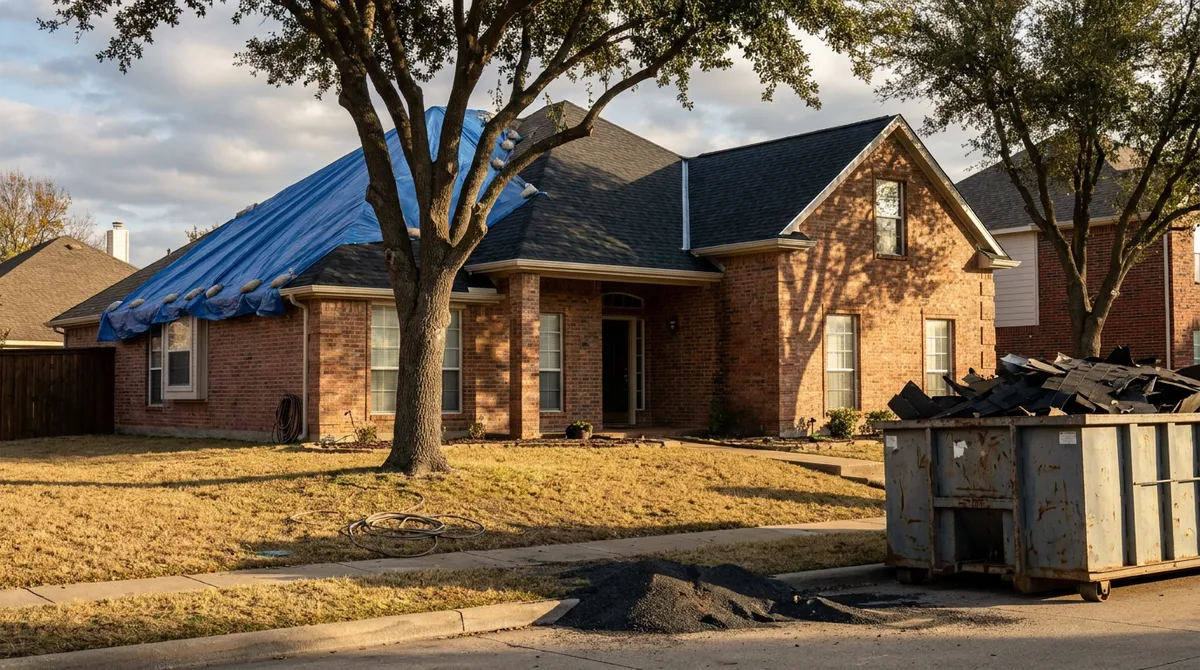
supplements: how we recover the scope your adjuster missed.
The initial scope an adjuster writes and the final scope your home actually needs are rarely the same document. Adjusters carry 30 to 80 claims at peak season after a major DFW storm. They walk fast, they miss elevations, and they default to legacy line items that don’t always match current Texas code.
We re-walk every property the day after the adjuster leaves with their scope in hand. We compare line by line against our original inspection photos. Common missed items: drip edge on rake elevations, ice-and-water shield in valleys, ridge vent with proper net free area, starter shingles on rakes, siding on the back elevation, gutter aprons under the new drip edge, downspout straps, screen frames on damaged windows, fence sections with hail-cratered pickets, and post replacement on wind-shifted runs.
Then we build the supplement packet. Dated photos for every missed item, code citation when applicable (28 TAC 21.1006 for the 25 percent rule items), and a written scope correction. We submit it through your carrier’s portal or directly to your adjuster’s email.
Most supplements get approved within 7 to 14 days. The depreciation release at the end of the project gets paid against the final scope, not the initial one, which is how restoration claims end up paying for the full loss.
Call (214) 326-3106 to have us re-walk after your adjuster.
what a typical restoration claim recovers vs an initial roof-only scope.
Three real DFW restorations from the last 18 months, with names removed.
West Plano, 30 square home, May 2023 storm. Initial roof-only scope: $17,400. After we documented siding on three elevations, gutters, two windows, and 60 feet of fence: $34,200 final. Net difference $16,800.
Highland Park, 42 square home, April 2024 storm. Initial scope: $24,800 roof and partial gutters. After supplements for full James Hardie elevation, ridge vent, drip edge, and four windows: $51,600 final. Net difference $26,800.
Frisco, 28 square home, May 2024 storm. Initial roof-only scope: $15,900. Final restoration with LP SmartSide, gutters, fence: $32,400.
Same storm, same neighborhood, same carrier in two of those cases. The difference is what gets documented on the first walk.
what you actually pay, real numbers.
On a covered restoration, your only out-of-pocket is your deductible. If you carry a 1 percent wind and hail deductible on a $400,000 home, that’s $4,000 due across a $34,000 project. For work your claim doesn’t cover, we offer an in-house payment plan on qualified projects. A larger upfront deposit gets the work started and the balance is split over flexible terms depending on the size of the project. Cash jobs are always welcome. Details on our payment plans page.
anti-storm-chaser warning.
After every major DFW storm, out-of-state crews flood the area in unmarked trucks knocking doors. They sign you, take the first insurance check, sub the work to whoever’s cheap, and leave the state before the supplement check arrives. You’re left chasing a warranty on a phone number that’s been disconnected. We’re family-owned in Plano since 2022 with a fixed address on Legacy Drive, Mahmoud Abu Saad and Sara Bannat as the named owners, CertainTeed ShingleMaster certified (top 3 percent of US roofers), and a 5.0 Google rating from 52+ verified DFW homeowners. If a roofer can’t show you their physical office and three local references in your zip code, don’t sign with them. Read our story.
dfw neighborhoods we serve.
We run restorations across the full DFW corridor.
- In Plano: West Plano, Willow Bend, Deerfield, Hunters Glen, and Russell Creek
- In Frisco: Stonebriar, Starwood, Phillips Creek Ranch, and The Trails
- In McKinney and Allen: Stonebridge Ranch, Tucker Hill, Adriatica, Twin Creeks, and Watters Creek
- In Dallas proper: Lakewood, Preston Hollow, Highland Park, University Park, and Lake Highlands
- Also in Dallas: M Streets, Bishop Arts, Kessler Park, and Bluffview
- Nearby cities: Richardson, Wylie, Garland, Mesquite, Irving, and Carrollton
- Nearby cities: Coppell, Lewisville, Flower Mound, Grapevine, and Keller
- Nearby cities: Southlake, Fort Worth, Arlington, Grand Prairie, and Prosper
Restoration volume runs heaviest in Plano, Frisco, McKinney, Allen, and Dallas, with steady multi-trade work out of Garland and Rowlett after every east-side hail event.
“Mahmoud’s crew caught siding damage on the back of our house that State Farm’s adjuster completely missed. The supplement they filed was $11,000 we never would’ve seen otherwise.” , Restoration client, Frisco, May 2024 storm.
Call (214) 326-3106 to schedule your free multi-trade inspection, or use our free roof cost calculator to estimate the roof portion of your scope.
What's included
- Multi-trade damage inspection across roof, siding, gutters, windows, and fence
- Emergency tarp and board-up dispatch within 24 hours of a major DFW storm
- Photo evidence packet built for your carrier with date, address, and trade tags
- On-site adjuster meetings with your project manager walking the full scope
- Scope-by-scope supplement filings to recover code items and missed line items
- CertainTeed shingle replacement with full underlayment, drip edge, and ridge vent
- James Hardie or LP SmartSide siding, K-style or half-round gutter replacement
- Vinyl, fiberglass, or aluminum-clad window replacement with sealed flashing
- Wood, vinyl, or steel fence sections matched to your existing material
- Final walk-through with depreciation release paperwork ready for your carrier
How it works
- Free multi-trade inspection. We walk the roof, siding, gutters, windows, and fence the same visit and hand you a written scope with photos for every trade before we ever talk numbers.
- Carrier filing and adjuster meeting. We file with your carrier, show up on site when the adjuster arrives, and walk them through every damaged trade so nothing gets left off the initial scope.
- Supplements and scope corrections. After the initial scope comes back, we file supplements for code-required items, missed siding panels, gutter runs, and any window flashing the adjuster skipped.
- Production scheduled by trade. One project manager sequences roof first, then siding, gutters, windows, and fence so your home is dried-in fast and the trades don't trip over each other.
- Final inspection and depreciation release. We photograph the finished work, send the completion packet to your carrier, and you sign one release for the recoverable depreciation across all five trades.