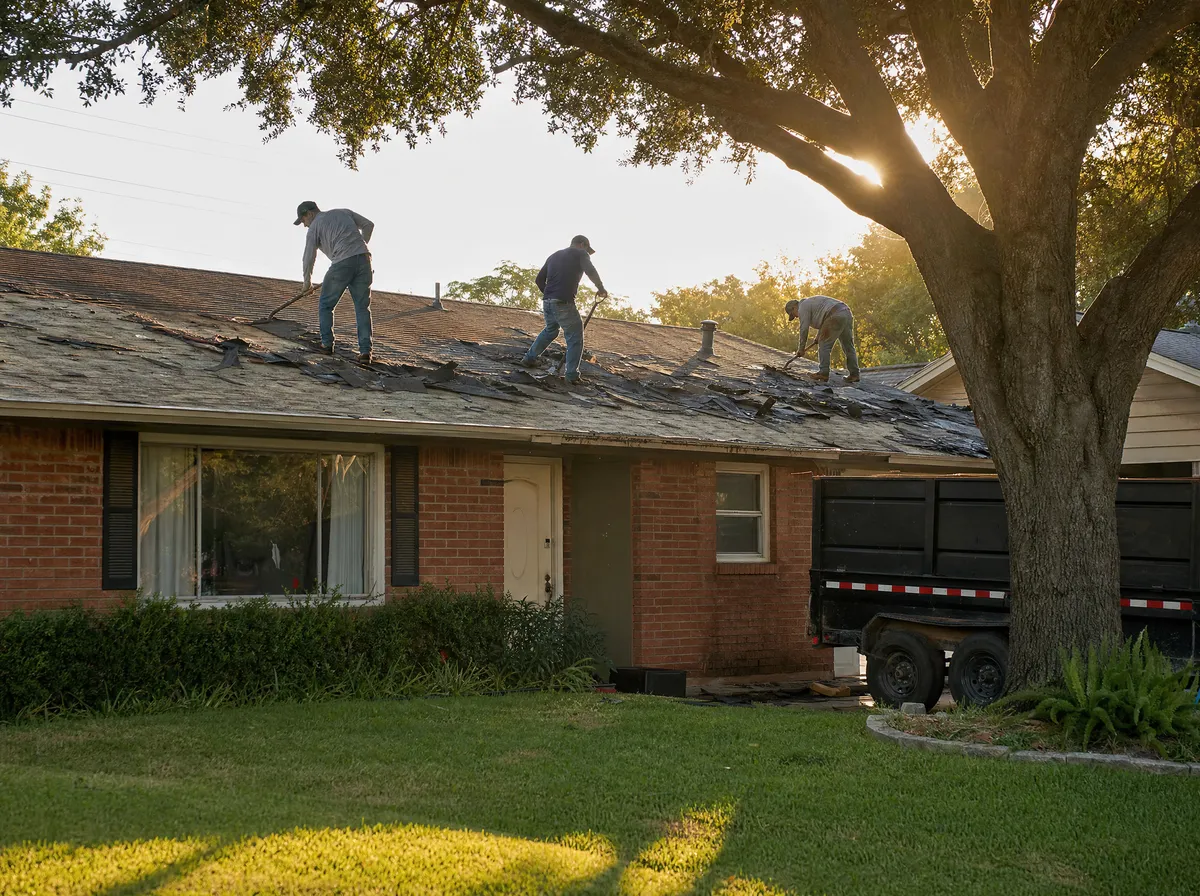
Most roofs in Dallas-Fort Worth are replaced in one day. On a 1,500 to 2,200 square foot single-story, the crew starts tear-off at 7 a.m., has the deck dried in by lunch, and is driving the ridge cap by late afternoon. A 2,200 to 3,500 square foot two-story is a two-day job. Anything over 3,500 square feet, or a roof with three or more valleys and a couple of chimneys, runs three days. The variable that blows those numbers up is not the size of the house. It is the weather, the pitch, and what the tear-off finds underneath.
Here is the whole day, hour by hour, and then the cases where it stretches.
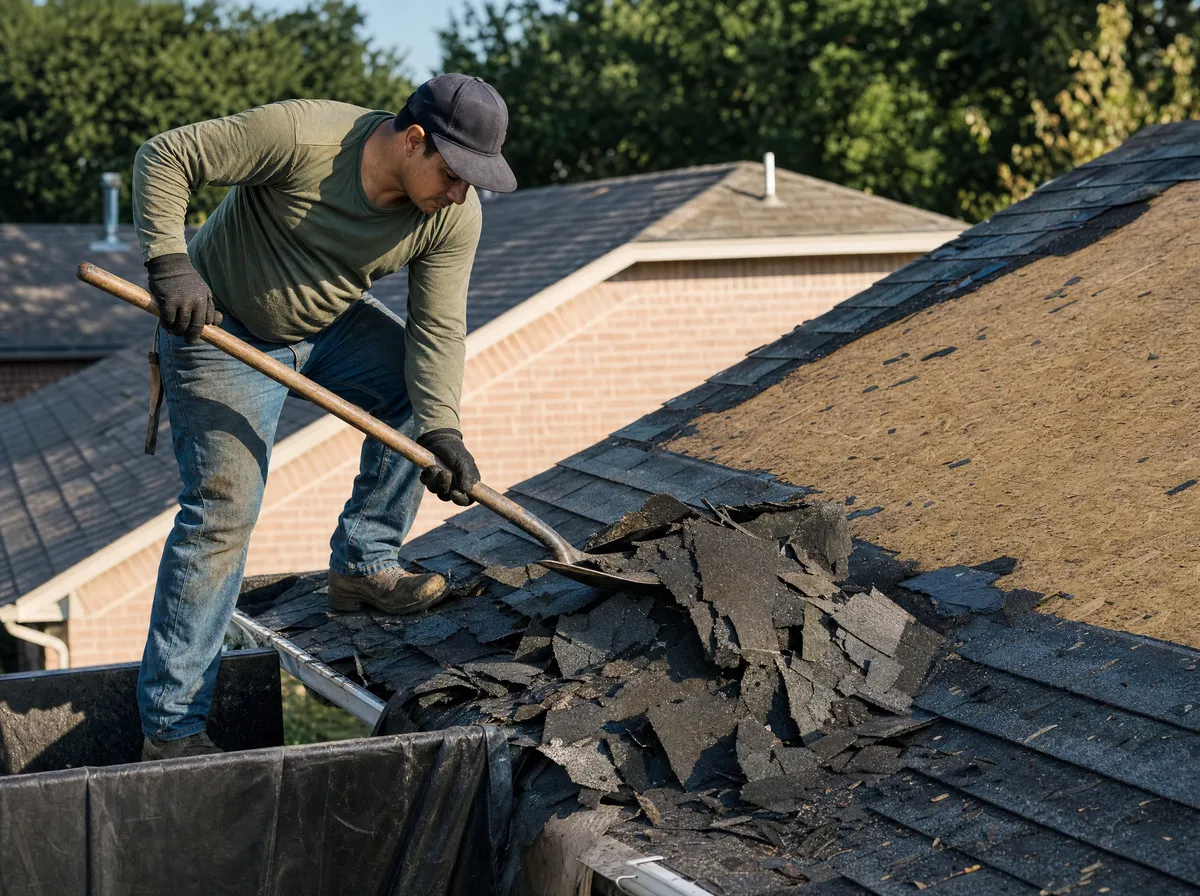 Tear-off on a single-story. This whole slope is bare deck within about ninety minutes of the first shovel.
tear-off day, hour by hour.
The evening before. Materials land in the driveway or get boomed onto the roof. Shingles, underlayment, ice and water shield, drip edge, vents, and the dump trailer. Cars come out of the garage tonight, not in the morning, because the trailer blocks the driveway from about 6:45 a.m.
7:00 a.m., tear-off. The loudest ninety minutes of the project. Old shingles, felt, and nails come off in sections, front slope first if it faces the street, so the house never looks half done from the curb for long. On a two-layer roof this takes closer to two hours and the trailer fills faster.
8:30 to 10:00, decking. This is where the schedule is actually decided. Every sheet gets walked. Soft, delaminated, or split OSB and any plank with gaps wider than code allows gets swapped at the per-sheet rate on the contract. A 1990s Plano house usually needs three to seven sheets. A 1960s Lakewood house on 1x6 plank can need a lot more, and that is the difference between a one-day and a two-day finish.
10:00 to noon, dry-in. New drip edge on the eaves. Ice and water shield in every valley, around every penetration, and up from the eaves. Synthetic underlayment across the whole deck. At this point the house is weather-tight even if nothing else happened today, which is the whole point of doing it before lunch.
Noon to 4:30, shingles and details. Starter course, field shingles, step flashing at every wall, counter flashing at the chimney, new pipe boots, vents, and the ridge vent cut and installed. On a single-story the ridge cap goes on around four.
4:30 to 5:30, cleanup and walk. Gutters cleaned out, a triple pass with the magnetic sweeper across the driveway, lawn, and beds, and a walk of the roof and the yard before the trailer leaves.
A roof that is dried in by lunch cannot leak that night. Everything about how we sequence the day is built around that one sentence.
why two-story and steep roofs get a second day.
The same square footage takes longer on a two-story because every bundle and every sheet of decking is going up a taller ladder or a longer boom, and every step is slower on a steeper slope. Our roof cost calculator adds 5 percent for moderate pitch, 10 for steep, and 15 for the 10/12 and 12/12 roofs common in Keller and Frisco custom builds, and the time cost tracks the price cost almost exactly.
The rule we follow is simple: never leave a deck exposed overnight. So a two-day roof is sequenced as tear-off and full dry-in on day one, shingles and details on day two. If the forecast says a cell arrives at 3 p.m., day one stops at dry-in and the crew comes back. That is not the schedule slipping. That is the schedule working.
Three-day roofs are the big cut-ups: 3,500 square feet and up, multiple chimneys, dead valleys, dormers, skylights. Every one of those details is a place a crew slows down to do it right, and you want them to.
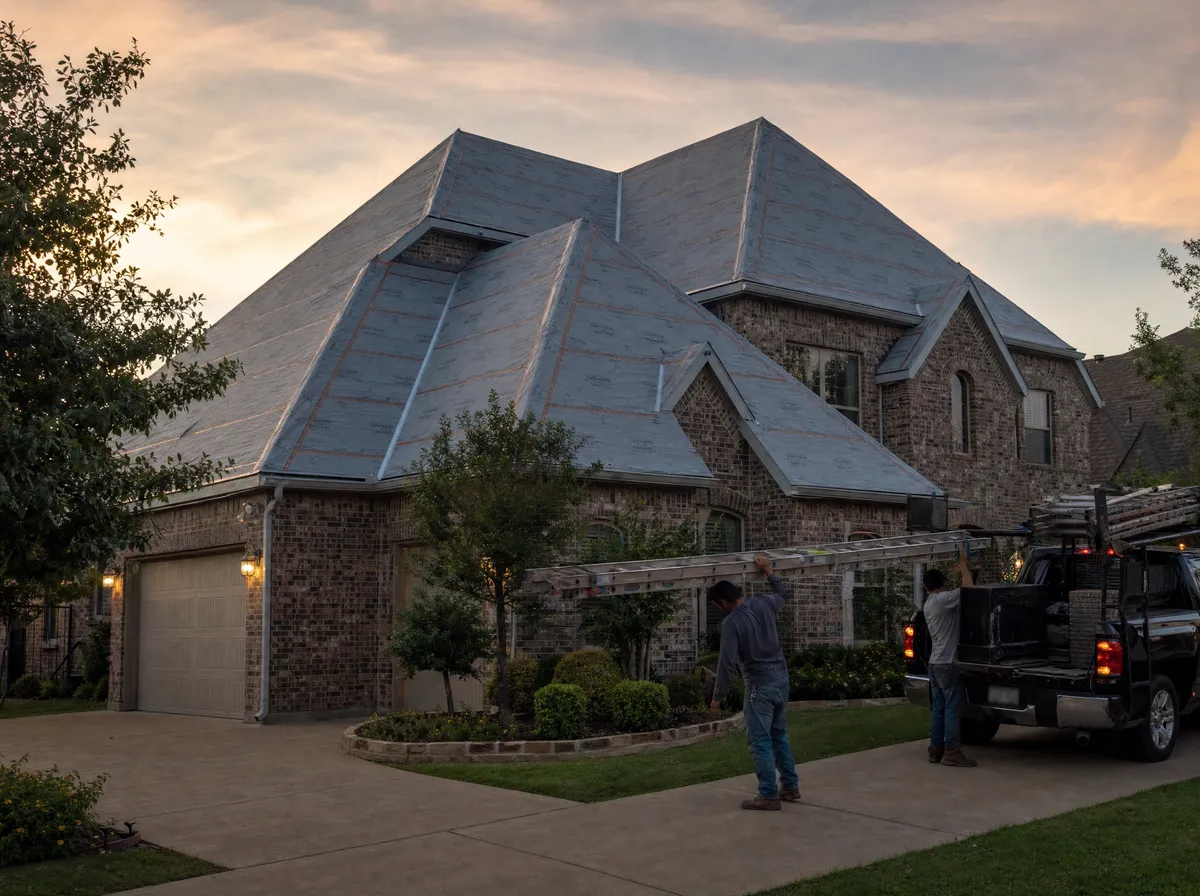 Day one of a two-story ends here: dried in, not shingled. The deck never spends a night exposed.
weather is the only delay you cannot plan around.
DFW averages 46.3 thunderstorm days a year and 37 inches of rain, with May the wettest month at nearly 4.8 inches, according to the National Weather Service’s Fort Worth office. That is why we do not book a tear-off into a window with rain in it, and why a spring replacement sometimes moves 48 hours on short notice.
The wrong way to handle weather is to tear off anyway and throw a blue tarp over the deck. A wet deck under a tarp is how most “new roof leaks” start. The right way costs a day and saves the decking. Winter, for what it is worth, is the most predictable install season in North Texas: fewer storms, cooler crews, and shingles still seal fine in a dry window above freezing.
what actually adds days (and what does not).
Homeowners worry about the wrong things. The house size and the shingle brand barely move the schedule. These do:
| Factor | Adds | Why |
|---|---|---|
| Rain inside the install window | 1 to 3 days | Tear-off is held; a dried-in roof waits for the next dry day |
| Pitch over 8/12 | Half a day to a day | Harness work, slower footing, more waste to manage |
| Plank decking with rot | Half a day or more | Sheets replaced one at a time before dry-in |
| Multiple chimneys, skylights, dormers | Half a day | Each detail is flashed by hand |
| HOA architectural approval | 5 to 10 business days before the crew is booked | Marshall Ridge and similar communities require submittals before materials are ordered |
| Designer or Class 4 shingles | Lead time before install, not install time | Some profiles are ordered, not stocked |
| Two layers of old shingles | 1 to 2 hours | Twice the tear-off, twice the trailer trips |
Things that do not add time: the color you pick, whether you are home, and the permit. The permit is pulled before the crew is scheduled and inspected after, and in most DFW cities the inspector comes within a few business days of the finish.
The Texas Department of Insurance tells homeowners to be wary of contractors asking for a large or full down payment before work starts, and to keep every agreement in writing. A written schedule with the dry-in point named belongs in that paperwork too. If a bidder cannot tell you which day you will be dried in, they have not planned the job.
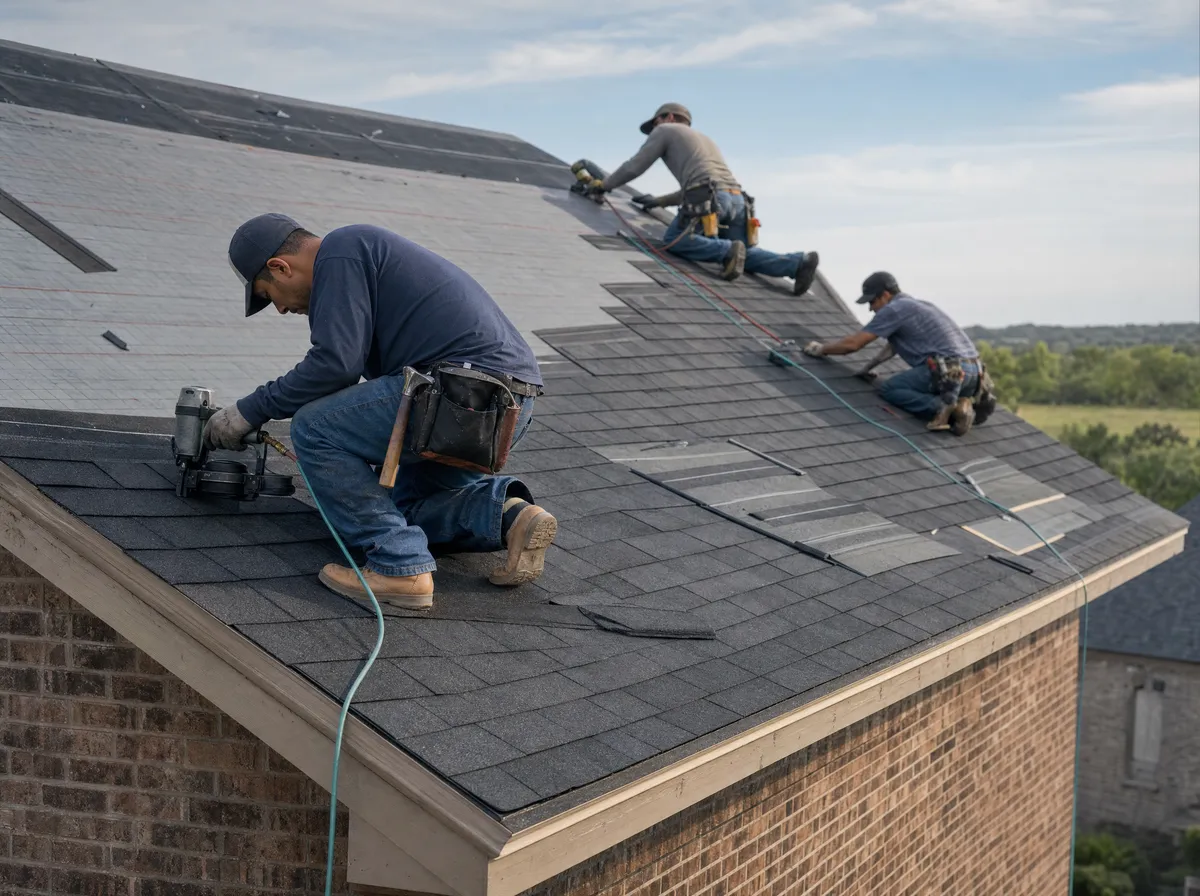 Day two of a two-story: field shingles going on over a deck that was dried in the afternoon before.
metal and tile run longer, and that is normal.
Asphalt is the only roofing material that routinely finishes in a day. Standing seam metal is cut, hemmed, and clipped panel by panel, so a residential standing seam roof typically runs three to five days. Tile is heavier to stage and rides on a more involved underlayment system, so it runs longer still. Neither is slow because something is wrong. They are slow because the details are the product.
InterNACHI’s life expectancy chart puts metal at 40 to 80 years and clay or concrete tile at 100 or more, against 30 for architectural asphalt. Paying for a few extra install days is part of buying the extra decades. If you are weighing that trade, the metal vs. shingle comparison runs the Texas heat and hail math.
how the day runs on a roof raiders job.
Everything above is our own schedule, and we put the dry-in point in writing before you sign. Free inspection first, including the attic, so the decking count is an estimate instead of a surprise. A fixed written scope with the per-sheet decking rate on the contract. Materials staged the evening before. Tear-off at 7, dry-in by lunch, and the crew lead walking the roof before the crew loads out, checking nail patterns, exposure, flashings, and every penetration.
The one thing we ask of you: clear the driveway and garage the night before, move anything fragile off the walls under the roof (the vibration is real), and keep pets inside. You do not need to be home. Most people are glad they were not around for tear-off.
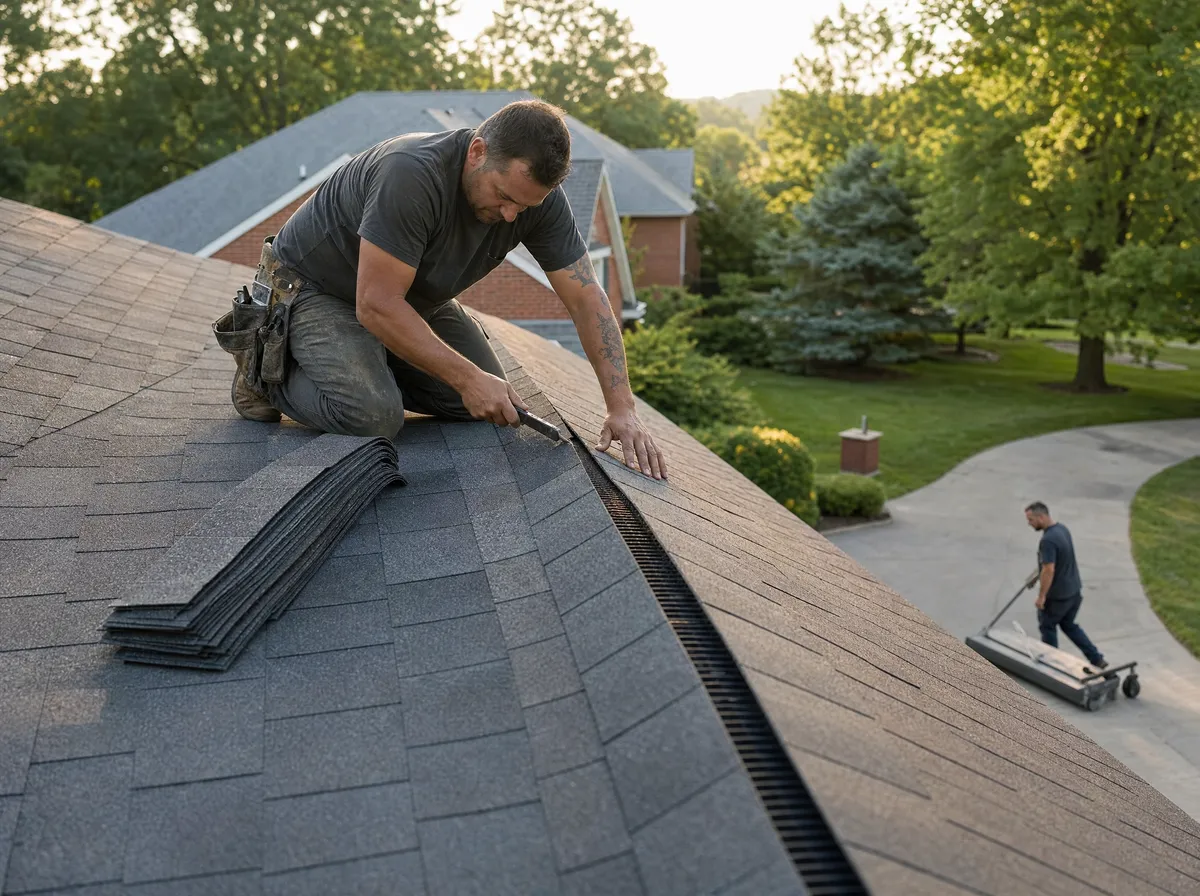 The last hour of the day: ridge vent cut and capped, then the magnet sweep.
One dry day. That is what a single-story roof replacement in DFW actually costs you in time.
If you want to know which case your house is, run the address through the free roof cost calculator for a satellite-measured roof size and pitch, then call (214) 326-3106 and we will put the day, the dry-in point, and the number in writing. For everything else that happens between signing and the final sweep, read what to expect during a roof replacement.
frequently asked questions.
How long does it take to replace a roof? A 1,500 to 2,200 sq ft single-story asphalt roof is a one-day job in DFW: tear-off at 7 a.m., dried in by lunch, ridge cap by late afternoon. A 2,200 to 3,500 sq ft two-story runs two days. Over 3,500 sq ft or heavy cut-ups run three.
Can a roof be replaced in one day? Yes, and most single-story DFW homes are. Two-story, steep, or complex roofs are split across two days on purpose so the deck is never left exposed overnight.
Does the timeline include the permit and inspection? The install does not wait on the permit, which is pulled before scheduling. The inspection happens after the roof is on, usually within a few business days.
What adds days to a roof replacement? Rain in the forecast, pitch over 8/12, multiple chimneys or skylights, plank decking that needs sheets replaced, HOA approval on custom homes, and lead times on designer or Class 4 shingles.
How long does a metal or tile roof replacement take? Standing seam metal typically runs three to five days. Tile runs longer. Asphalt is the only material that routinely finishes in a day.
Do I need to be home during the roof replacement? No. Be reachable by phone and clear the driveway and garage. The crew does not need access inside.