Roofing in Garland, TX, Hail Repair and Insurance Claims
20 minutes from our Plano HQ. Same ShingleMaster certified crews, same insurance claim documentation, same family-owned standard you would get if our office was on your street.


Garland sits about 20 minutes southeast of our Plano HQ on Legacy Drive, wedged between the President George Bush Turnpike on the north and the Lake Ray Hubbard shoreline on the east. It is one of the largest cities in Dallas County and ranks among the dozen biggest in Texas, and its 57 square miles cover three distinct hail-corridor zones: the Firewheel master-planned area off Highway 78, the Oaks of Garland and Club Hill custom-home pockets along Centerville Road, and the Lake Ray Hubbard corridor running east of Bass Pro Drive. The eastern half of Dallas County’s hail belt cuts straight through these neighborhoods, which is why our roofing garland tx crews ran back-to-back inspections here through the 2024 spring storm season. Garland’s housing stock is older and more varied than Frisco or Prosper, so the documentation work matters more here than almost anywhere else we run. Our ShingleMaster crews cover Garland to the same standard we hold inside Plano, and we concentrate most of our routes through Firewheel, Oaks of Garland, and the Buckingham Road corridor. If your shingles took a hit, we can be on your roof the same day you call.
garland sits at the eastern edge of dallas county.
Garland is one of the largest cities in Dallas County, ranks near the top dozen in Texas, and is the only major Dallas County suburb with a working freight rail line cutting through its industrial core off Forest Lane. The city covers 57 square miles, runs from Buckingham Road on the south up to the Plano border at Campbell Road, and stretches east all the way to the Lake Ray Hubbard shoreline. Population sits right around 250,000. The arterial network that matters for storm dispatch is George Bush Turnpike across the top, Highway 78 cutting northeast toward Wylie and Lavon, Interstate 635 grazing the southwest corner, and Centerville Road running north-south through the residential heart of the city. Nearly every hail-claim address we work in Garland sits within a few minutes of one of those four roads.
The housing and economic mix here is more varied than almost any other DFW suburb we run. You have 1960s and 1970s ranch homes along Walnut Street and Centerville, 1980s and 1990s tract subdivisions through Camelot and Sunrise Hill, late-1990s and 2000s master-planned product in Firewheel, custom builds in Oaks of Garland and Club Hill Estates, and a growing concentration of larger lake-adjacent homes on the Ray Hubbard corridor. A single Garland storm cell can chew up a 1972 ranch with original 3-tab and a 2018 custom home with Presidential TL shake in the same afternoon, and both jobs route through the same building department. Because of that spread, our crews carry stock for both ends of the market.
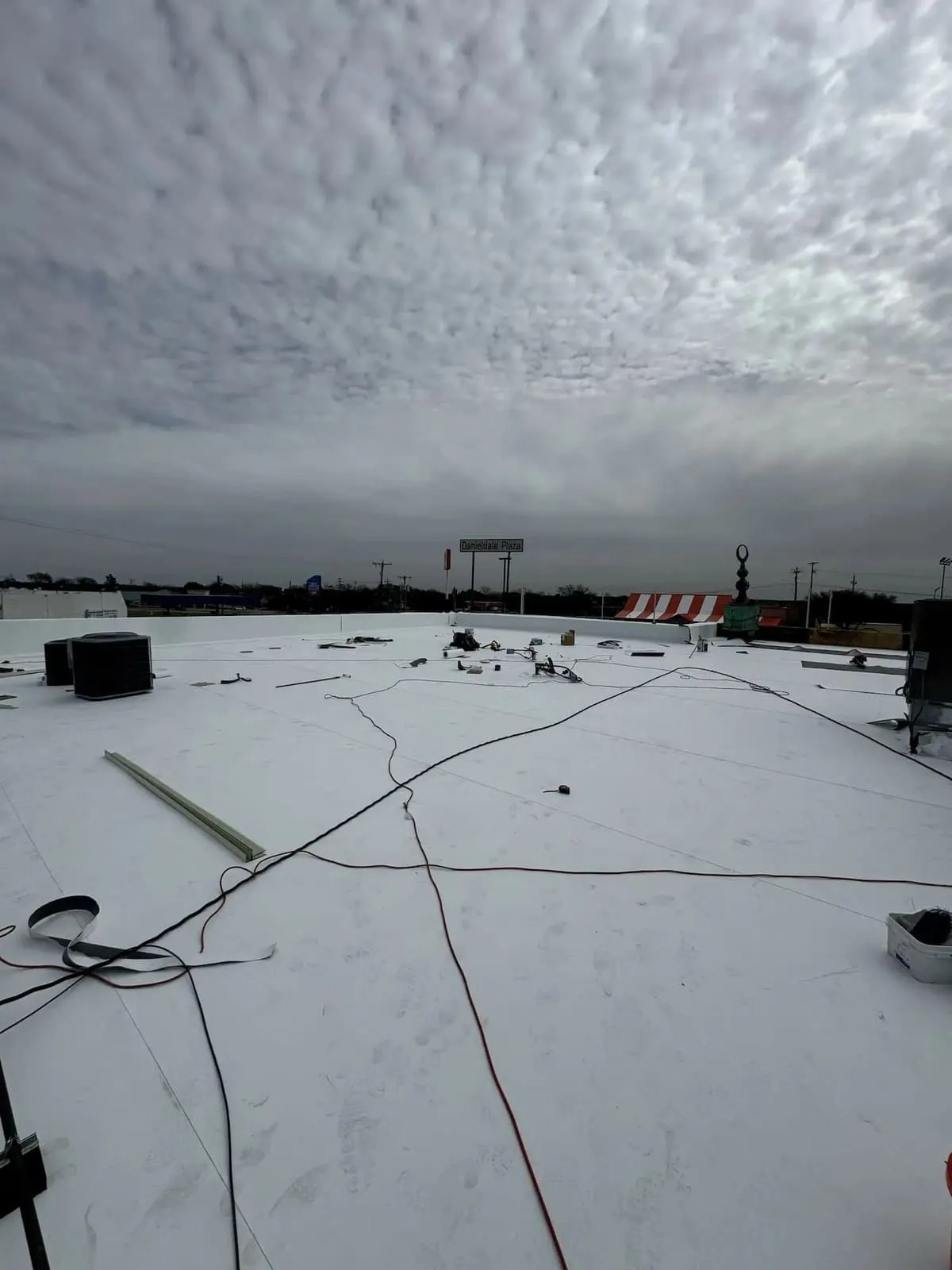
Three things separate Garland from neighboring Wylie and Mesquite and change how we scope a job. HOA scrutiny is the first: Garland’s associations run looser than Plano’s and Frisco’s but tighter than Mesquite’s, so color-match submittal is required in roughly half the neighborhoods we work. The age of the housing is the second: older roofs mean more code-upgrade supplements come back from adjusters, especially on decking nail patterns and drip edge that were not required when the original roofs went on. The commercial mix is the third: Garland’s spine along Forest Lane and the PGBT frontage carries a larger share of low-slope TPO and built-up roofs than its suburb peers, so our commercial roofing crew runs Garland routes most weeks of the year.
garland roofing corridors and hail patterns.
Storm dispatch in Garland keys off a handful of specific arterials and intersections. NOAA’s hail-swath data going back to 2018 shows the eastern half of Dallas County getting hit harder and more often than the western half, and Garland’s geography puts it right in the path of cells coming down from Collin County and tracking southeast toward Rockwall. Here is where our trucks tend to land.
- Highway 78 from Garland Road to the Wylie border. This northeast-running arterial catches most storm cells that develop up toward Sherman and track down through Lavon. The signals at Centerville, Brand Road, and Bobtown sit on a stretch that files a heavy share of the city’s claims. When a cell drops golf-ball hail along here, we document every slope on every home the same way, whether the house is in Garland or in Plano.
- President George Bush Turnpike at Jupiter Road and at Garland Avenue. The PGBT’s elevation and east-west orientation make the frontage neighborhoods on its south side a regular target. Much of the commercial flat-roof work we pick up along this corridor traces back to spring wind and hail events rather than a single named storm.
- Centerville Road from Buckingham to Walnut Street. The central north-south corridor through Garland’s older housing stock. The signals at Buckingham, Kingsley, and Walnut all sit in neighborhoods where the original 1970s and 1980s 3-tab shingles are well past life, so storm filings here tend to bundle hail damage with deferred deterioration the adjuster has to separate out.
- Buckingham Road from Jupiter to the Mesquite line. The east-west corridor across the city’s south edge. The mid-century ranch homes set back from this road carry low-pitch roofs that show hail bruising clearly, which makes documentation cleaner but also makes the adjuster’s first-pass scope tighter.
- Lake Ray Hubbard shoreline from Bass Pro Drive south to the I-30 bridge. Larger custom and lake-adjacent homes here usually carry designer shingle profiles, and the open water exposure means the wind component of every storm hits harder. We see a steady stream of storm damage roof repair work along this corridor, and the May 28 2024 wind event that the National Weather Service clocked at 65 to 95 mph hit this exposure especially hard.
- Firewheel Parkway from Highway 78 to the Sachse border. The Firewheel master-planned neighborhood sits on the highest residential elevation in the city, which is why it draws hits on cells that miss the rest of Garland. Most of our Firewheel work routes through the signals at Firewheel Parkway and at Brand Road.
- Forest Lane between Shiloh Road and Jupiter. Garland’s industrial and commercial spine. The flat roofs along this stretch take wind damage more often than hail, but spring 2024 brought both, and we ran TPO and TPO roofing work here well into the following months.
If you are inside that grid and you saw hail in your yard, your roof needs eyes on it before the carrier’s clock starts running.
garland housing stock and what carriers expect.
Garland’s housing stock skews older than newer DFW markets like Prosper or Celina, and the decade ranges shape every scope we write. The Buckingham Road and Walnut Street ranch homes were mostly built between 1960 and 1980, which means their original roof systems were 3-tab strip shingles with no ridge venting and minimal drip edge. Most of those roofs have been replaced twice by now, often with first-generation architectural shingles that are themselves hitting end of life. The Camelot, Sunrise Hill, and Eastern Hills subdivisions went up between roughly 1980 and the mid-1990s, which puts them on early dimensional shingles that the manufacturers were still calibrating, and we see plenty of granular loss and seam failure on those roofs even before the hail hits. Firewheel, Club Hill Estates, and the newer Oaks of Garland phases came online from the late 1990s through the 2010s, the era where designer profiles like CertainTeed Landmark Premium and Presidential start showing up in the HOA-approved options.
HOA shingle-color rules apply across most of Firewheel, Oaks of Garland, Club Hill Estates, and the Lake Ray Hubbard custom-home pockets. Older subdivisions like Camelot, Sunrise Hill, and the Buckingham corridor are largely HOA-free, which gives the homeowner more freedom on color and profile but also means there is no shared maintenance schedule pushing roofs to get replaced before they fail. When we install shingle roofing in HOA neighborhoods, we pull the color packet before we submit anything to the carrier, because rebuilding to an unapproved color triggers a teardown the homeowner pays for out of pocket.
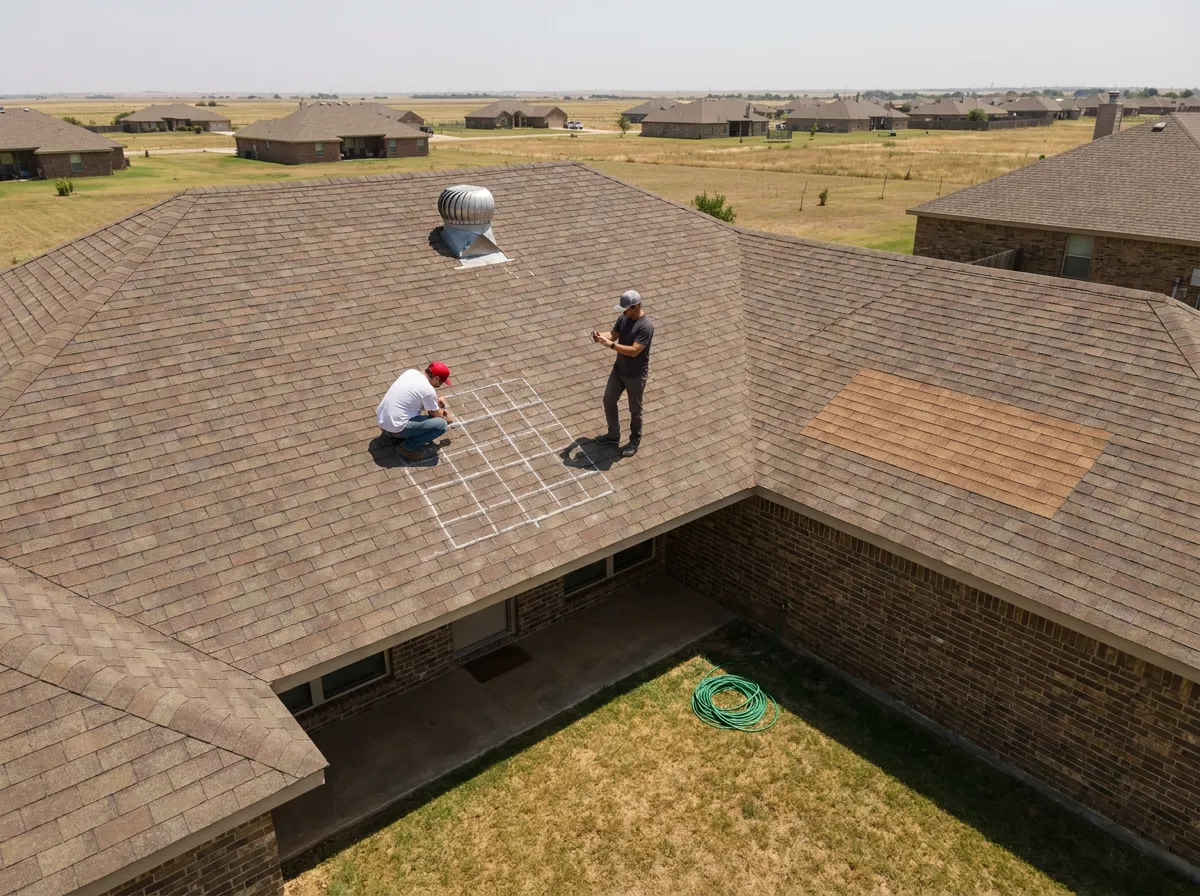
What carriers expect from a Garland claim has tightened over the last two years, and Garland’s old housing stock is exactly why. Texas Insurance Code 28 TAC 21.1006, the Texas 25 percent rule, lets a policyholder demand a full replacement when more than a quarter of a slope is damaged, and it shows up on most of the Garland supplements we file. Carriers know the rule, and they know a 1972 Centerville-corridor roof is old enough that proving which slopes clear that quarter-slope threshold matters more here than in a newer market. Our scope sheets carry chalk-line counts of impact strikes per square per slope, with photographs at each square, because that documentation is the difference between an ACV first offer and an RCV final settlement. We will say plainly what we will not do: we never negotiate your claim on your behalf, which Texas Insurance Code 4102.163 reserves for licensed public adjusters. What we do is inspect, document, and meet your adjuster on the roof with the evidence already in hand.
how a garland hail claim actually works.
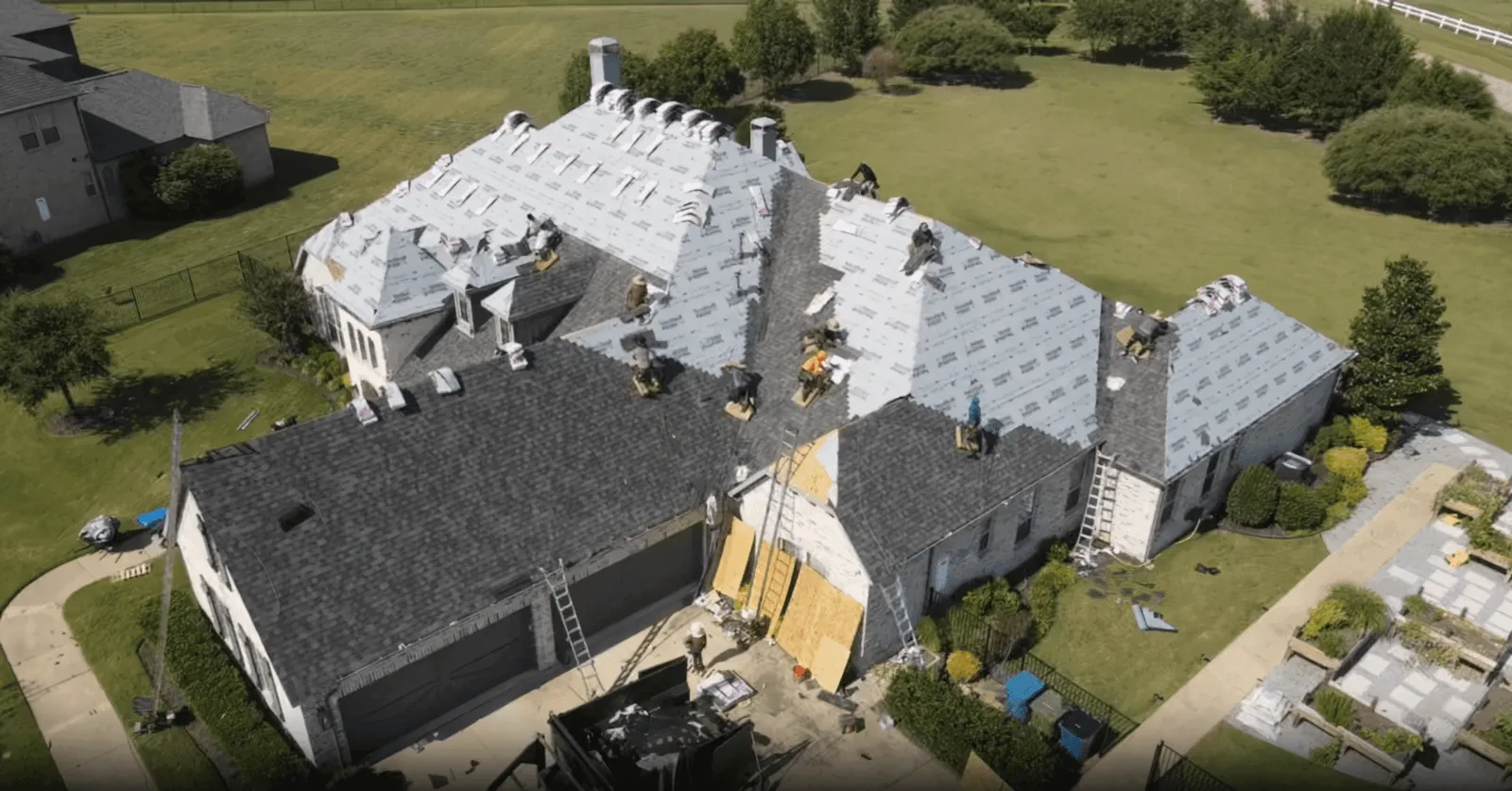
Most homeowners lose money on a hail claim because they call the carrier before they call a roofer. Here is the order we run with every Garland family, and the local twist on each step.
- Pin the storm date first. NOAA’s hail-swath and storm-events data for your address tells the carrier which cell, what hail size, and what time of day. Filing under the wrong date is the single most common reason a Garland claim gets denied or short-scoped, and once the carrier locks the date in, fixing it is hard. North Texas hail season runs March through June, so if you are not certain which spring storm hit you, look your address up in the NOAA Storm Events Database before you call the carrier, and we will help you read it.
- Get a free inspection before you call the carrier. This order matters more in Garland than in newer suburbs because of the housing-stock age. If we get on your 1978 Centerville-corridor roof and find functional hail damage, we will tell you. If we find storm-cosmetic damage sitting on top of pre-existing wear, we will tell you that too, before you file and take the premium hit. Our roof inspection is free, and you get a written report whether you file or not.
- Do not sign with door-knockers. The post-storm flyer pattern in Garland runs heavy through Firewheel, Oaks of Garland, and along Buckingham Road. Out-of-state crews with magnetic truck signs walk these neighborhoods a few days after a named storm and push you to sign a contract that assigns your claim proceeds to them. Read the back of the page. If you see an Assignment of Benefits clause, you have handed your claim over. We do not work that way, and we will walk you through the paperwork before you sign anything.
- We meet your adjuster on the roof. When the carrier sends an adjuster to your Garland address, we show up with the scope sheet, the photos, and the code-required line items already documented. Dallas County adjusters work this market every week and recognize a clean scope. The first offer often comes back as ACV and short of a full replacement, and that is when we file a hail damage roof repair supplement for the code items the first scope missed.
After supplement and approval, the recoverable cash value, the gap between ACV and RCV, gets released by the carrier once we hand over the final invoice and the city permit close-out. That last piece is the part most door-knockers never explain, and it is why we walk Garland homeowners through the timing before we ever swing a hammer.
garland building department, permits, and code.
Garland handles re-roof permits through its Development and Permitting Center, on the first floor of the Main Street Municipal Building at 800 Main Street, Garland TX 75040, near the corner of Main and Glenbrook. City Hall and the broader Municipal Center sit a few blocks over at 200 N 5th Street, but the building counter you actually pull a roofing permit from is the Main Street office, open Monday through Friday, 8 a.m. to 5 p.m., with submittals taken until 4. We pull every Garland permit ourselves before tear-off. Homeowners who try to skip it get caught at resale, when the title company runs the permit history and finds an unpermitted roof on a major exterior component.
Garland requires a permit on any re-roof valued at 2,000 dollars or more, and the contractor has to be registered with the city with current insurance naming Garland as certificate holder, which we keep on file. Re-roof permits in Garland move fast, often same-day or inside a couple of business days for a standard tear-off, though after a named storm the building department’s volume spikes and turnaround stretches out. We submit your permit packet the same day we sign the contract so your job lands in the queue early. Final inspection happens at job close, and Garland inspectors are known to be thorough on decking nail patterns and drip-edge installation, so our crews build to the inspector’s standard from the first square.
On code, Garland still runs on the 2015 International Residential Code, not a newer edition, and that detail matters when we write a supplement. The IRC roof-coverings chapter governs shingle nailing patterns, decking replacement triggers, drip-edge requirements, and ice-and-water-shield placement at penetrations, and Garland caps a roof at two shingle layers before full removal is required. When we cite a code-required line item on your supplement, we tie it to Garland’s adopted 2015 code, not to a generic Texas standard. That precision is part of why supplements out of our shop get approved more often than supplements written by crews who do not know which edition the city is actually enforcing.
garland hoa rules and approved shingle profiles.
Garland’s HOA landscape splits roughly in half. Firewheel, Oaks of Garland, Club Hill Estates, and most of the Lake Ray Hubbard custom-home pockets carry active associations with shingle-color and profile rules. The older neighborhoods, including the Buckingham, Walnut, and Centerville-corridor ranch homes and most of Camelot and Sunrise Hill, are largely HOA-free. When we work an HOA neighborhood, we pull the architectural-control packet from the management company before we order shingles, because rebuilding to an unapproved color triggers a forced teardown the homeowner pays for out of pocket. Roof Raiders handles the HOA submittal packet on every job, no charge.
The CertainTeed color profiles approved most often across Garland HOAs are Weathered Wood, Driftwood, Pewter Gray, and Moire Black. Firewheel and Oaks of Garland tend to approve a slightly broader range, including Burnt Sienna and Heather Blend for the larger custom homes. The Lake Ray Hubbard waterfront-adjacent neighborhoods sometimes allow Presidential TL Shake or Grand Manor in Black Walnut or Charcoal Black for the higher-end designer installs. We carry samples of all of these in the truck so you can see them in your own driveway against your brick and trim before you commit. The HOA paperwork goes in alongside the city permit application, and we do not tear off until both approvals are back in writing.
what garland neighborhoods we work most.
Roof Raiders runs Garland routes every week of the year, and the addresses we touch most often cluster into a handful of neighborhoods. Here is where the trucks land.
- Firewheel. Our highest-volume Garland neighborhood, mostly Class 4 impact-rated upgrades on late-1990s through 2010s custom builds. Tight HOA color rules, steeper pitches, and bigger square footage than the rest of the city.
- Oaks of Garland. Steep-pitch architectural and designer replacements with HOA color matching. The 1990s and early 2000s housing here often needs decking-nail-pattern upgrades to meet current code.
- Lake Ray Hubbard corridor. Designer shingle installs such as Grand Manor and Presidential TL Shake on larger waterfront-adjacent homes. Open water exposure means wind ratings matter as much as impact ratings here.
- Club Hill Estates. Custom-home pocket east of Firewheel with HOA-approved color packets and high-pitch designer roof systems.
- Camelot. 1980s and early 1990s tract subdivision in southwest Garland along Buckingham. Most original architectural shingles are end-of-life, which means full replacements rather than partial repairs.
- Sunrise Hill. Similar age and profile to Camelot, located closer to the Centerville corridor.
- Eastern Hills and Duck Creek. Older established neighborhoods inside the central residential belt, with 1970s and 1980s ranch homes that frequently bundle hail damage with deferred maintenance.
- Buckingham, Walnut, and Centerville Road ranch homes. The mid-century housing stock where we install the most Class 4 impact-rated systems, which often unlock 20 to 35 percent premium reductions on the homeowner’s wind and hail rider.
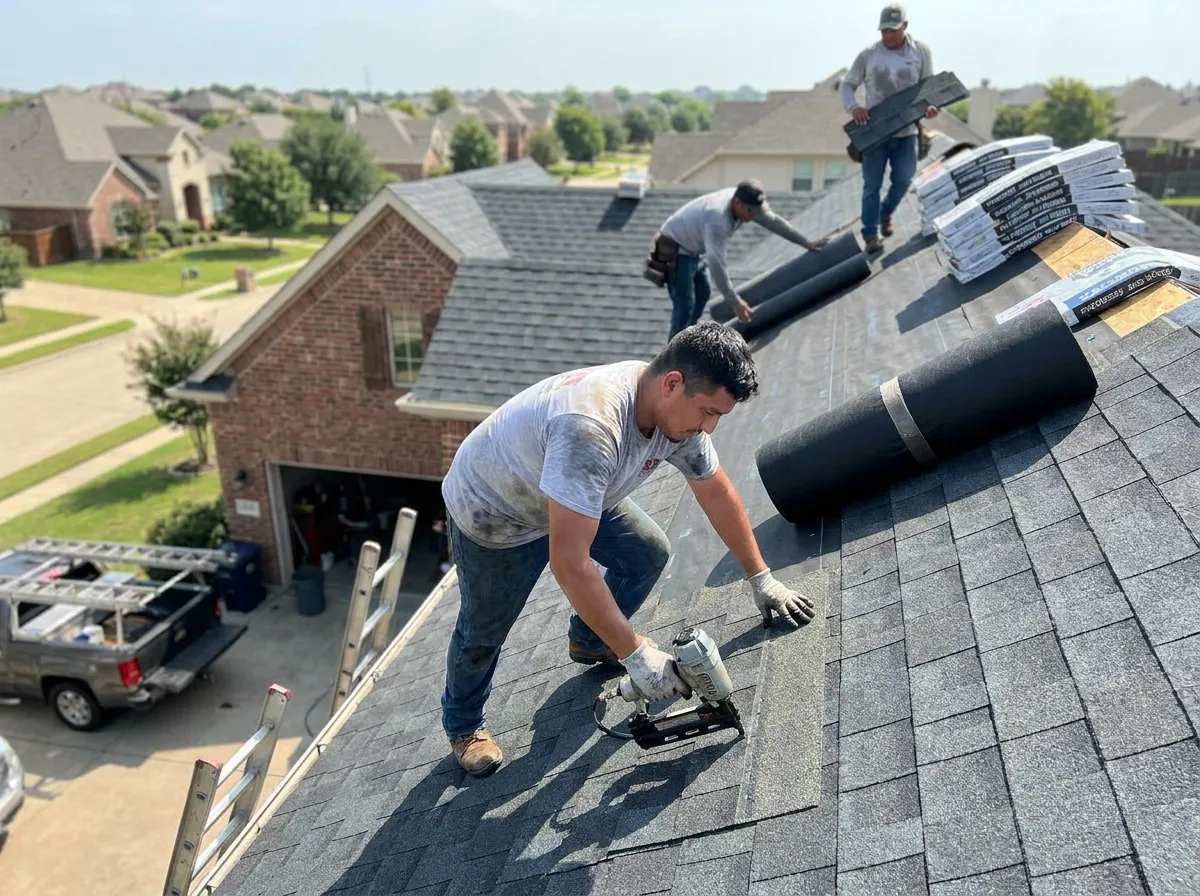
If you are not sure which crew is closest, call (214) 326-3106 and we will route from Plano or our nearest active Garland job.
garland landmarks.
Where Garland matters file, treat, and travel. These are the three pins we point new homeowners toward when we talk about how this city’s roofing market actually moves.
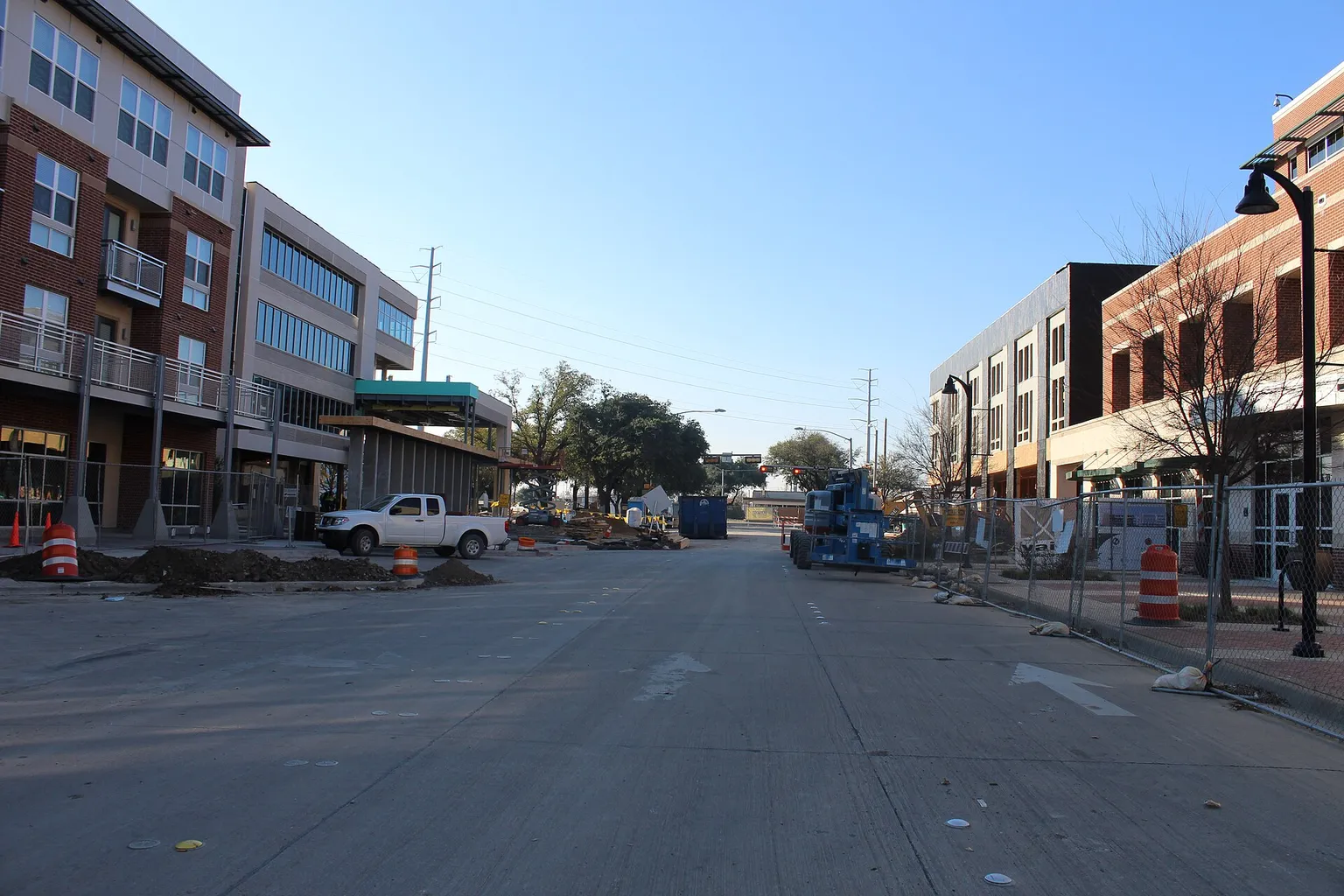 Garland City Hall at 200 N 5th Street, where roofing permits get pulled and HOA-overlap inspections originate.
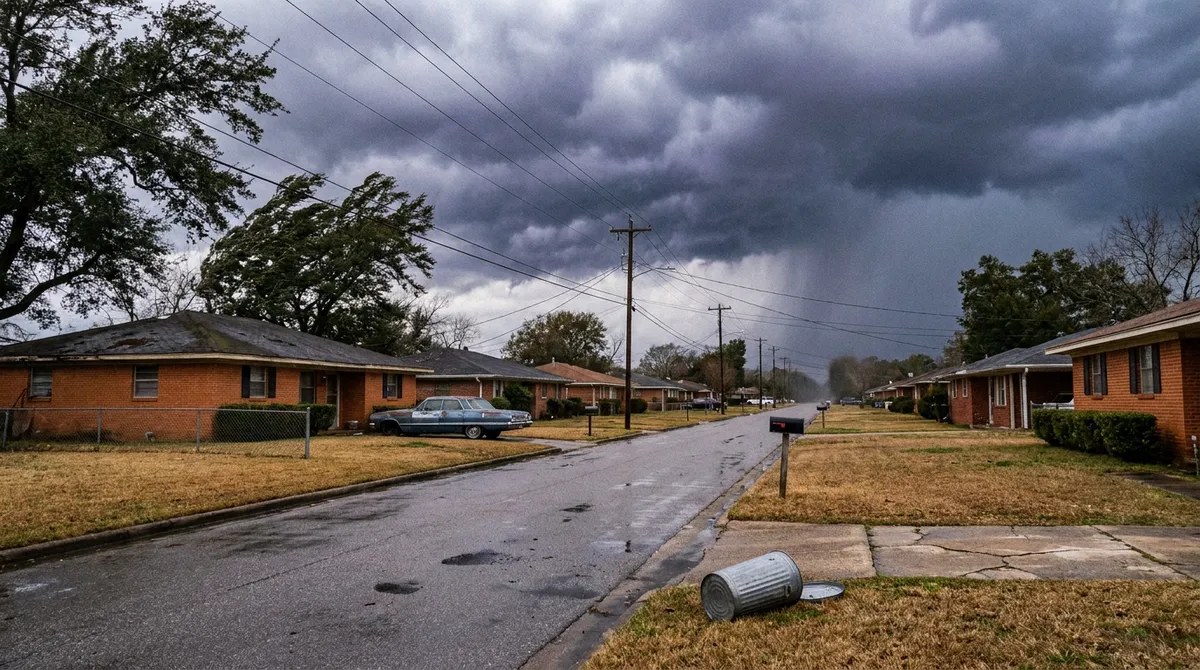 The PGBT and Highway 78 interchange, where spring hail cells dropping out of Collin County funnel their heaviest stones.
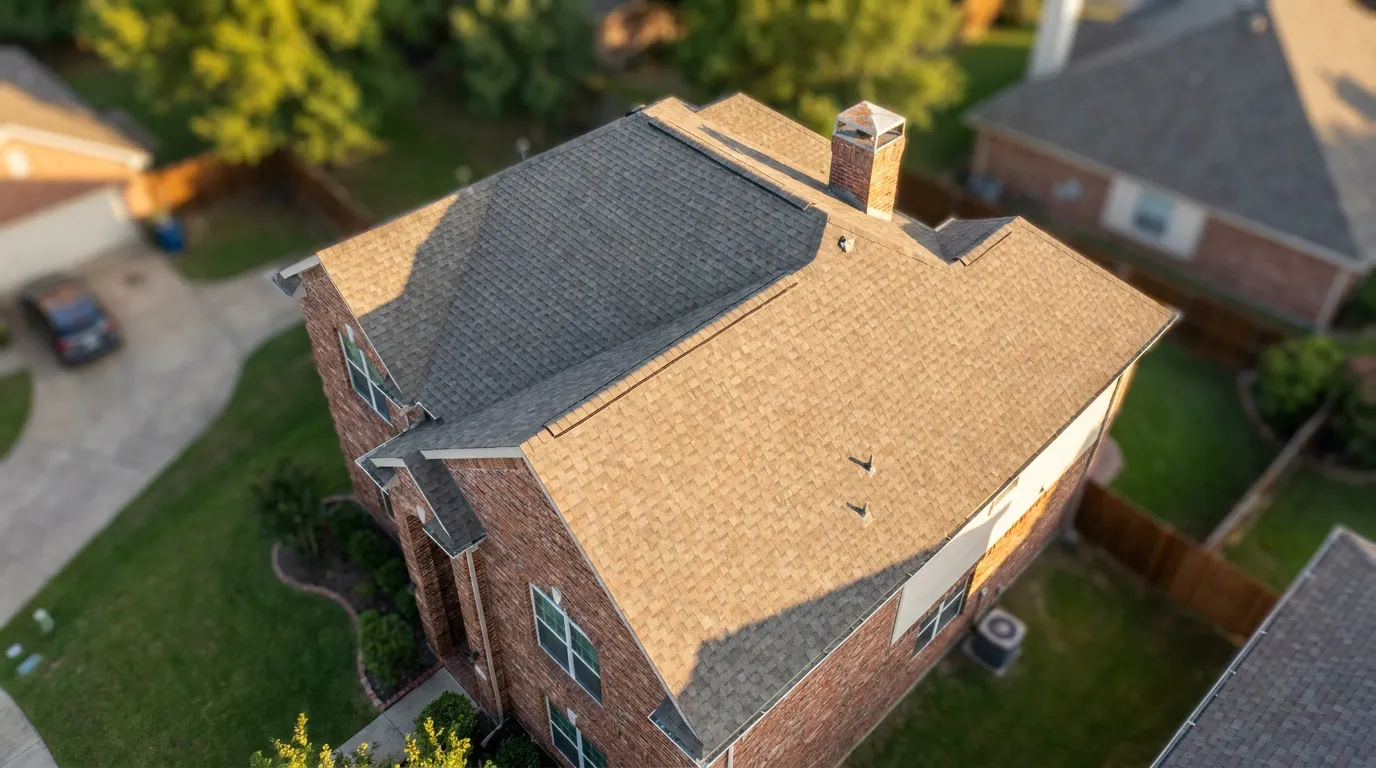 Firewheel from above, the highest-elevation residential zone on Garland’s northeast edge.
who you are actually hiring.
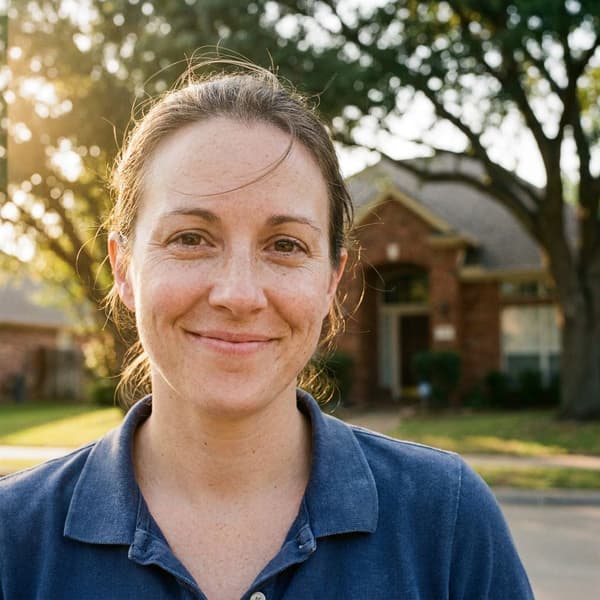
Hire us and you are hiring a family business, not a franchise. Sara Bannat was laid off at 40 weeks pregnant in 2022, and rather than chase another corporate job, she and her husband Mahmoud started Roof Raiders to treat Dallas County families the way they wished a contractor had treated them. Mahmoud runs the crews and answers the phone himself most days. Sara runs operations and the warranty paperwork. The work is backed by a CertainTeed ShingleMaster credential that puts us in the top 3 percent of roofers nationally, a Goldman Sachs 10,000 Small Businesses Preferred Vendor designation, OSHA compliance, and a 5.0-star Google rating. In a market like Garland, where half the roofs predate the codes they now have to meet, that documentation discipline is the whole job.
The crew chiefs have been with us since the first year, and our hail damage roof repair and roof replacement lines route through the same dispatcher whether you are in Firewheel or out on Buckingham. Meet Mahmoud and Sara.

Ready for a free inspection in Garland? Call (214) 326-3106 or schedule online. Our 24/7 storm line is live every night of the year, and if your roof is open to the sky after a Highway 78 or Lake Ray Hubbard cell rolls through, we will tarp it before we leave. We also run crews in nearby Richardson, Rowlett, Mesquite, Rockwall, and Dallas, so dispatch stays fast. If you want to ballpark a replacement before you call, run the numbers through our free roof cost calculator, and if you would rather spread the payment out, ask about our in-house payment plans on qualified projects.
Garland hail history
Garland sits in the eastern half of the Dallas County hail belt, where cells dropping south out of Collin County track over the Firewheel ridge and the Lake Ray Hubbard shoreline. North Texas hail season runs March through June, and the 2023 and 2024 spring seasons both put Garland under repeated wind and hail. The May 28 2024 event was primarily a straight-line wind storm, with the National Weather Service measuring gusts of 65 to 95 mph across the city. Confirm your own date of loss against the NOAA Storm Events Database before you file.
Neighborhoods we serve in Garland
- Firewheel
- Oaks of Garland
- Camelot
- Sunrise Hill
- Lake Ray Hubbard corridor
- Club Hill Estates
- Eastern Hills
- Duck Creek
Garland on the map
What We Do
Roof replacement, storm damage, and insurance claims, handled end-to-end.
DFW homes take a beating from hail every spring. Our six service lines cover everything from the first leak call to your final depreciation payment.

Hail Damage Roof Repair
Full insurance claim assistance from inspection through final depreciation payment. CertainTeed materials, ShingleMaster install.
Learn more

Full Roof Replacement
Full tear-off to bare deck with CertainTeed Landmark through Class 4 impact systems and the registered 5-Star warranty. In house payment plans on qualified projects.
Learn more

Emergency Roof Repair
Active leak? We answer 24/7 and dispatch a tarping crew the same day. Permanent repair scheduled within days.
Learn more

Residential & Commercial Roofing
CertainTeed Landmark, Landmark Pro, Presidential, and full TPO/EPDM commercial systems across DFW.
Learn more
Insurance Claim Assistance
We meet your adjuster on the roof and document full replacement scope with multi-page photo reports.
Learn more

Solar + Multi-Trade
Solar panel detach-attach during roof replacement. Gutters, fencing, siding, and windows from one trusted contractor.
Learn more
52+ 5-Star Google Reviews and Counting
52+ Five-Star
Google Reviews
ShingleMaster
Top 3% of US roofers
Goldman Sachs
10KSB Preferred Vendor
Manjit Kapri
Local Guide·
So easy to work with Sara and Moe. They communicate effectively all the way through and helped me with my insurance process.

Jamie Finley
We've had the opportunity to partner with this roofing company on multiple projects through our flooring and renovation business.
Morgan Phelps
We absolutely love Roof Raiders! Their team is such a joy to work with. They're extremely professional and made the process easy and smooth for us.
Garland homeowners, schedule your free inspection.
Free inspection. No pressure. ShingleMaster certified.