Key takeaways
- In Dallas-Fort Worth a three-tab roof lasts 12 to 15 years, architectural shingles 18 to 22, Class 4 impact shingles 20 to 25, and standing seam metal 40 or more. National charts run 5 to 10 years longer.
- Heat, hail and a 150-degree attic take the difference, and many North Texas roofs are replaced by a storm claim before they wear out.
- Find your roof's age from the seller's disclosure, your city's permit history, or the appraisal district build year, in that order.
- Past 15 years, carriers start pricing the roof at actual cash value. A new Class 4 roof usually earns a windstorm discount.
- What the next roof costs by size and shingle tier is in our Texas roof replacement cost guide.
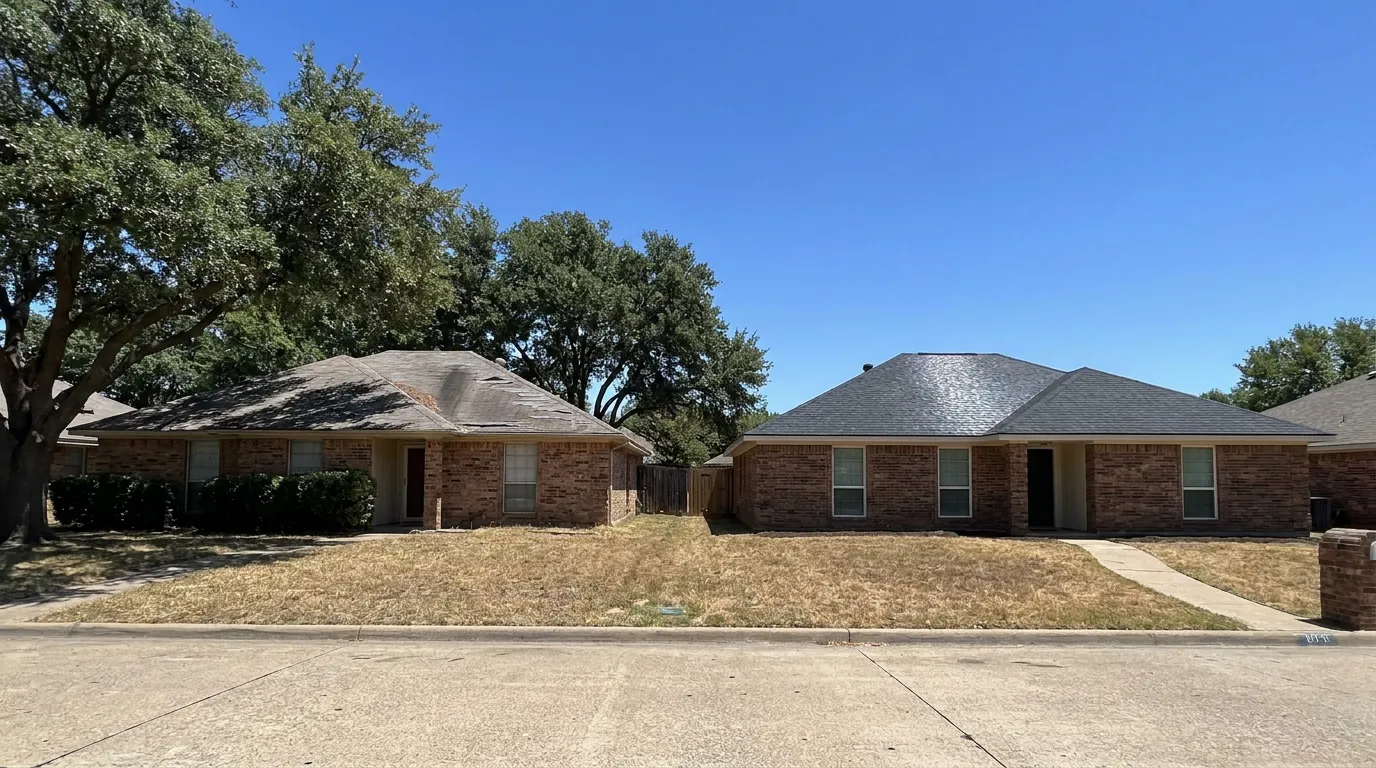
The short answer for Dallas-Fort Worth: a three-tab asphalt roof lasts 12 to 15 years, an architectural shingle roof lasts 18 to 22, a Class 4 impact-rated roof lasts 20 to 25, and a standing seam metal roof lasts 40 or more. Those numbers are shorter than what you will read on national sites, and the gap is not a rounding error. It is Texas heat, Texas hail, and the fact that a lot of North Texas roofs get replaced by a storm claim long before they wear out.
I’m Mahmoud, co-owner of Roof Raiders with my wife Sara. Since 2022 we have torn off a lot of roofs across Plano, Frisco, Richardson, and Dallas, and the age stamped on the shingle wrapper almost never matches the age we find on the deck. Here is what actually happens.
roof lifespan by material in dfw.
InterNACHI’s life expectancy chart, which home inspectors use nationwide, lists three-tab asphalt shingles at 20 years, architectural shingles at 30 years, metal at 40 to 80 years, and skylights at 10 to 20 years. Those are honest national averages. Here is how they play out on a North Texas roof:
| Roofing material | National chart | What we see in DFW | What ends it early |
|---|---|---|---|
| 3-tab asphalt | 20 years | 12 to 15 years | Heat curling, wind uplift on unsealed tabs, hail |
| Architectural (laminated) asphalt | 30 years | 18 to 22 years | Granule loss from UV, hail bruising, seal strip failure |
| Class 4 impact-rated asphalt | 30 years | 20 to 25 years | Heat aging, though hail damage drops sharply |
| Standing seam metal | 40 to 80 years | 40 plus years | Fastener and sealant maintenance, cosmetic hail denting |
| Clay or concrete tile | 50 plus years | 40 plus years | Cracked tiles from hail, underlayment failure at 20 to 25 years |
| Flat TPO or modified bitumen | 20 to 30 years | 15 to 25 years | Ponding water, seam failure, UV |
Two notes on that table. First, the underlayment under tile and metal is usually the real lifespan limit. A 50-year tile roof on a 25-year underlayment is a 25-year roof. Second, “what ends it early” in Texas is very often hail, not age. Texas led the nation with 902 major hail events in 2025 according to the Insurance Information Institute. Many DFW roofs get replaced through an insurance claim at year eight or twelve because a storm totaled them, and the homeowner never finds out how long the shingle would have lasted.
why texas roofs age faster.
Three reasons, and they compound.
Heat. NWS Fort Worth’s climate normals show DFW averages 20.2 days a year at or above 100 degrees. A dark shingle surface runs far hotter than the air on those days. Asphalt dries out, loses flexibility, and starts shedding granules. Once the granules go, UV reaches the mat and the shingle cracks and curls.
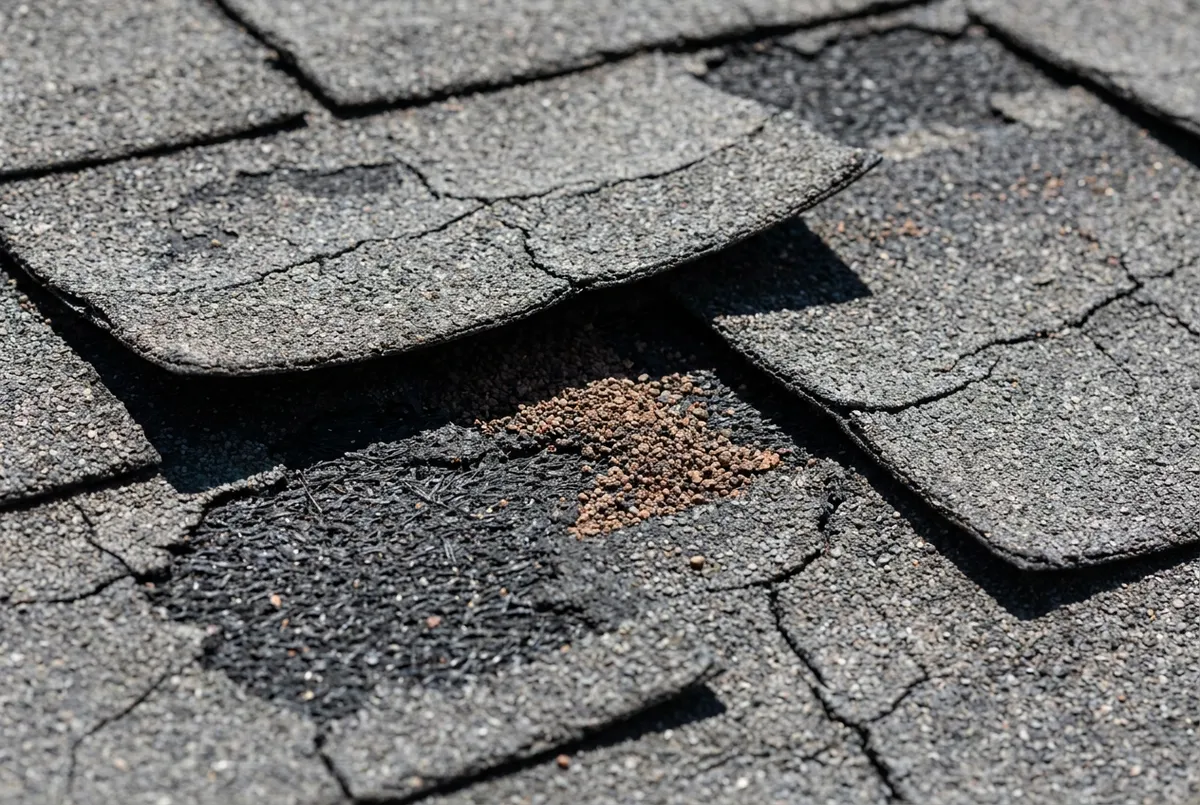
Wind. The seal strip that bonds each shingle to the one below is, per the Insurance Institute for Business and Home Safety, the most important factor in a roof’s wind performance. Heat ages that adhesive. DFW averages 46.3 thunderstorm days a year, and the National Weather Service counts 58 mph gusts as severe. A roof that shrugged those off at year three is lifting at year ten.
Hail. One-inch hail is the severe threshold and it is routine here. Even when a hailstorm does not total a roof, every bruise is a spot where the granules are gone and the mat is exposed. Those spots age at triple speed. A roof that took “cosmetic” hail at year five is not a 20-year roof anymore.
Add a fourth factor that has nothing to do with weather: installation. A shingle rated for 130 mph and installed with four nails and no starter course is not a 130 mph roof. The same shingle installed with six nails, sealed starter, and sealed ridge on a ventilated attic reaches the top of the DFW range in that table. The install is the difference between 15 years and 22.
how to find out how old your roof is.
Almost nobody knows. Here is how to find out, in order of effort.
- Closing documents and the seller’s disclosure. Texas sellers are supposed to disclose known roof repairs and replacements. Check the disclosure notice from your purchase.
- City permit records. Most DFW cities require a permit to reroof. Your city’s building inspections or permit portal will show reroof permits by address, often with the contractor’s name and the date. That is the single most reliable source.
- Appraisal district records. The Dallas Central Appraisal District and its Collin, Denton, and Tarrant counterparts show the home’s year built. If there has never been a reroof permit, the roof is as old as the house.
- Your insurance file. If a prior owner filed a hail claim and replaced the roof, the carrier may have the year. Your agent can sometimes pull it.
- The shingle itself. A roofer can lift a tab and read the manufacturer’s date code on the underside, and can usually date a roof within a few years from granule loss, seal condition, and pipe boot wear. Our free roof inspection includes an age and remaining-life estimate in the written report.
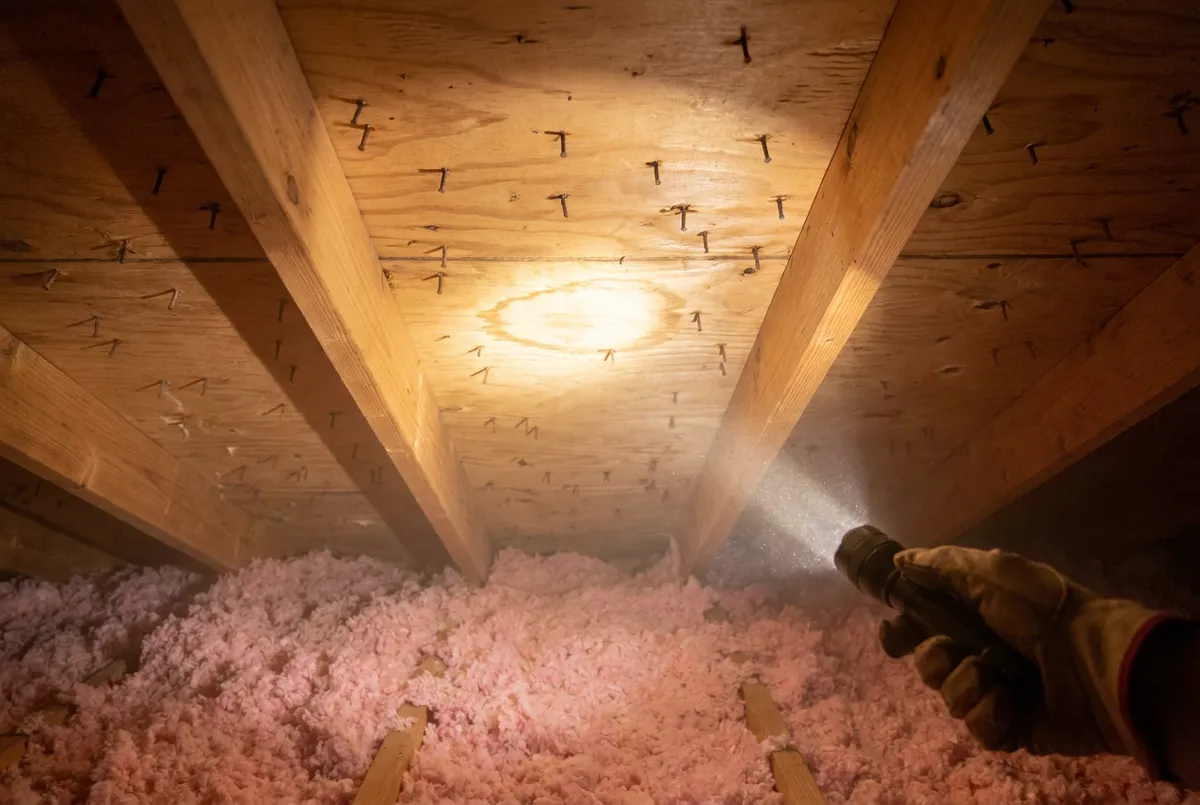
One more clue that costs nothing: look in the attic. Plank decking (individual boards with gaps) means the house was built before the mid-1980s. If the shingles above have been replaced but the decking has water stains and nail tips from two or three generations of roofs, you are looking at a house that has been reroofed more than once.
what roof age does to your insurance.
This is the part that turns a roofing question into a money question.
The Texas Department of Insurance says it directly: as roofs age, some companies switch coverage to actual cash value, and if your roof is in poor condition, your company might not cover your roof at all. In practice across DFW, that means:
- Under 10 years: Full replacement cost coverage is the norm. A hail claim pays to replace the roof, minus your deductible.
- 10 to 15 years: Carriers start asking for inspections at renewal. Some add a roof surface schedule that reduces payouts by age.
- 15 to 20 years: Many carriers move the roof to actual cash value only. A totaled $22,000 roof might pay out $8,000 to $11,000 after depreciation.
- 20 plus years: Some carriers require replacement before they will write or renew the policy.
Our post on ACV vs RCV for Texas homeowners walks through the math. The practical advice is simple: know your roof’s age before renewal, and if it is past fifteen years, get an inspection and a written condition report before your carrier orders its own.
signs your roof is at the end, whatever the calendar says.
Age is a guide. The roof tells you the truth. The signs that a DFW roof is done, from most to least obvious:
- Shingles curling, cupping, or cracking across whole slopes, not just one spot
- Widespread granule loss, with bald patches and granule piles at the downspouts
- Daylight through the deck or soft, spongy decking underfoot
- Leaks in more than one location
- Flashing rusted through or held together with caulk patches
- You are on your third repair in two years
We cover all twelve in signs your roof needs replacement in Texas. If you are seeing three or more, the roof is telling you it is finished regardless of what year it went on.
making the next roof last longer.
If you are replacing, four choices decide whether the next roof lands at the bottom or the top of the DFW range:
- Class 4 impact shingles. They do not stop heat aging, but they cut hail damage dramatically, and hail is what ends most North Texas roofs early. They also earn a windstorm discount with most Texas carriers. Our Class 4 shingles post runs the payback math.
- Six-nail high-wind installation with sealed starter and sealed ridge, which is standard on every roof replacement we do.
- Real attic ventilation. A 150-degree attic cooks shingles from underneath. Ridge vent with balanced soffit intake adds years.
- Metal, if you are staying 20 plus years. A standing seam roof costs more up front and then simply does not need replacing. Our metal vs shingle comparison covers cost and attic temperatures.
A 2,400 sq ft Plano replacement with CertainTeed Landmark Pro runs roughly $22,000. The Class 4 version of the same roof runs roughly $24,500, and the carrier discount usually recovers the difference inside a few years. The full 2026 breakdown by home size, pitch, decking, shingle tier and county is in our Texas roof replacement cost guide.
frequently asked questions.
How long does a shingle roof last in Texas? In DFW, a three-tab asphalt roof realistically lasts 12 to 15 years, an architectural roof 18 to 22, and a Class 4 impact-rated roof 20 to 25 if hail does not end it early. National charts say 20 and 30 years for the first two. Texas heat and hail take the difference.
How do I find out how old my roof is? Check the seller’s disclosure or your closing documents first. Then pull the permit history from your city’s building inspections department, since most DFW cities require a permit to reroof. Your appraisal district record shows the home’s build year, which is the roof’s age if it has never been replaced. Last option: a roofer can read shingle wear and the manufacturer date stamp on the underside of a shingle.
Should you buy a house with a 20-year-old roof? You can, but price it in. A 20-year-old architectural roof in Texas is at or past the end of its life, and a carrier may insure it at actual cash value only or require replacement. Get a roofer inspection during the option period and negotiate the replacement cost or a credit.
Is a 10-year-old roof considered old in Texas? It is middle-aged. Ten years is when pipe boots crack, seal strips start to let go, and the roof becomes noticeably more vulnerable to wind and hail. It is not time to replace unless a storm forces it, but it is time for annual inspections.
Does a new roof lower homeowners insurance in Texas? Often, yes, especially if the new roof uses Class 4 impact-rated shingles, which many Texas carriers discount on the windstorm portion of the premium. Send the manufacturer certificate to your agent after the install. A new roof also moves you back from actual cash value to replacement cost coverage on many policies.
How often should you replace your roof in Texas? Plan on architectural shingles every 18 to 22 years in DFW, sooner if hail totals it. Many North Texas roofs never reach their design life because a storm replaces them first through an insurance claim, which is why documenting storm damage matters more here than almost anywhere.
If you do not know how old your roof is, or you know and it is past fifteen, call (214) 326-3106. We will walk it, date it, photograph every slope, and give you a written report with a remaining-life estimate. Free, no commissioned salespeople, and if the roof has five good years left we will tell you that too.