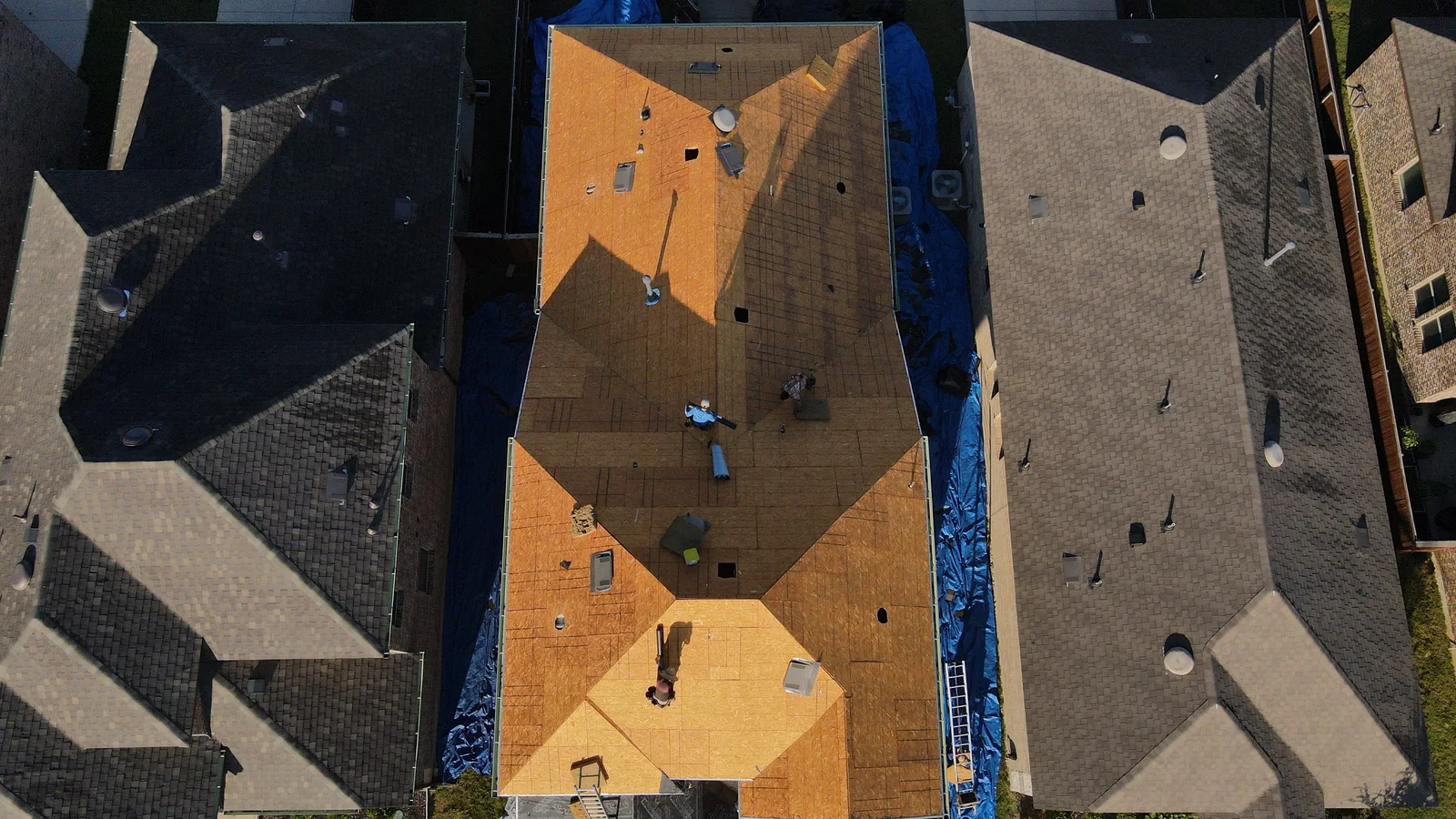


If you own or manage a commercial building in DFW and the roof has hit end-of-life, you’re not looking for a patch anymore. You’re looking for a full system replacement that holds an NDL warranty, doesn’t shut down your tenants, and gets documented well enough that your insurance carrier or lienholder won’t push back. That’s what this page covers.
We’re CertainTeed ShingleMaster certified (top 3 percent of US roofers) and family-owned in Plano, see all credentials. The family founded Roof Raiders in 2022 and built the commercial side around property managers who got burned by guys who disappeared after the deposit cleared, read our story.
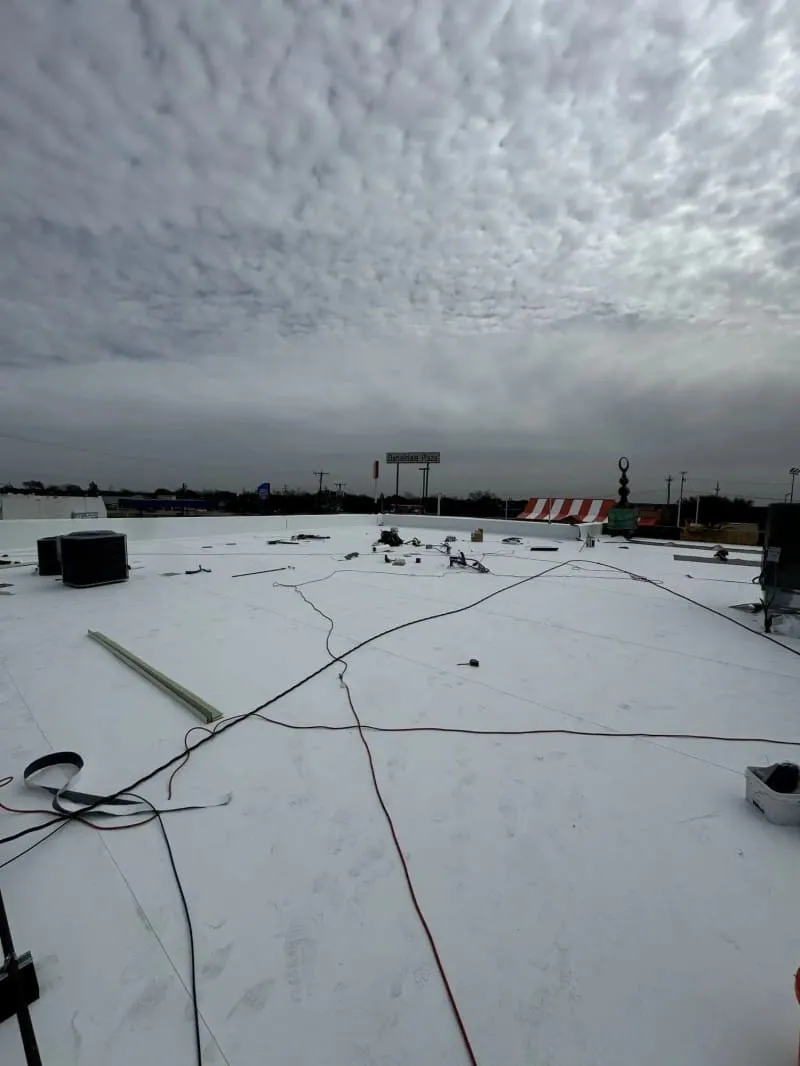
Call (214) 326-3106 for a free commercial inspection.
the four commercial systems we install when replacing.
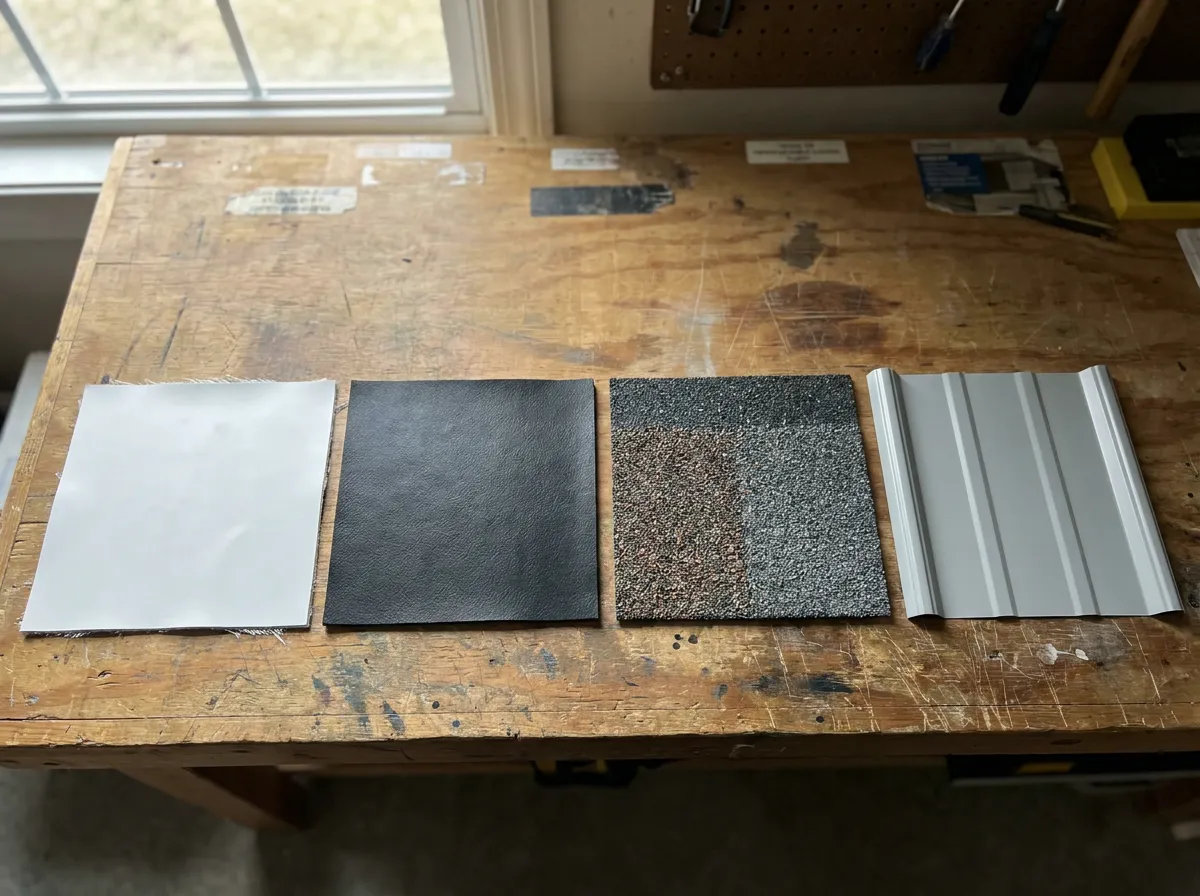
There’s no universal answer to which membrane fits your building. There are four systems we install regularly across DFW, and the right one depends on your building’s age, substrate, penetration count, and how long you plan to hold the asset.
TPO (Thermoplastic Polyolefin) is what we install on roughly 70 percent of new commercial jobs in Dallas. Heat-welded seams, white reflective surface, strong hail performance at 80 mil. Carlisle SureWeld and GAF EverGuard are the two product lines we run.
EPDM (rubber) earns its place on older buildings with mixed substrates, lightweight concrete decks, or quirky structural conditions where TPO’s rigidity creates seam stress. Lifespan runs 25 to 30 years when installed clean.
Modified Bitumen wins when your roof has dozens of penetrations, HVAC curbs, drains, and historical patches. Torch-down or self-adhered Mod-Bit conforms to detail work that TPO struggles with.
Coated metal restoration is a retrofit option for standing-seam metal that’s still structurally sound but leaking at seams and fasteners. We pressure-wash, treat rust, then apply a silicone or acrylic coating system. Extends life 10 to 20 years at a fraction of replacement cost.
| System | NDL Warranty | Typical Lifespan | Energy Rating | When We Recommend |
|---|---|---|---|---|
| TPO 60 mil | 15-20 yr | 20-25 yr | Cool Roof Rated | Standard warehouses, retail, office |
| TPO 80 mil | 20-30 yr | 25-30 yr | Cool Roof Rated | Plano + Frisco + Allen hail belt |
| EPDM | 20-30 yr | 25-30 yr | Standard | Older buildings, mixed substrates |
| Modified Bitumen | 15-20 yr | 20-25 yr | SBS reflective option | High-penetration roofs, complex curbs |
| Coated Metal | 10-20 yr | 15-20 yr | Cool Roof Rated | Retrofit on sound metal substrate |
tpo thickness: 60 mil vs 80 mil for dfw hail country.
This decision matters more in north Dallas than most reps will tell you. The standard commercial TPO spec across most of the country is 60 mil. That’s fine for buildings south of I-30 and out toward Mesquite or Grand Prairie where hail exposure is more moderate.
But if your building sits in the hail corridor, Plano, Frisco, McKinney, Allen, Prosper, Southlake, or anywhere north of George Bush Turnpike, we recommend 80 mil. The extra thickness handles 2-inch hail without puncturing the membrane, which is the failure mode that drives most commercial hail claims.
Here’s the documentation piece most owners miss. To register the NDL warranty at the 25 or 30 year tier with Carlisle or Firestone, the manufacturer requires 80 mil membrane plus an R-value match on insulation. If you spec 60 mil to save $0.40 per sq ft, you cap your warranty at the 15 or 20 year tier. On a 30,000 sq ft building that’s a real warranty difference.
the ndl warranty hierarchy and what unlocks each tier.
NDL stands for No Dollar Limit. It means the manufacturer pays full repair or replacement cost during the warranty period, not a prorated number that drops to nothing by year 12. Every major manufacturer offers tiered NDL warranties, and each tier has specific install requirements.
Carlisle SureWeld runs 15, 20, 25, and 30 year NDL tiers. The 25 and 30 year tiers require 80 mil membrane, R-25 insulation minimum, and Carlisle-certified installer status (we hold this).
GAF EverGuard runs Silver Pledge, Gold Pledge, and Diamond Pledge NDL tiers. The top tiers require 80 mil, two layers of ISO insulation with staggered seams, and post-install thermal imaging.
Firestone UltraPly NDL runs 15, 20, 25, and 30 year tiers. The 30 year tier requires their Red Shield contractor status plus daily install logs and mill-cert documentation on every roll of membrane.
What unlocks the top tier on any of these brands: pre-bid manufacturer approval, mill-cert documentation on materials, daily install logs, and post-install thermal imaging. We submit all four on every NDL job. If a roofer can’t show you mill certs and install logs at close-out, your warranty is likely registered at a lower tier than what was quoted.
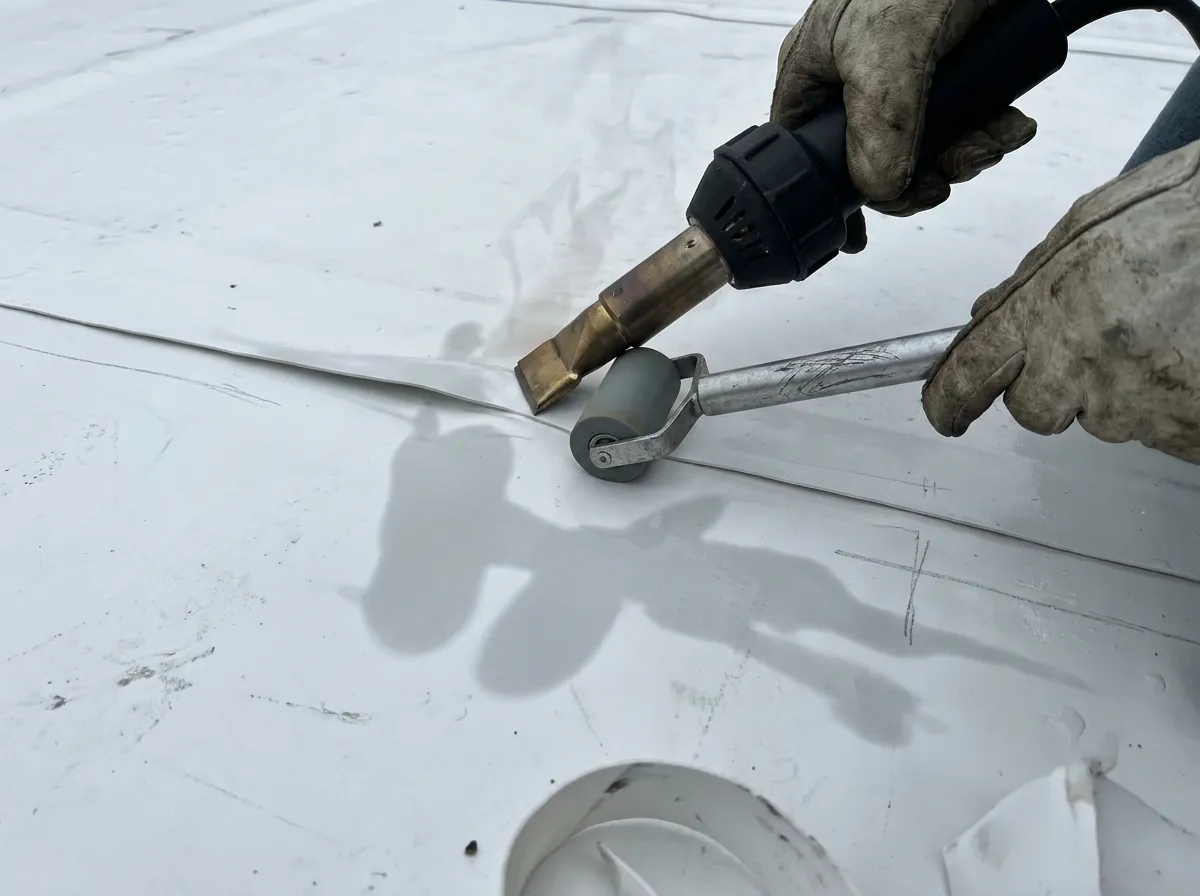
Call (214) 326-3106 to schedule a pre-bid inspection on your building.
tear-off, dry-in, and dump truck logistics.
The biggest operational risk on a commercial replacement isn’t the new membrane. It’s the 48 to 72 hour window where the old system is off and the new one isn’t fully welded. That’s where buildings get water-damaged and tenants file claims.
Our protocol on every commercial job: every section we tear off gets dried-in the same day. That means underlayment, board insulation, and a temporary membrane lap before the crew clocks out. Daily tarp protocol covers any seam that isn’t heat-welded by end of shift. The building stays watertight from morning kickoff to close-out, every single working day.
Logistics piece tenants notice: dumpster placement and crane staging. We stage dumpsters away from tenant entrances, schedule crane lifts before 8 AM or after 6 PM where possible, and run a daily debris sweep so your parking lot stays clean. On occupied buildings we coordinate the crane operator and the property manager on a shared schedule so nobody’s surprised when a 40-foot reach is parked across two spots.
For buildings with active loading docks, we work the dock side last. Tear-off happens after the last delivery of the day and dry-in finishes before the first delivery the next morning. Tenants keep operating.
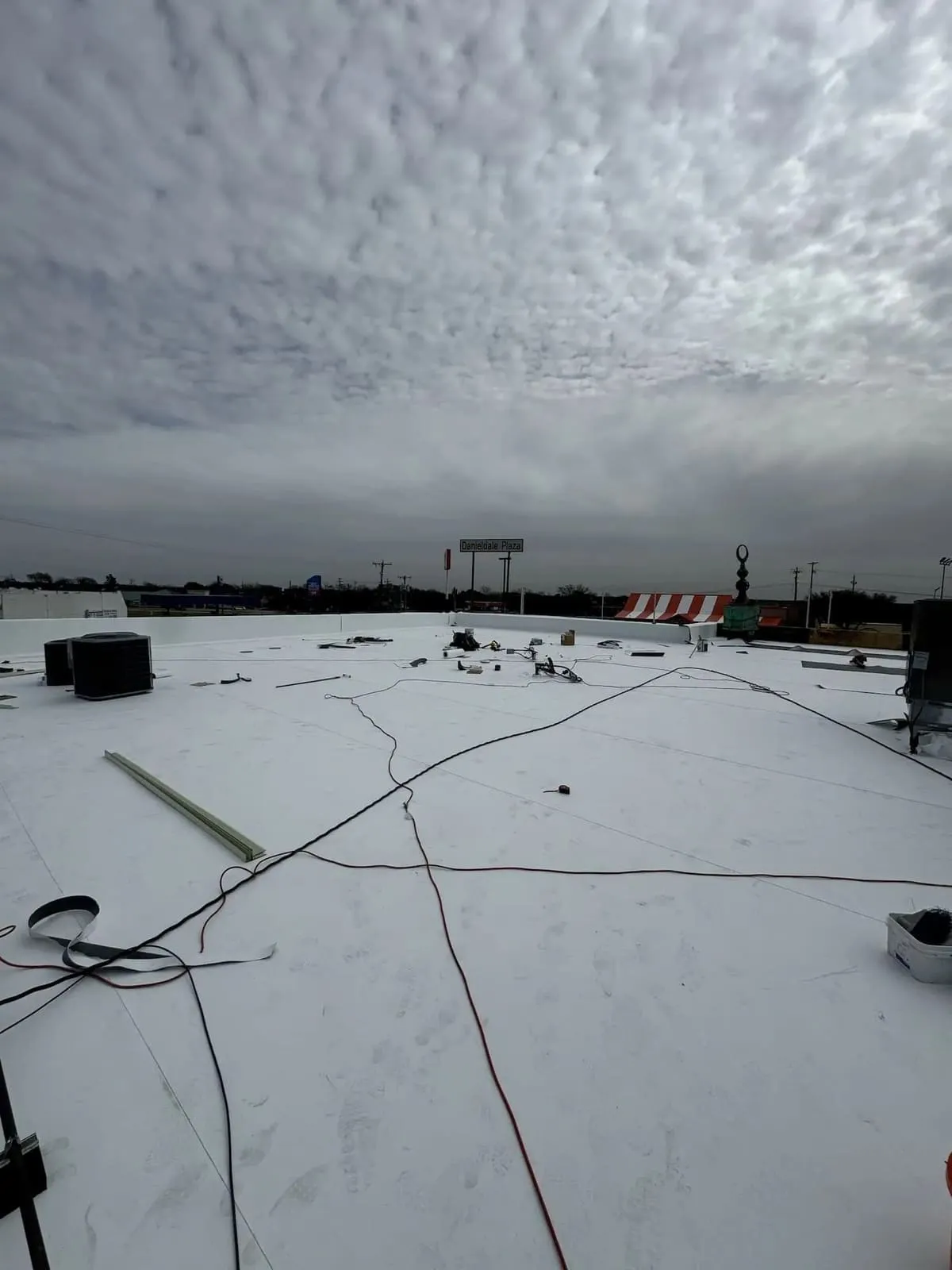
the rapid roof response process.
Here’s the five-step process every commercial replacement runs through, start to finish.
Step 1, pre-bid inspection and core sample. We pull a 12-by-12 core sample to confirm deck type (steel, concrete, lightweight concrete, or wood), count insulation layers, and check for saturation. You get a written scope and a system recommendation before any pricing leaves our office.
Step 2, system selection and manufacturer pre-approval. Once you’ve picked the system, we submit drawings to Carlisle, GAF, or Firestone for NDL warranty pre-approval. This is required for tiered warranties above 15 years. Pre-approval takes 5 to 10 business days.
Step 3, tenant phasing plan and crane logistics. We map the building into install sections, lock in dumpster and crane staging with the property, and send a tenant communication packet 14 days before kickoff. Packet includes daily work hours, parking impact, and the project manager’s direct cell.
Step 4, tear-off, dry-in, and full install. Each section gets torn off and dried-in same day. Daily tarp protocol. End-of-day photo log emailed to property management. Building stays watertight throughout.
Step 5, thermal imaging QC and warranty registration. Post-install drone thermal scan catches any wet insulation before close-out. We submit final docs to the manufacturer, your NDL warranty gets registered, and the certificate lands in your inbox within 10 business days of substantial completion.
what commercial replacement costs in dallas.
Real numbers from jobs we’ve quoted across DFW in the last 12 months. These ranges assume normal access, no major deck repair, and standard edge metal.
TPO 60 mil: $8.00 to $11.00 per sq ft installed. A 20,000 sq ft warehouse lands at $160,000 to $220,000.
TPO 80 mil: $10.50 to $14.00 per sq ft installed. Same 20,000 sq ft warehouse lands at $210,000 to $280,000. The premium pays for itself through the 25 or 30 year NDL warranty tier and better hail performance.
EPDM: $7.00 to $12.00 per sq ft. A 20,000 sq ft install runs $140,000 to $240,000 depending on adhered vs ballasted and insulation spec.
Modified Bitumen: $9.00 to $15.00 per sq ft. A 20,000 sq ft mod-bit replacement with 30+ penetrations lands at $180,000 to $300,000. The variance is detail work, not membrane cost.
Coated metal restoration: $3.50 to $6.50 per sq ft. A 20,000 sq ft metal restoration lands at $70,000 to $130,000. Roughly 30 to 40 percent of full replacement cost when the metal substrate is still sound.
tenant disruption: phased install plans.
For occupied buildings, the install plan matters more than the membrane spec. A great TPO system installed during business hours over a busy medical tenant will cost you that tenant.
We section every occupied building into install zones based on the tenant mix below. Zone 1 might be the back of the building where the warehouse tenant operates 4 AM to 2 PM, so we work that zone after 2 PM. Zone 2 might be the front where the medical office runs 8 AM to 5 PM, so we work that zone before 7 AM or weekends.
Tenant communication packet goes out 14 days before kickoff. It covers daily work hours per zone, parking impact, dumpster location, crane lift schedule, and the project manager’s direct cell. Mid-project we send a weekly status email with photos of completed zones and the upcoming week’s schedule. Most disputes happen because tenants weren’t told what was coming. Ours always are.
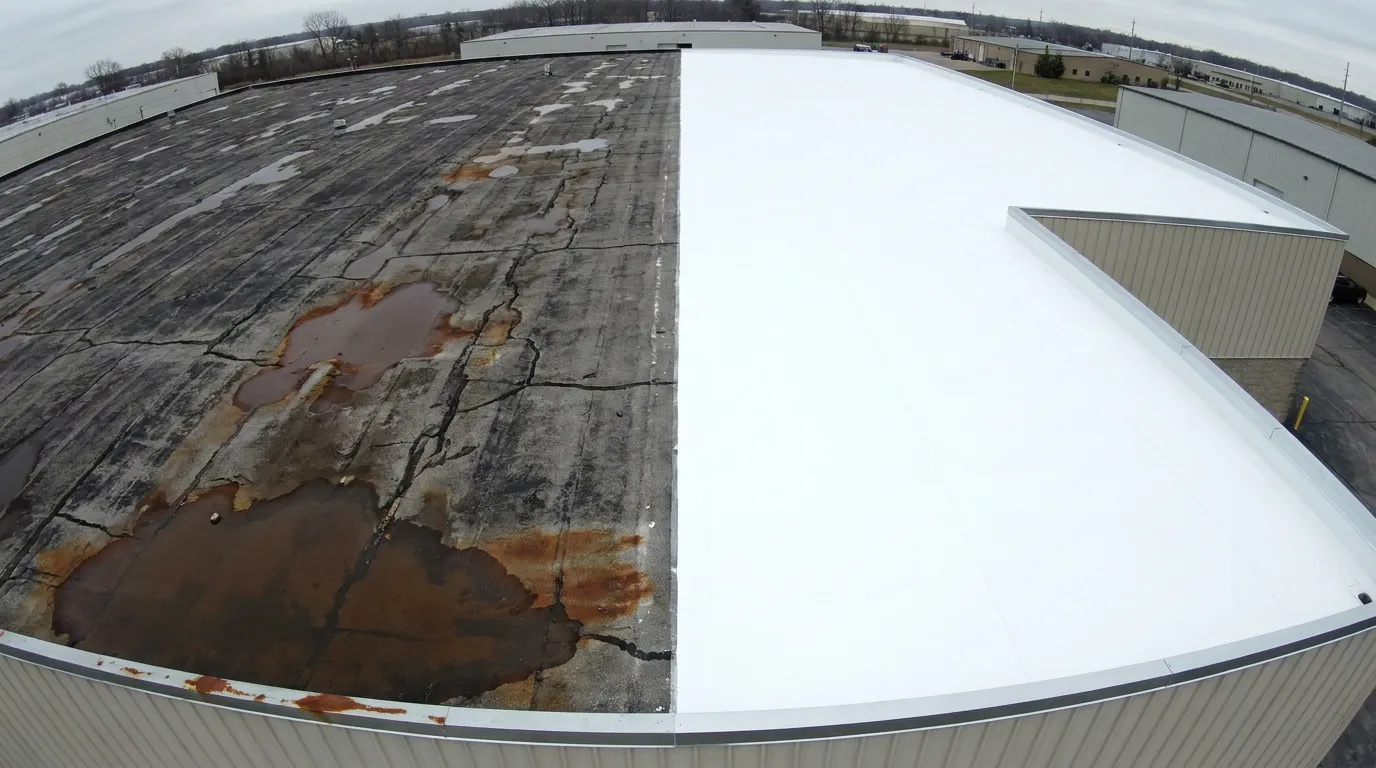
Call (214) 326-3106 to scope a phased install for your occupied building.
the monthly status report property managers actually need.
If you manage a portfolio of 4 to 22 buildings, you don’t want a separate email thread for each roof. You want one monthly report that shows you the state of every building in one place.
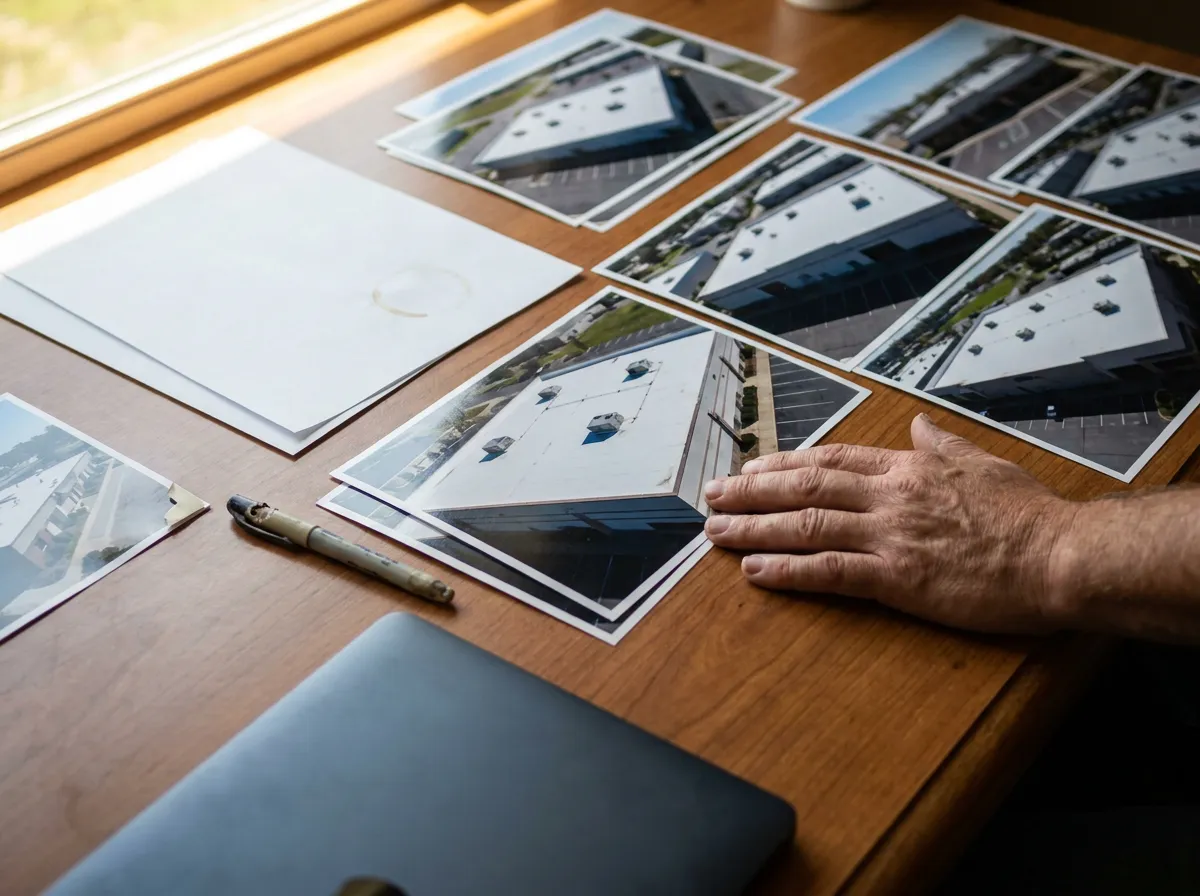
Ours runs 1 to 2 pages per building. Each building gets a current condition photo, a remaining-life estimate, a list of any active leaks or recent repairs, and a recommended action for the next 90 days. The portfolio summary on page 1 shows you which buildings need budget attention this quarter vs which are stable.
This is the document we get asked for on every renewal. Owners use it for capital planning. Asset managers use it for disposition decisions. Insurance brokers use it for renewal underwriting.
the texas 25 percent rule, what carriers actually require.
For commercial replacements funded by insurance, the Texas 25 percent rule under 28 TAC 21.1006 still applies. The rule says that if more than 25 percent of a roof has been damaged or repaired within any 12-month period, the entire roof system must be brought up to current code.
On commercial buildings, “current code” usually means upgraded insulation R-value, code-compliant edge metal, and updated drainage. Carriers honor this when the documentation is clean. The 25 percent threshold gets measured by test squares or core samples, which is why we pull cores on every insurance-involved scope.
What this means for you: if your carrier approved partial repair on a building that’s actually past the 25 percent threshold, your scope is wrong. We’ll document it and meet your adjuster on the roof. We won’t negotiate the claim, Texas Insurance Code 4102.163 bars roofers from that, but we’ll produce the photos, core samples, and scope your public adjuster needs.
dfw weather and the storm timeline carriers honor.
The DFW storm history that drives most current commercial claims: May 28, 2023 (north Dallas hail across Plano, Frisco, and McKinney), April 9, 2024 (widespread DFW hail including Allen, Richardson, and Highland Park), May 23, 2024 (Fort Worth and Arlington high winds plus hail), and June 17, 2024 (Mesquite, Garland, and Wylie hail event).
Most commercial carriers will still honor claims tied to those four dates if damage is documented, even two years out. The window varies by carrier and policy. If your roof has hail bruising or seam failures you suspect trace back to one of those storms, the documentation matters more than the calendar.
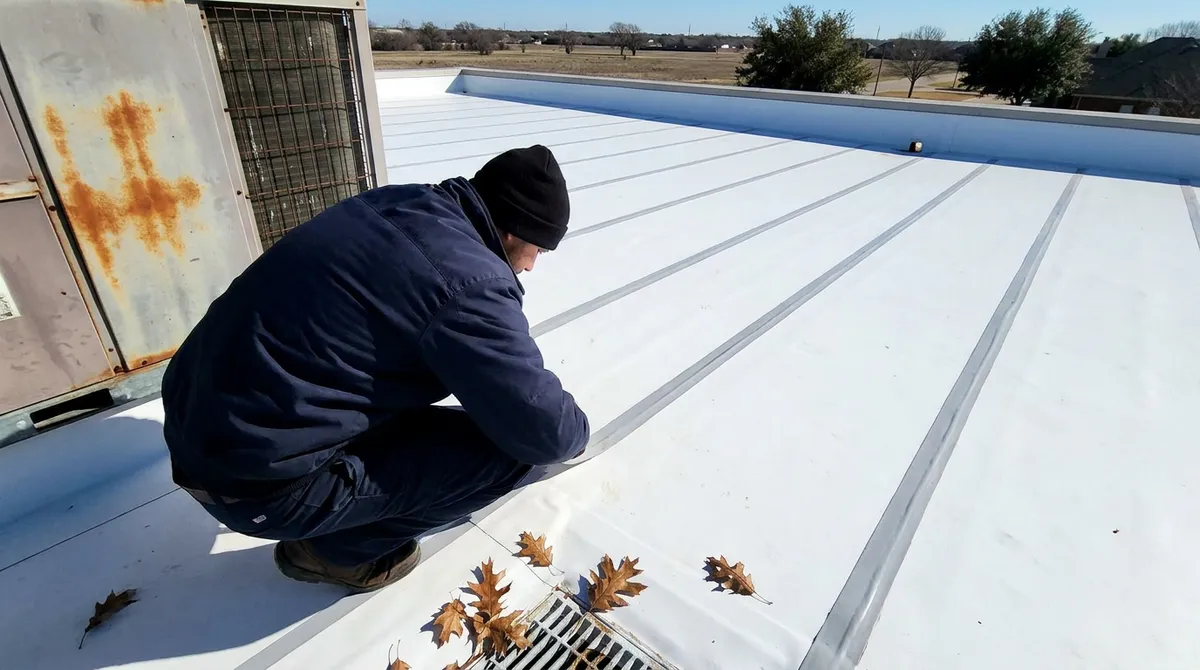
Call (214) 326-3106 for a free storm-damage inspection on your building.
paying for your commercial replacement.
Most owners pay for a commercial replacement one of three ways: a covered insurance claim, cash, or our in-house payment plan on qualified projects. With the payment plan, a larger upfront deposit gets the work started and the balance is split over flexible terms depending on the size of the project. Details on our payment plans page.
anti-storm-chaser warning.
After every named DFW hail event, dozens of out-of-state crews park RVs in commercial lots and door-knock property managers. They write low bids, take a deposit, and disappear when the work gets hard. Here’s how to spot one before signing.
Real local commercial roofers carry a Texas commercial general liability policy with your property listed as additional insured, can show you three local references on portfolios over 100,000 sq ft, hold manufacturer-certified status with at least one of Carlisle, GAF, or Firestone, and have a Plano, Dallas, or Fort Worth office address that’s older than 12 months. We’re at 6900 Dallas Pkwy Suite 540 in Plano. Drive by anytime.
dfw neighborhoods we serve.
We replace commercial roofs across:
- Plano (Legacy West, Willow Bend, Preston Park), Frisco (Stonebriar, The Star district, Hall Park), McKinney (Craig Ranch, Adriatica, downtown McKinney), Allen (Watters Creek, Twin Creeks), Richardson (CityLine, Telecom Corridor, Spring Valley)
- Dallas (Las Colinas-adjacent, Stemmons Corridor, Deep Ellum, Lakewood, Uptown), Highland Park, Garland (Firewheel, downtown Garland), Mesquite (Town East)
- Irving (Las Colinas, Valley Ranch), Carrollton, Coppell, Lewisville (Old Town, Vista Ridge), Flower Mound
- Grapevine (Grapevine Mills area), Keller, Southlake (Town Square), Fort Worth (Alliance, downtown, West 7th)
- Arlington (entertainment district, north Arlington), Grand Prairie, Prosper, and Wylie
The heaviest concentration of our replacement work sits in Plano, Dallas, Richardson, Irving, Arlington, and Fort Worth. Each of those service-area pages covers the local storm dates and permit offices we work with.
If your property is in DFW, we can quote it.
Call (214) 326-3106 to schedule a free commercial inspection.
What's included
- Pre-bid manufacturer approval and NDL warranty registration
- Full tear-off to deck with daily watertight dry-in
- TPO, EPDM, Modified Bitumen, or coated metal system install
- 60 mil or 80 mil membrane sized for DFW hail exposure
- ISO insulation R-value engineered to current Texas energy code
- Crane staging, dumpster placement, and tenant phasing plan
- Post-install thermal imaging QC and mill-cert documentation
- Monthly portfolio status reports for multi-building owners
- Manufacturer NDL warranty registration
- Final adjuster walk for insurance-funded replacements
How it works
- Pre-bid inspection and core sample. We pull a 12x12 core sample to confirm deck type, insulation layers, and saturation. You get a written scope before any pricing.
- System selection and manufacturer pre-approval. We submit drawings to Carlisle, GAF, or Firestone for NDL warranty pre-approval. Required for tiered warranties above 15 years.
- Tenant phasing plan and crane logistics. We map the building into install sections, lock in dumpster and crane staging, and send a tenant communication packet 14 days out.
- Tear-off, dry-in, and full install. Each section gets torn off and dried-in same day. Daily tarp protocol keeps the building watertight start to finish.
- Thermal imaging QC and warranty registration. Post-install drone thermal scan catches any wet insulation before close-out. NDL warranty registered with the manufacturer and emailed to you within 10 business days.