Roofing in North Richland Hills, TX, Storm Damage and Hail Repair
45 minutes from our Plano HQ. Same ShingleMaster certified crews, same insurance claim documentation, same family-owned standard you would get if our office was on your street.


North Richland Hills sits about 45 minutes west of our Plano headquarters on Legacy Drive, anchored squarely in the Tarrant County mid-cities cluster between Fort Worth and DFW Airport. NRH is the third largest city in Tarrant County, covering roughly 18.3 square miles north of the SH-183 freight corridor. The east side carries Smithfield’s century-old grid, the oldest part of the city. The middle holds Iron Horse, the golf-course community wrapped around the city-owned course that opened in 1988. The south end runs HomeTown NRH, the walkable mixed-use district that platted in the early 2000s below Mid-Cities Boulevard. Tarrant cells that ride east off the Cross Timbers and stall over Loop 820 hit this city in ways the Collin County storms often skip, and the Mid-Cities took compounding hail through the 2022, 2023, and 2024 spring seasons. Our ShingleMaster crews cover NRH to the same standard we hold in Plano, and we have stood on roofs here with State Farm, Allstate, USAA, Farmers, and Texas Farm Bureau adjusters. If you want roofing in North Richland Hills, TX from a crew that does not vanish after the deposit clears, you are in the right place.
north richland hills sits at the heart of the tarrant mid-cities.
NRH spans roughly 18.3 square miles, bounded by Hurst to the south, Watauga and Haltom City to the west, Keller to the north, and Colleyville to the east. Population sits near 70,000, with a daytime working population that swings higher off the Iron Horse Boulevard medical and retail corridor, the NorthEast Mall trade area pulling over from Hurst, and the SH-183 commuter flow into Fort Worth. The big redevelopment story is City Point, the mixed-use build on the old North Hills Mall site, adding hundreds of new homes, townhomes, and multifamily units that will need roofs scoped and serviced for decades. Three arterials shape how storms land and how we route crews: Loop 820 cutting east-west along the southern edge, Davis Boulevard running north-south through Smithfield and into Keller, and Mid-Cities Boulevard tying HomeTown to the Birdville school campuses. TEXRail threads the city too, with the Smithfield and Iron Horse stations both sitting just north of the loop.
The housing mix is what sets the local roofing market apart from the master-planned suburbs up north. Birdville and Smithfield carry a heavy 1970s and early-1980s ranch inventory, much of it originally laid with 3-tab and already re-roofed once or twice. Forest Glenn and the Davis Boulevard corridor moved into 1990s and early-2000s production builds with first-generation architectural laminates that aged hard through the 2010s hail cycles. Iron Horse came up through the 1990s and 2000s as a golf-course community with bigger square footage and busier roof lines, more dormers, more valleys, more places for granule loss to compound. HomeTown started building out through the 2010s with a denser walkable grid, alley-loaded garages, and steeper pitches that read differently to an adjuster.
That spread matters because NRH is not Frisco. Carriers writing policy here know the housing skews older than the newer master-planned markets like Prosper or Celina, and they scope tighter for it. Test squares come up more often. Partial-slope approvals come up more often. Code-upgrade endorsements draw harder scrutiny. We document every slope the same way whether the home is in this city or back in Plano, but we walk into an NRH adjuster meeting expecting the carrier to push, and we bring the paper to push back.
north richland hills roofing corridors and hail patterns.
The Tarrant mid-cities hail belt does not behave like the Collin County belt. Storms here ride east off the Cross Timbers, catch the elevation change along Davis Boulevard, and frequently stall over Loop 820 before pushing into Hurst and Bedford. Knowing the corridors tells us where to start scoping the morning after a cell drops. None of the dates below should be taken as your date of loss. Pull your own address against the NOAA Storm Events Database, because that record is the anchor the carrier actually cares about.
- Davis Boulevard from Mid-Cities to Starnes. The north-south spine that runs through Smithfield’s older grid and into Forest Glenn. Hail cells riding off the Cross Timbers track this corridor regularly, and the original 1970s ranches on the side streets off Davis tend to scope toward full replacement once we pull the free inspections and walk the adjuster. Most of our recent NRH dispatches started somewhere on this stretch.
- Iron Horse Boulevard around the golf course. The signature golf-course corridor. Bigger roofs, more valleys, more dormers, so granule loss compounds quietly and keeps showing up on supplemental claims long after the headline storm. Heavy hail damage roof repair work runs through this pocket, and the complex roof lines are exactly where a rushed first scope leaves slopes off the estimate.
- Mid-Cities Boulevard at Smithfield Road. The east-west commuter spine through the historic Smithfield district. Older shingle profiles, lower pitches, exposed garage extensions that catch wind-driven hail at odd angles. Watch the older flat-roof commercial buildings along the southwest quadrant, because the TPO roofing on a lot of those shells is hitting end of life right as the claim cycle accelerated.
- Loop 820 service road from Rufe Snow to Holiday Lane. The southern hail catch. Storms riding east tend to drop their heaviest stones crossing the elevation step at 820, and the older 1980s neighborhoods in the Birdville pocket south of the loop take it hard. Plenty of partial-slope scopes through here, plenty of carrier-requested test squares.
- Rufe Snow Drive at Glenview. The northwest gateway from Watauga. Heavy commercial mix, drive-throughs, retail shells with flat membrane roofs. Our commercial roofing calls on this corridor pick up after cells cross through Watauga into the back side of NRH.
- HomeTown grid south of Mid-Cities. Newer construction, denser block pattern, steeper pitches. The roofs here run mostly 2005 to 2015 vintage architectural laminates, which means the first big claim cycle is landing right now. HOA approval matters more here than almost anywhere else in NRH, because the design code is enforced street by street.
- Precinct Line Road at Bursey Road. The northeast gateway from Colleyville. Mixed stock, older infill next to 2000s production, and a common exit point for cells leaving the city. Several of our recent storm damage roof repair jobs in NRH opened with morning-after calls from this corridor.
The pattern across every one of these corridors is the same. North Texas hail season runs March through June, the Mid-Cities took compounding damage across the 2022, 2023, and 2024 seasons, and if you bought your house before any of those springs your roof was almost certainly exposed to at least one event. The NOAA hail-swath data we pull will show whether your specific address fell inside a damage polygon, and that swath, not a salesman’s story, is what decides the claim.
north richland hills housing stock and what carriers expect.
NRH housing breaks into four rough cohorts, and each one draws a different scope from the carrier. The 1970s Birdville and Smithfield ranches went up under 3-tab in the 235 to 240 lb range, most have been re-roofed once or twice since, and a real share were re-shingled with first-generation architectural laminates in the 1995 to 2005 window that are now well past their 20-year design life. The 1990s Forest Glenn and Davis Boulevard production builds carry those early architectural laminates, often Owens Corning Oakridge or CertainTeed XT-25 vintage product, and they show brittle mat behavior and corner crushing under hail impact. The 2000s Iron Horse and early HomeTown homes carry mid-generation architecturals like CertainTeed Landmark or GAF Timberline, and those still claim well when the storm date is documented. The 2010s HomeTown and Thornbridge builds carry the newer designer-line architecturals, with impact-resistant Class 4 product in the pockets where the builder offered the upgrade.
HOA shingle-color rules apply unevenly across the city but weigh heavily in Iron Horse, HomeTown, Thornbridge, and Crestwood Estates. The profiles we install most often here are CertainTeed Landmark in Weathered Wood, Driftwood, and Pewter Gray, with Moire Black approved in HomeTown where the design code allows a darker palette, and the warmer browns leaning toward Iron Horse. We pull the HOA submittal packet before we order material and keep the architectural review board’s approval letter in your project file so it travels with the warranty paperwork.
On the legal side, the rule that drives the most NRH scope decisions is the Texas 25 percent rule, written into Texas Insurance Code 28 TAC 21.1006. When more than a quarter of a roof section needs repair inside any 12-month period, the whole section has to come up to current code. That hits NRH harder than the newer suburbs because the 1970s and 1980s stock so often hides multiple older layers, and once we strip to deck we routinely find decking issues that trip the code-upgrade clause. The carriers writing policy here, mainly State Farm, Allstate, USAA, Farmers, and Texas Farm Bureau, want damage tied to a documented storm and a documented weather event, so we hand them date-stamped photos and the InterNACHI inspection report and leave no room to argue the scope down.
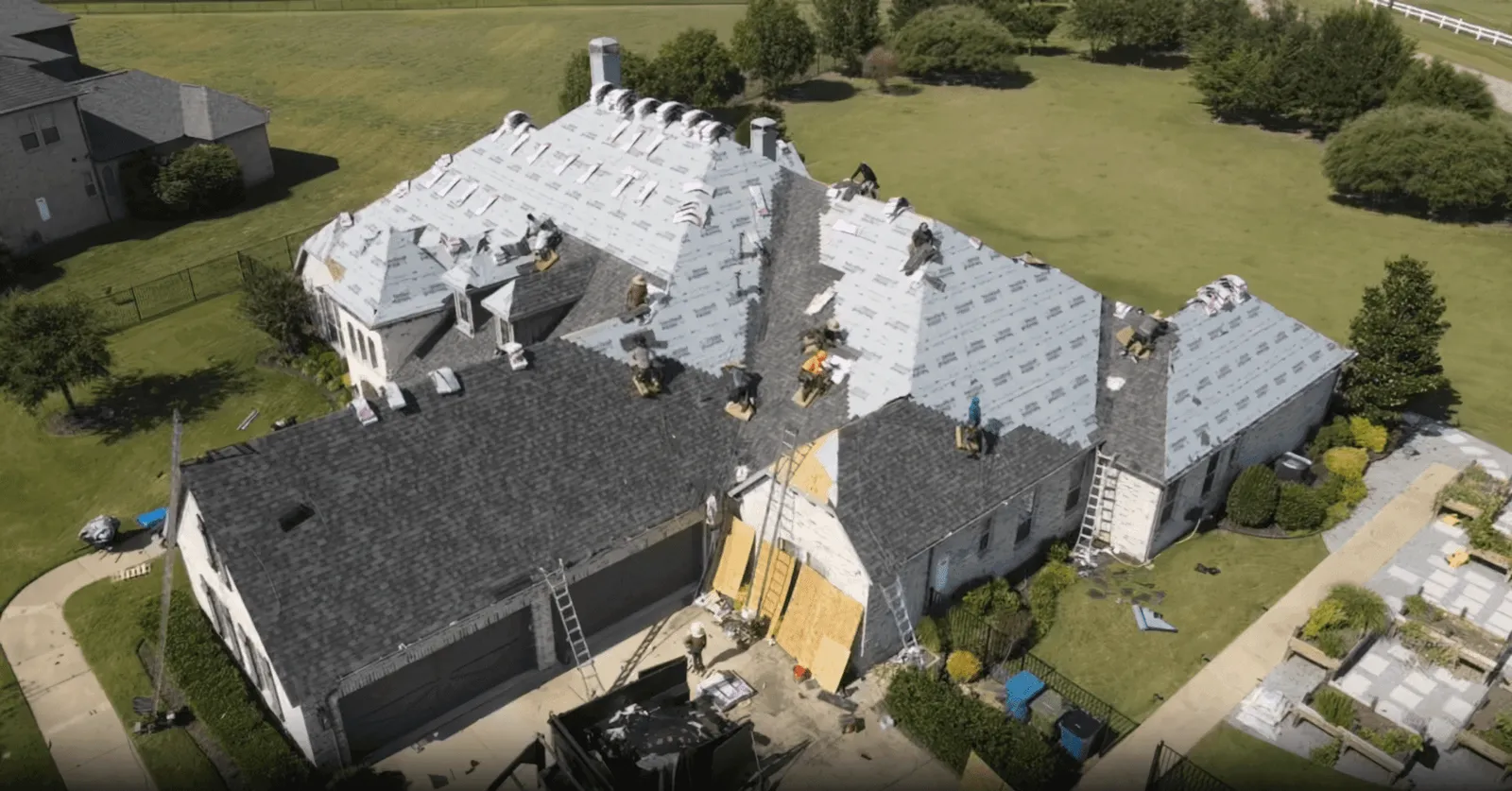
Aerial view of an older suburban North Texas neighborhood showing a mix of original 3-tab re-roofs and architectural shingle replacements.
how a north richland hills hail claim actually works.
We run every NRH homeowner through the same sequence, because the denied and under-scoped claims we see almost always skipped one of these steps.
- Pin down the storm date first. NOAA hail-swath data for your address reaches back about a decade and shows whether a damage polygon ever crossed your roof. We pull it before the ladder ever comes off the truck, and we cross-reference the NWS Fort Worth record for the spring seasons your address might be tied to. The storm date anchors the whole claim. Get it wrong and you have handed the carrier the easiest denial there is, so verify it yourself against the NOAA Storm Events Database too.
- Free inspection before you call the carrier. Order matters most right here. We climb the roof, document hail bruising, granule loss, mat exposure, and any wind-lift on the ridge cap, then hand you a written report with date-stamped photos. You open the claim only after that. File before you know whether you actually have damage and you can end up with a non-payable claim parked on your CLUE report for the next five years.
- Do not sign with the door-knockers. Every named storm brings the same parade through Smithfield and down the Davis Boulevard corridor. Out-of-state crews roll in with magnetic truck signs and free-roof flyers, then try to lock you into Assignment of Benefits paperwork before the adjuster ever shows. Watch for the other tells too: no verifiable local address you can drive to, no current general liability or workers’ comp certificates, and pressure to sign anything before your adjuster has walked the roof. Any one of those is your cue to walk.
- We meet your adjuster on the roof. Every adjuster meeting in NRH happens up top, with our crew lead, our photo file, and the InterNACHI report in hand. We do not negotiate your claim, and we cannot, under Texas Insurance Code 4102.163. What we do is document the damage, flag what the adjuster’s scope missed, and give the carrier everything it needs to write a fair number. If the first scope comes back light against the actual damage, we file a supplement with documentation and let the carrier reconcile it.
The supplement is where most NRH claims finally reach fair value. The first pass routinely misses code upgrades, decking damage that only surfaces at tear-off, ventilation owed under current IRC 2018, and detached structures like patio covers and separate garages. We file the supplement with photo documentation and code citations, the carrier reviews, and the recoverable depreciation gets released against the final invoice. That release is what gets you to RCV, and skipping it is how homeowners leave thousands on the table.
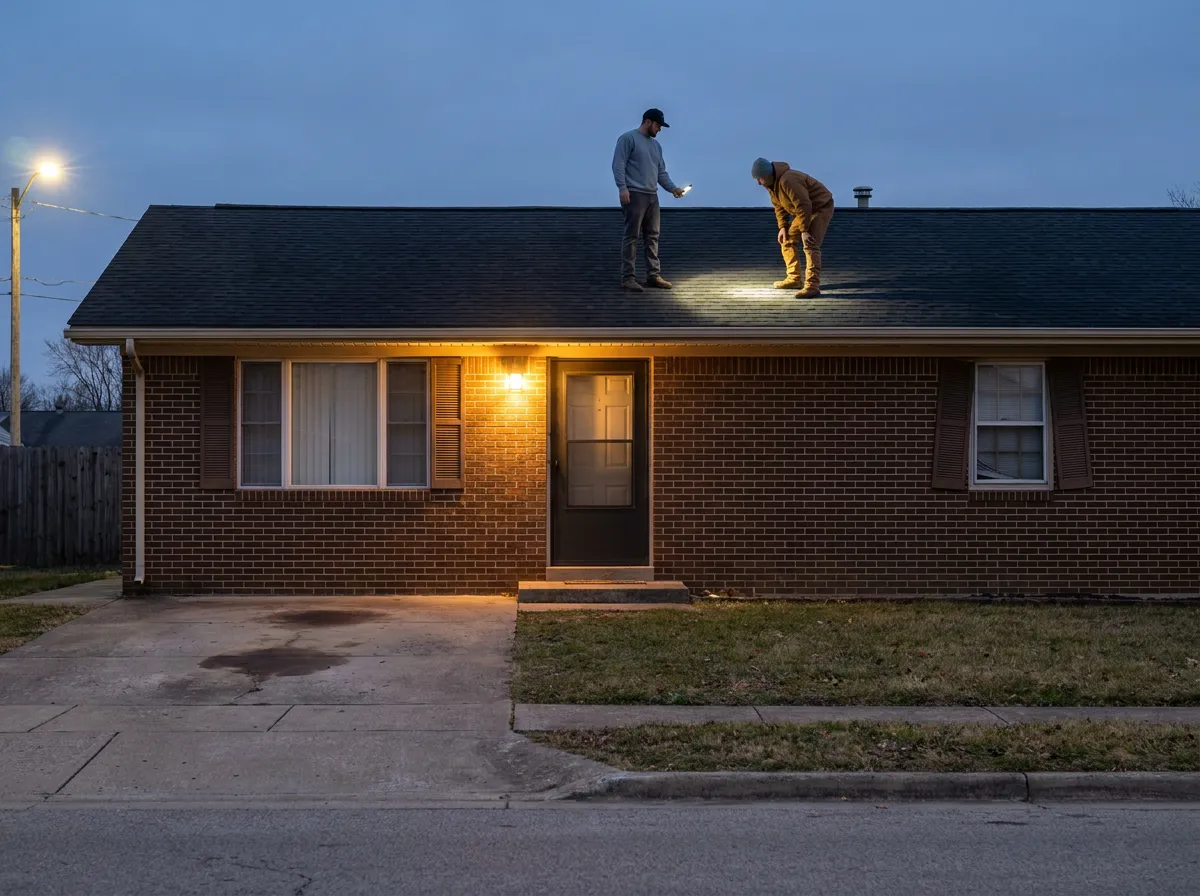
A roofer documenting hail damage alongside an insurance adjuster, with date-stamped scope photos and an inspection report up on the ridge.
north richland hills building department, permits, and code.
NRH permits and inspections run out of the City Hall complex at 4301 City Point Drive, North Richland Hills TX 76180, on the first floor. The Building Inspections division handles every residential and commercial re-roof permit, plan review, and final inspection, and the counter is open Monday through Friday, 8 a.m. to 5 p.m. The city runs a paperless online e-portal, so applications, document submittal, fee payment, and inspection requests all go through 24 hours a day. Their permit line is 817-427-6300 if you need to talk to a reviewer.
A residential re-roof permit in NRH typically clears in 1 to 3 business days once the application, contractor info, and any required HOA approval letter are in. We pull the permit in your name as the property owner, with us listed as contractor of record, which is how it should be done. A clean application filed early in the day can turn around fast. The final inspection gets called in after tear-off, deck repair, underlayment, and finish, and the inspector signs off before we close the permit and release your warranty paperwork.
The city operates under IRC 2018 with local amendments for roofing, framing, and energy code. The roofing sections that come up most are R905 for steep-slope assemblies, R908 for re-roofing, and R903 for flashing. The amendment that bites most often in NRH is ventilation: net free vent area has to match attic square footage at a 1:150 ratio, or 1:300 with balanced intake and ridge exhaust. We run that calculation on every NRH job, because the carrier’s code-upgrade endorsement only pays when we document compliance on the final invoice.
north richland hills hoa rules and approved shingle profiles.
HOA enforcement swings hard by neighborhood in NRH. Anything in Iron Horse, HomeTown, Thornbridge, Crestwood Estates, and the newer Forest Glenn sections needs architectural review board approval before material gets ordered. The older Birdville and Smithfield grids mostly run without active HOA enforcement, though deed restrictions still apply in pockets, so we check before we assume.
The profiles we install most in NRH are CertainTeed Landmark in Weathered Wood, Driftwood, and Pewter Gray, with Moire Black cleared in HomeTown where the code allows a darker palette and the warmer browns like Burnt Sienna and Resawn Shake trending toward Iron Horse. The Landmark Pro and PRO Max upgrades carry the same colors with thicker mats and longer terms, and we steer Iron Horse and HomeTown homes toward the PRO line where roof complexity and street visibility justify it. CertainTeed shingle roofing carries our ShingleMaster top 3 percent installer warranty when we lay the full system, underlayment, ice and water shield, ridge vent, and starter strip included.
We fill the HOA submittal packet with the board’s required photos and color swatches and get the approval letter in writing before any material order goes out. That letter lands in your project file alongside the permit, the InterNACHI inspection, the date-stamped adjuster photos, and the warranty paperwork. One folder, everything in it, transferable to the next owner.
what north richland hills neighborhoods we work most.
Across NRH our calls cluster into a handful of named pockets. The corridor patterns above explain why these come up more than others, but here is the working list.
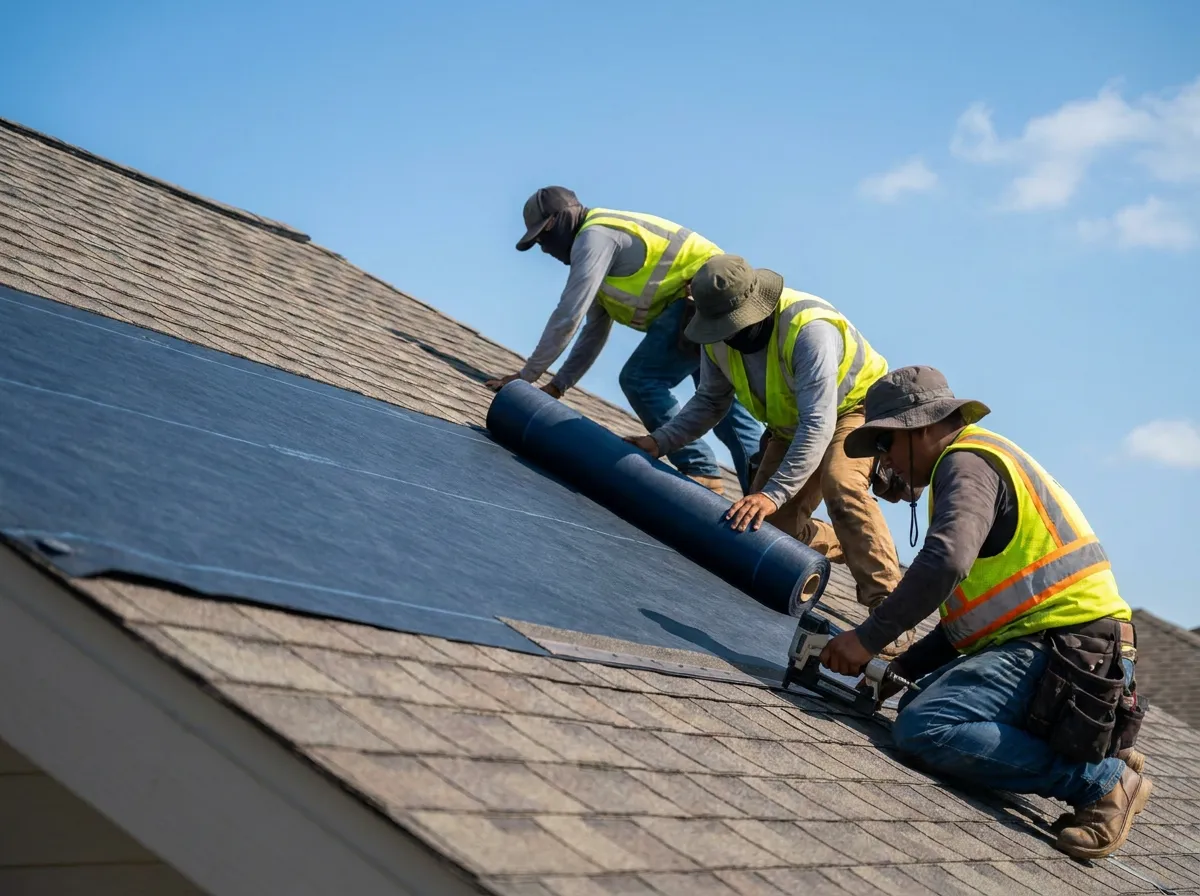
A crew running CertainTeed Landmark architectural shingles in Weathered Wood on a residential re-roof.
- Smithfield. The historic east-side grid around Smithfield Road and Davis Boulevard, settled back in the 1800s and folded into NRH in 1960. Heaviest concentration of 1970s ranches over original 3-tab or first-gen architectural shingles, and the decking under them tends to read tired during tear-off, so full-replacement scopes are common.
- Iron Horse. Golf-course homes built through the 1990s and 2000s around the city course off Iron Horse Boulevard. Bigger square footage, complex roof lines, premium shingle upgrades. HOA approval is mandatory before any material order.
- HomeTown NRH. The walkable mixed-use grid south of Mid-Cities. Steeper pitches, alley-loaded garages, and 2005 to 2015 vintage architectural laminates hitting their first major claim cycle now.
- Forest Glenn. 1990s and early-2000s production along the Davis Boulevard spine. First-generation architectural laminates showing brittle mat behavior, and a regular source of storm-cycle dispatch.
- Birdville. The historic district around the original Birdville school campus. Older deed restrictions, light HOA enforcement, plenty of generational ownership and multi-decade re-roof histories.
- Davis Boulevard corridor. Mixed residential and commercial. Older retail with TPO membrane alongside 1990s housing. Watch the southwest commercial pocket for TPO roofing calls.
- Thornbridge. Newer 2010s build-out off Davis north of Mid-Cities. Designer-line architecturals, tighter HOA enforcement, lower claim frequency but higher complexity when claims do hit.
- Crestwood Estates. Mid-size custom homes with mixed pitch profiles. HOA-enforced color palette, frequent dormer and valley work on inspection scopes.
north richland hills landmarks.
Where NRH homeowners file claims, pull permits, and drive every morning. Three spots that anchor how we work this city.
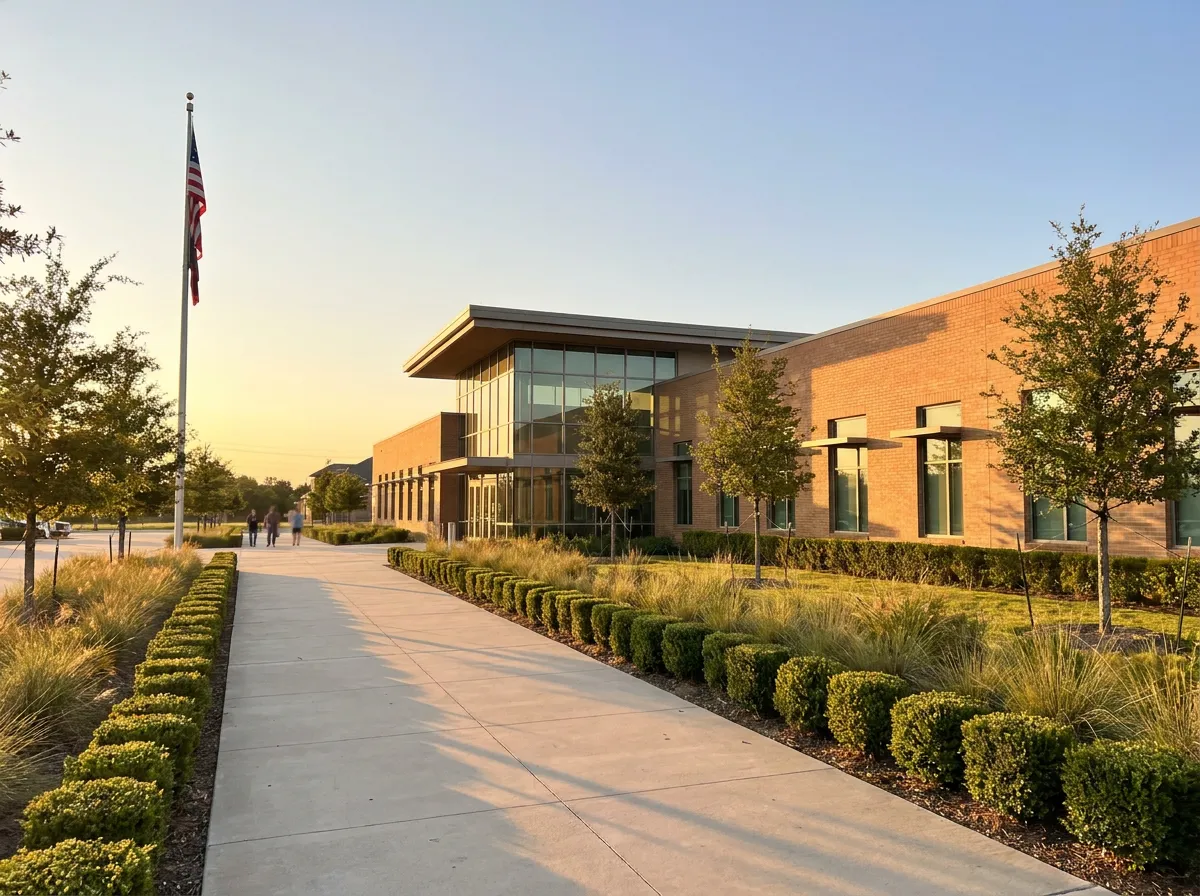
North Richland Hills City Hall at 4301 City Point Drive, where re-roof permits are pulled and HOA submittal packets get reviewed.
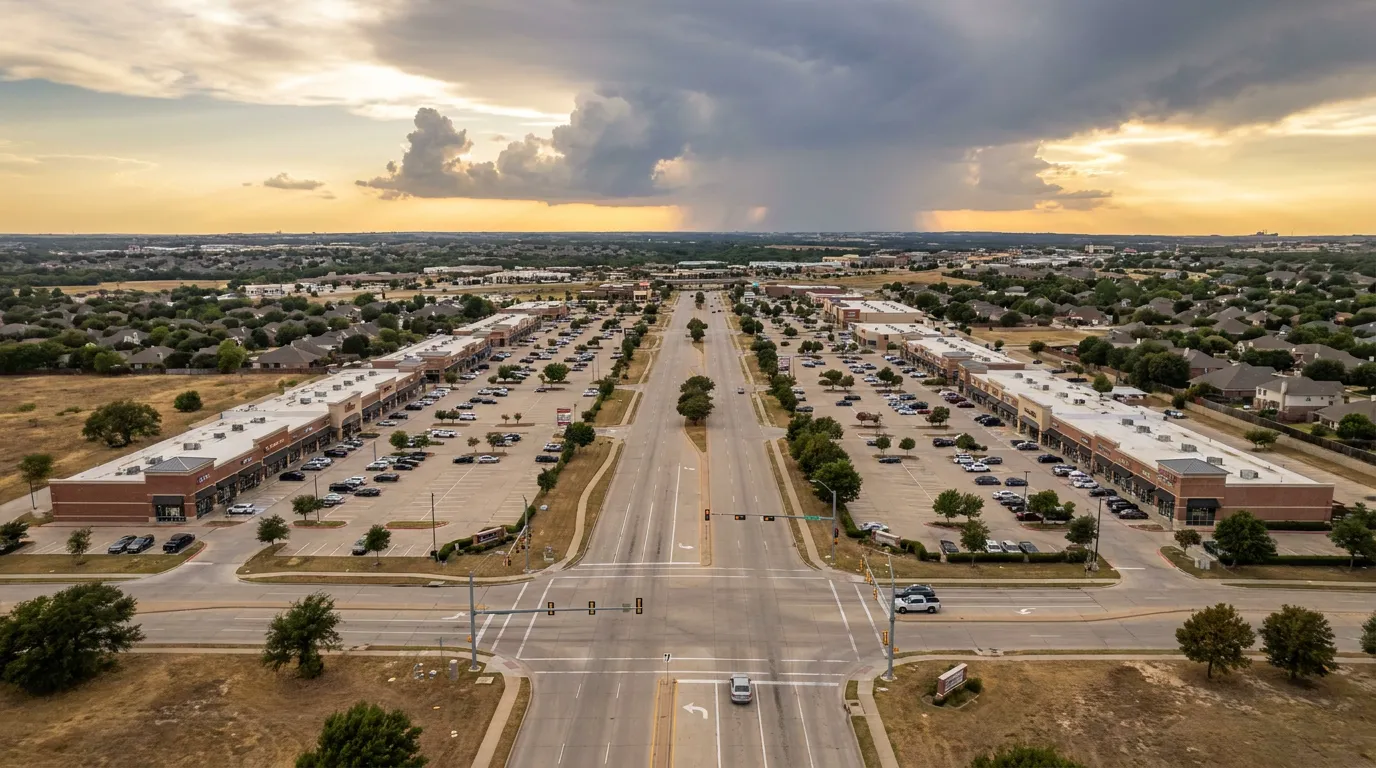
Spring hail cells track across North Richland Hills along the main commercial corridors, driving the bulk of local claim activity.
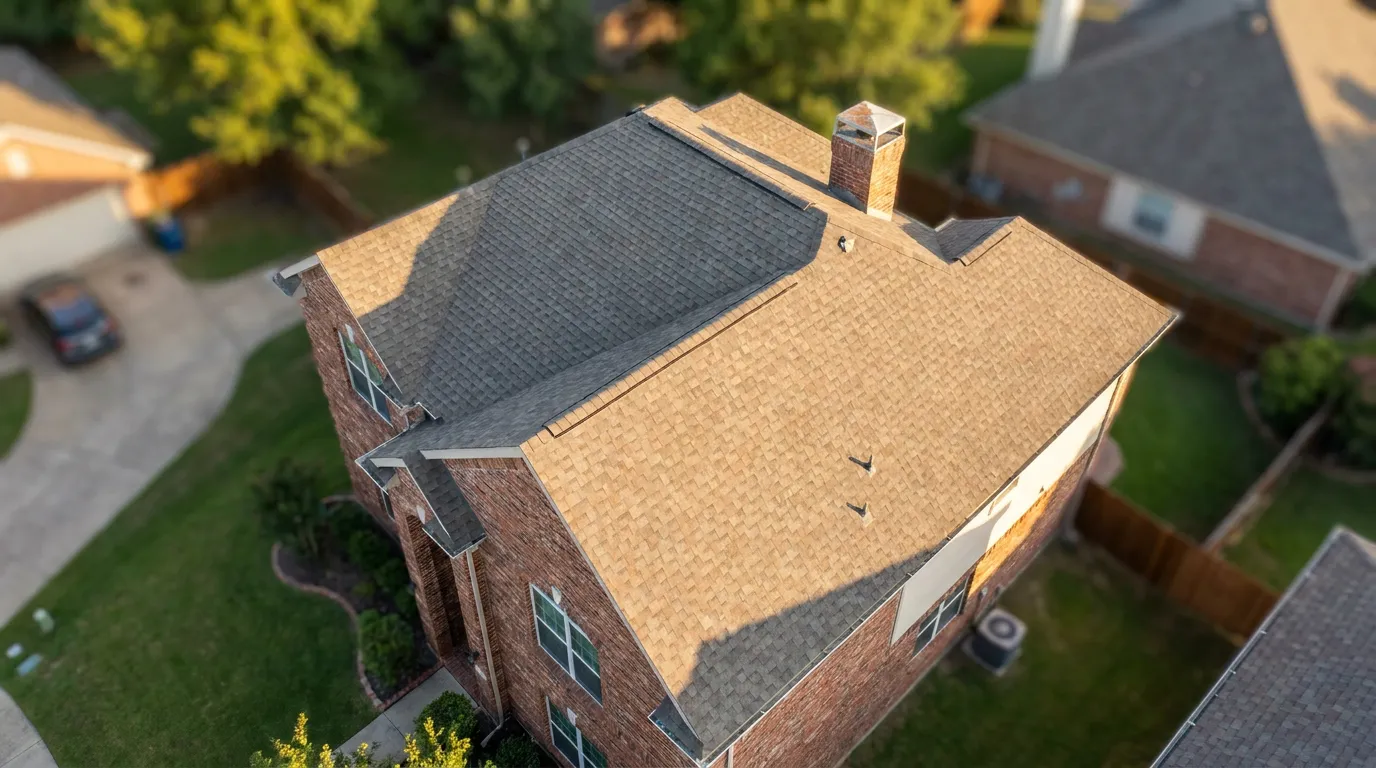
Iron Horse golf-course homes wrapped around the city course off Iron Horse Boulevard, one of the higher-claim pockets in the 76180 zip.
who you are actually hiring.
Roof Raiders & Co. is family-owned. Sara Bannat got laid off from her corporate job at 40 weeks pregnant in 2022, and instead of waiting out the storm she and her husband Mahmoud started the company out of Plano on Legacy Drive. Mahmoud runs the crews. Both of them answer the phone. When you call from a Smithfield driveway or an Iron Horse cul-de-sac the morning after a hail event, you are talking to an owner, not a call center, and the person who quotes the job is the person standing behind the warranty after it closes. Credentials are real and verifiable: CertainTeed ShingleMaster, which puts us in the top 3 percent of roofers nationally, Goldman Sachs 10,000 Small Businesses Preferred Vendor, OSHA-trained crews, and a 5.0 rating across our Google reviews, with a 24/7 storm line during season.
That owner-on-the-roof model is exactly why we hold up in an NRH adjuster meeting, where the carrier expects older housing and scopes tight. The crew lead who documented your damage is the one standing on the ridge when the adjuster arrives, photo file and InterNACHI report in hand. Meet Mahmoud and Sara.
roof replacement in north richland hills.
NRH took compounding hail through the 2022, 2023, and 2024 spring seasons, and a roof that has been bruised three seasons running is usually past the point where another repair holds. Smithfield’s older stock and the Iron Horse builds are prime full roof replacement candidates: compounding strikes embrittle the shingle mat, and carriers will total a roof they would have spot-repaired two seasons ago. A replacement resets the system end to end, full tear-off, decking allowance, synthetic underlayment, new flashings, ridge ventilation, and the registered CertainTeed 5-Star warranty, and many NRH jobs are covered claims where the out-of-pocket is the deductible. Ballpark your address with the free roof cost calculator before we climb.
Ready for a free inspection in North Richland Hills? Call (214) 326-3106, or run our free roof cost calculator for a first-look number before we ever climb. If the scope and your budget are not lining up on an out-of-pocket job, ask about our payment plans. Nearby cities we work daily: Bedford, Euless, Colleyville, Keller, and Southlake.
North Richland Hills hail history
North Richland Hills sits in the Tarrant County hail belt that catches storms rolling east off the Cross Timbers, and the Mid-Cities took repeated hail through the 2022, 2023, and 2024 spring seasons. Smithfield, Iron Horse, and HomeTown all carry roofs scoped against those cycles. North Texas hail season runs March through June, and we dispatch same-day to NRH addresses across the 76180 and 76182 zips. Verify your own date of loss against the NOAA Storm Events Database before you file.
Neighborhoods we serve in North Richland Hills
- Smithfield
- Iron Horse
- HomeTown NRH
- Forest Glenn
- Birdville
- Davis Boulevard corridor
- Thornbridge
- Crestwood Estates
North Richland Hills on the map
What We Do
Roof replacement, storm damage, and insurance claims, handled end-to-end.
DFW homes take a beating from hail every spring. Our six service lines cover everything from the first leak call to your final depreciation payment.
Hail Damage Roof Repair
Full insurance claim assistance from inspection through final depreciation payment. CertainTeed materials, ShingleMaster install.
Learn more

Full Roof Replacement
Full tear-off to bare deck with CertainTeed Landmark through Class 4 impact systems and the registered 5-Star warranty. In house payment plans on qualified projects.
Learn more

Emergency Roof Repair
Active leak? We answer 24/7 and dispatch a tarping crew the same day. Permanent repair scheduled within days.
Learn more

Residential & Commercial Roofing
CertainTeed Landmark, Landmark Pro, Presidential, and full TPO/EPDM commercial systems across DFW.
Learn more
Insurance Claim Assistance
We meet your adjuster on the roof and document full replacement scope with multi-page photo reports.
Learn more

Solar + Multi-Trade
Solar panel detach-attach during roof replacement. Gutters, fencing, siding, and windows from one trusted contractor.
Learn more
52+ 5-Star Google Reviews and Counting
52+ Five-Star
Google Reviews
ShingleMaster
Top 3% of US roofers
Goldman Sachs
10KSB Preferred Vendor
Diana Aqrabawi
Roof Raiders helped me replace my whole roof as well as updated the paint on my fence and garage! They did a fantastic job and work very efficiently. Very nice people. Highly recom…Read more
Manjit Kapri
Local Guide·
So easy to work with Sara and Moe. They communicate effectively all the way through and helped me with my insurance process.

Jamie Finley
We've had the opportunity to partner with this roofing company on multiple projects through our flooring and renovation business.
FAQs
Common questions about roofing in North Richland Hills.
North Richland Hills homeowners, schedule your free inspection.
Free inspection. No pressure. ShingleMaster certified.