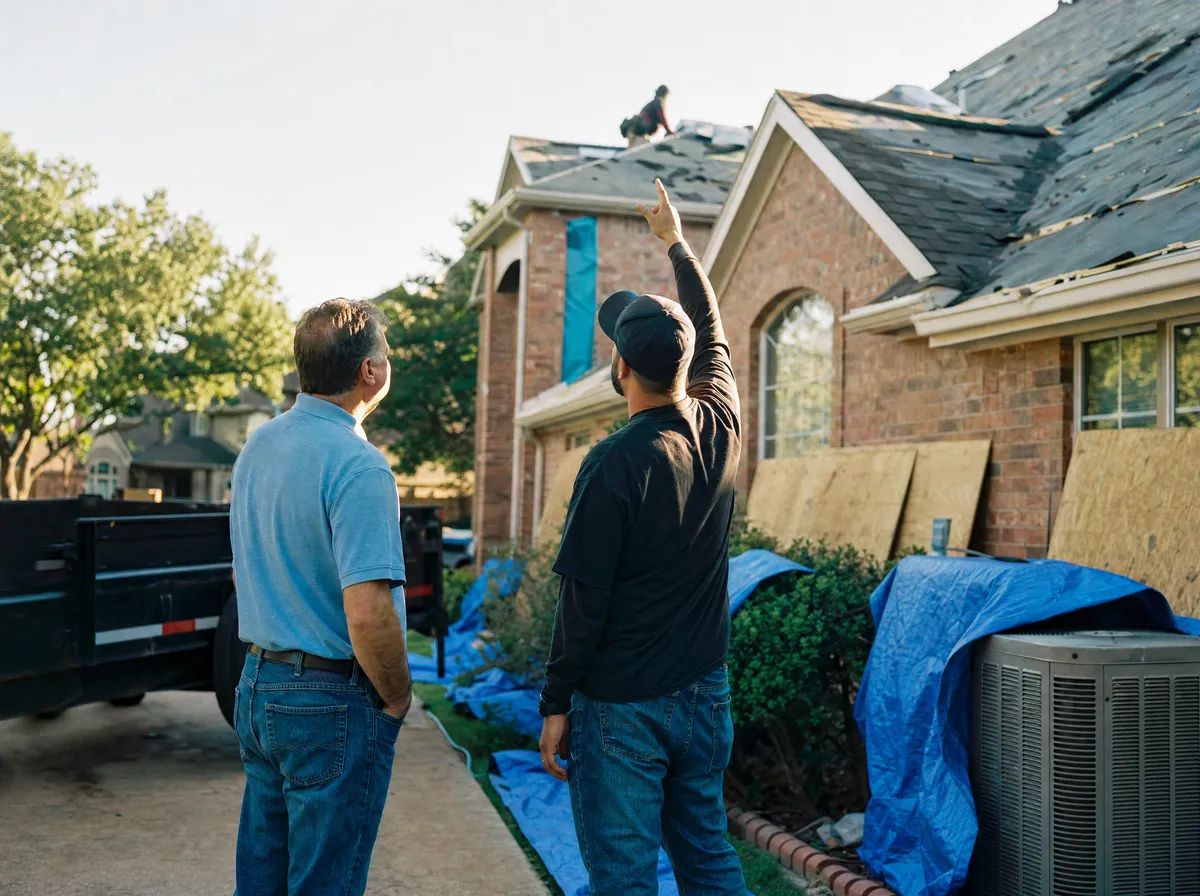
You signed the contract. Now the questions start: should you be home, how bad is the noise, do you need to move the patio furniture, is somebody pulling a permit, and what exactly happens when the trailer shows up at 6:45. You do not need to be home, it is very loud for about ninety minutes, yes on the furniture, yes on the permit, and the trailer is the first of a dozen things that happen in a set order. Here is the full run-down, in the order you will experience it, from a crew that has done this on hundreds of DFW roofs.
For how long the whole thing takes by roof size, read how long it takes to replace a roof first. This post is about everything around the timeline.
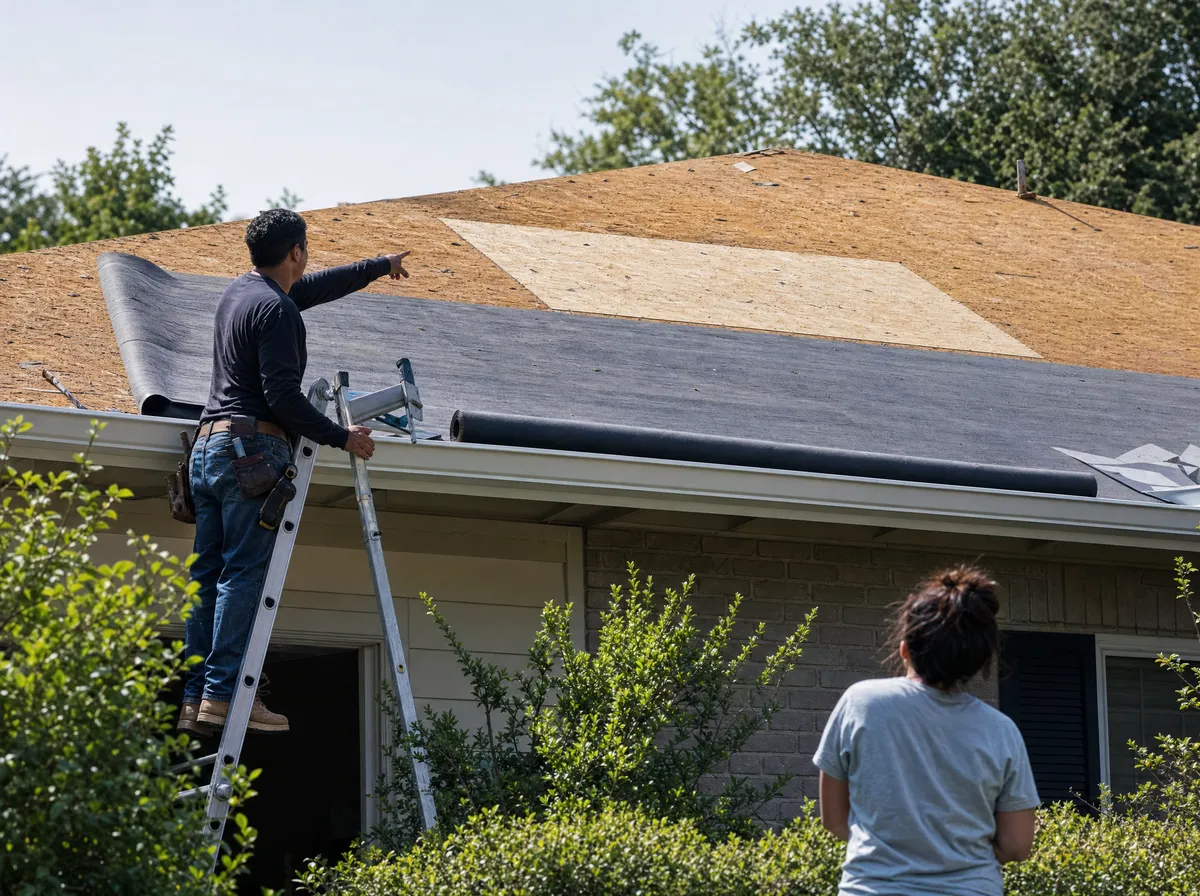 The walk-through at dry-in. This is the moment to ask questions, not the day after the shingles are on.
the week before: permits, materials, and hoa paper.
Three things happen before anyone climbs a ladder, and two of them are on the contractor.
The permit. Every city in Dallas-Fort Worth requires a roofing permit, and the fee runs roughly $95 to $250 in Collin County, $125 to $300 in Dallas County, and similar across Tarrant and Denton. The contractor pulls it. If a bidder tells you a permit is optional, or asks you to pull it as an owner-builder to “save money,” that is the whole bid telling you something.
Material delivery. Shingles, underlayment, drip edge, vents, and the dump trailer arrive the evening before or first thing that morning. The delivery truck may boom bundles directly onto the roof. Move cars to the street the night before, because once the trailer is in the driveway it is there until the last sweep.
HOA approval, if you have one. Communities like Marshall Ridge in Keller and the Oakmont custom sections require an architectural submittal with the shingle profile and color before materials are ordered. That adds 5 to 10 business days up front, not to install day. The contractor should handle the packet.
The Texas Department of Insurance adds a paperwork rule worth following before any of this starts: never sign “a contract with blank spaces,” because “shady contractors will fill in the spaces later with higher costs.” Your contract should already show the shingle line and color, the decking rate per sheet, the permit, and the dry-in point in writing.
the night before: what to move and why.
Roof work shakes a house more than people expect. Tear-off is ninety minutes of scraping directly overhead, and nail guns run most of the afternoon. Here is the prep list we text every homeowner the day before.
- Inside, under the roof: take down pictures, mirrors, and anything hanging by a single nail. Move fragile items off high shelves. If you have attic storage, drape a sheet over it, because decades of dust shakes loose from the underside of the deck.
- Garage and driveway: empty the driveway, and take anything you need out of the garage in the morning, because the trailer blocks the door.
- Outside: patio furniture, grills, planters, and anything within about ten feet of the eaves moves to the middle of the yard or into the garage. Mark sprinkler heads with flags. Roll up the outdoor rug.
- Vehicles: on the street, not under the boom path. Shingle bundles are heavy and delivery drivers are not surgeons.
- Pets and kids: inside during tear-off at minimum, and ideally somewhere else for the morning. Dogs in particular do not enjoy the first hour.
- Neighbors: a text the night before about the trailer and the noise buys a lot of goodwill.
Ninety minutes of noise you planned for is an inconvenience. Ninety minutes you did not plan for is a broken heirloom.
should you stay home? here is the honest answer.
You can, and you do not have to. The crew never needs inside access, the driveway and garage are the only spaces we use, and the owner or crew lead is reachable by phone the entire day. A lot of homeowners leave during tear-off, come back for the dry-in walk-through around noon, and leave again for the afternoon.
If you do stay, work from a room on the far side of the house or the ground floor, expect the internet to stay up (we do not touch utility lines) but the concentration to go down, and plan on not using the driveway. If you work from home on calls, this is a good day for the coffee shop.
What you should be present for, or send someone for: the dry-in walk-through at midday, where the crew lead shows you the decking that was replaced and the underlayment going down, and the final walk at the end, where you see the ridge, the flashings, and the yard after the magnet sweep.
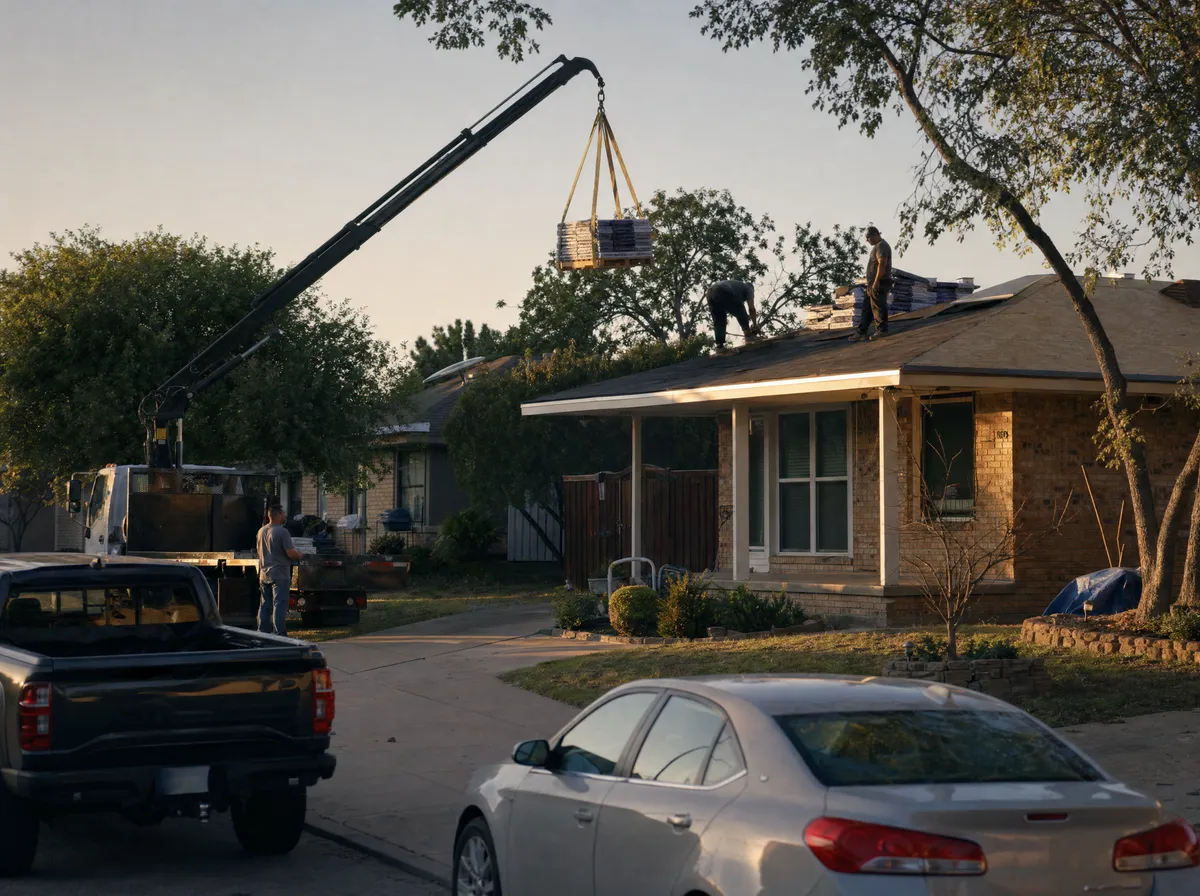 Materials land the evening before. Cars come out of the garage tonight, because the trailer takes the driveway at 6:45.
install day, in the order it happens.
- 6:45 to 7:00. Trailer positioned, tarps go down over landscaping and the AC condenser, plywood leaned against windows under the eaves.
- 7:00 to 8:30. Tear-off. The loud part.
- 8:30 to 10:00. Decking walked and probed. Soft or split sheets replaced at the per-sheet rate that is already on your contract. You are shown every one.
- 10:00 to noon. Drip edge, ice and water shield in valleys and around penetrations, synthetic underlayment across the deck. The house is weather-tight from here.
- Noon to 4:30. Starter, field shingles, step and counter flashing, pipe boots, vents, ridge vent, ridge cap.
- 4:30 to 5:30. Gutters cleaned out, triple magnetic sweep of driveway, lawn, and beds, final walk with you.
On a two-story or steep roof, steps 1 through 4 are day one and steps 5 and 6 are day two, so the deck is never exposed overnight. If rain is in the forecast, tear-off does not start, and that is a schedule working, not slipping. DFW averages 46 thunderstorm days a year, with May the wettest month, so a spring install occasionally moves 48 hours on short notice.
gutters, skylights, and the “is that included?” list.
Gutters. Existing gutters are protected during tear-off, cleaned of debris at the end, and re-secured if anything loosened. New gutters are a separate line item, and tear-off day is the cheapest day of your life to replace them, because the crew, the trailer, and the ladders are already on site. If you want them, put them on the estimate before you sign, not as an add-on afterward.
Skylights. The flashing kit gets replaced during a tear-off regardless. If the skylight itself is more than about ten years old, replace the unit at the same time; doing it separately later costs far more.
Vents and attic ventilation. Most 2000s DFW roofs were under-vented. A replacement is when ridge vent gets cut and soffit intake gets opened up, at $8 to $18 per linear foot for the ridge vent. It is the line item bad bids quietly skip.
Satellite dishes and solar. Dishes come off and go back on, and you may need to call your provider to re-aim. Solar panels are a detach-and-reattach coordinated with your installer, and it adds a day.
Decking. Budget $70 to $100 per sheet for anything the tear-off exposes. The count is unknown until the shingles are off, which is exactly why the rate has to be on the contract beforehand.
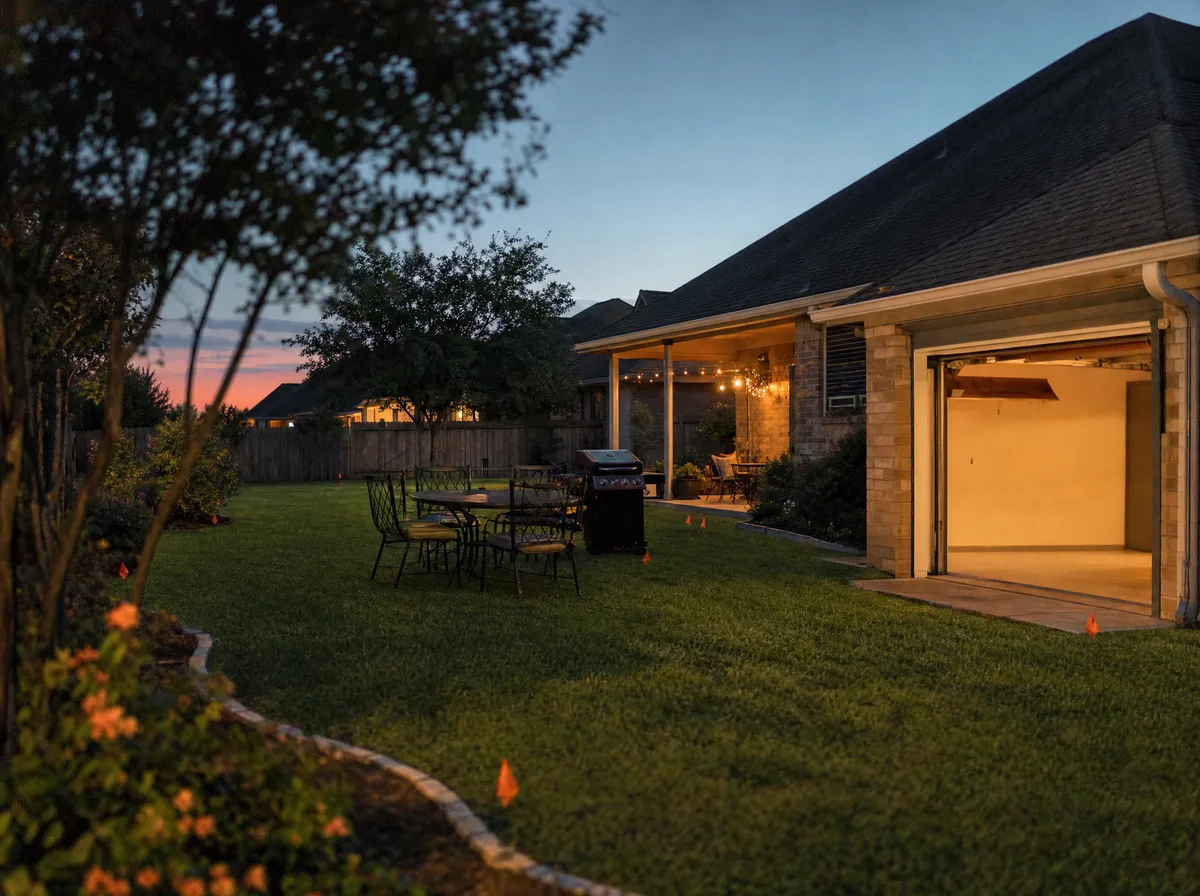 Ten feet from the eaves is the rule. Furniture, grill, planters, and flags on every sprinkler head.
paying: deposit, deductible, and the two checks.
If you are paying out of pocket, expect a deposit at material delivery and the balance at substantial completion, in writing. TDI’s guidance is direct: “Be wary if a contractor asks for a large or full down payment,” and after a disaster “it’s against the law for out-of-town contractors to ask for a down payment before they start.”
If a storm claim is paying, your out-of-pocket is your deductible, and TDI is blunt about the rest: “It’s illegal for contractors to waive your deductible or help you avoid paying it,” and your carrier “can ask for proof that you paid your deductible before it pays the full amount of your claim.” Keep the canceled check or the payment plan paperwork. The carrier’s first check (actual cash value) usually arrives before the job, and the recoverable depreciation is released after the final invoice and photos are submitted. The insurance claim guide walks the whole sequence.
what the day looks like on a roof raiders job.
Every step above is how we run the job, and the parts that matter most are in your contract before we schedule: the shingle line and color, the per-sheet decking rate, the permit as a line item, the dry-in point, and the CertainTeed warranty we register in your name. The full scope is on the roof replacement page.
The night before, Sara sends the prep list above by text. Morning of, the crew lead introduces himself before the first shovel. Midday, you get the dry-in walk-through. End of day, the lead walks the roof and the yard with you, and you get the photo set the crew took at every stage. Out-of-pocket customers can use our in-house payment plan on qualified projects, with a larger deposit and the balance split on a schedule we agree on together.
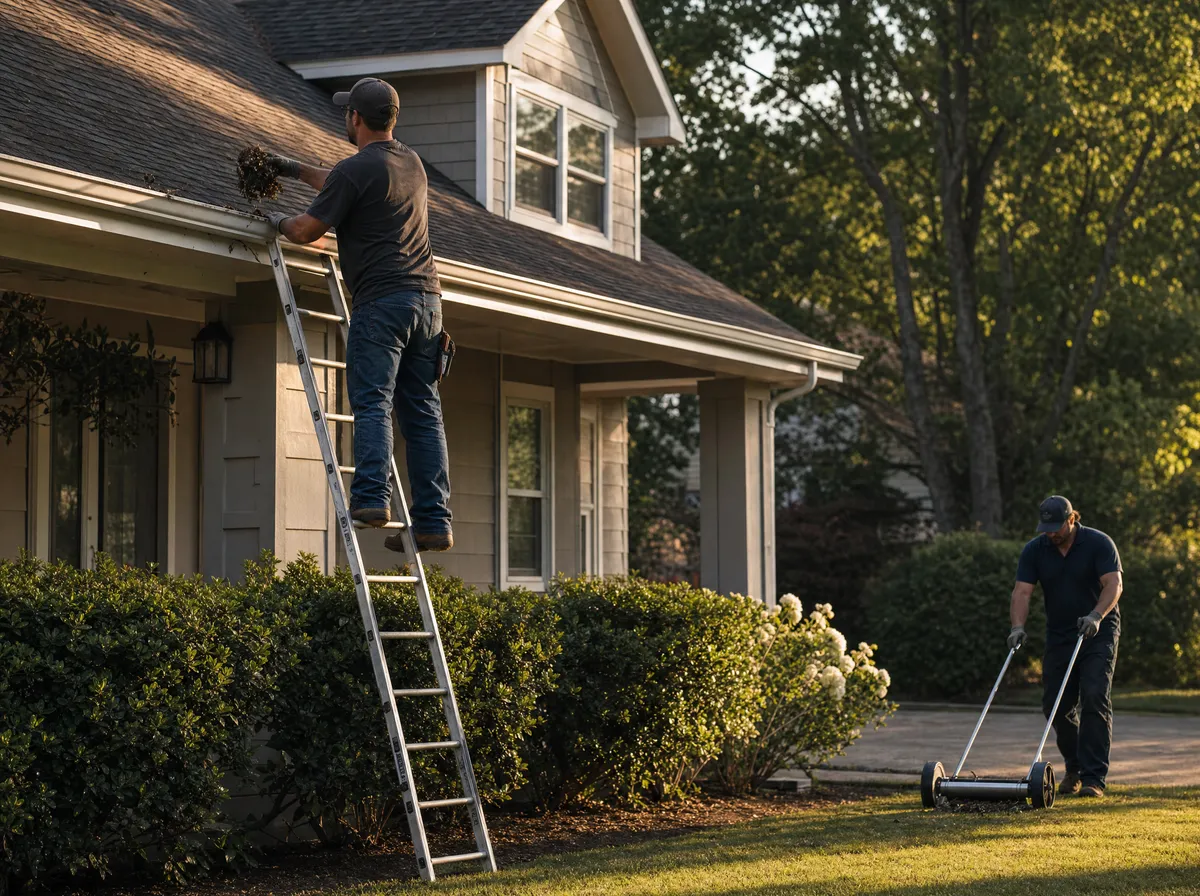 Gutters cleaned, triple magnet pass, then the final walk with you. That is how the day ends.
You should be able to leave for the day, come back, and know exactly what happened while you were gone. That is what the photo set is for.
Have a question this post did not cover? Call (214) 326-3106, or run the free roof cost calculator to see your roof’s size and the price range before we talk.
frequently asked questions.
Should I stay home during a roof replacement? You can, but you do not have to. The crew never needs access inside. Many homeowners leave for the loud morning and return for the midday and end-of-day walk-throughs.
How loud is a roof replacement? Tear-off is roughly ninety minutes of scraping directly overhead, then nail guns through the afternoon. Expect enough wall vibration to knock loose anything hanging by a single nail.
What should I do to prepare for a roof replacement? Clear the driveway and garage, move cars to the street, take wall hangings down under the roof, cover attic storage, move patio furniture away from the eaves, mark sprinkler heads, and keep kids and pets inside during tear-off.
Are gutters included in a roof replacement? Existing gutters are protected and cleaned. New gutters are a separate line item, and install day is the cheapest time to add them.
Do I need a permit to replace my roof, and who gets it? Yes, in every DFW city, at roughly $95 to $300 by county. The contractor pulls it and has it inspected after the install.
What happens if it rains during my roof replacement? Tear-off does not start into a rainy forecast. If a cell pops up mid-install, the deck is fully dried in before anyone leaves. A bare deck under a blue tarp overnight should never happen.
Can I get a new roof in winter in Texas? Yes. Winter has fewer storm days, shingles seal fine in a dry window above freezing, and the calendar is easier to book before hail season.