If your adjuster approved a $24,800 roof replacement and the first check came in at $14,200, you did not get shorted. You got an ACV check, and the rest is sitting in a bucket called recoverable depreciation that you collect after the roof is installed. ACV (Actual Cash Value) is what your roof is worth today after years of wear. RCV (Replacement Cost Value) is what it costs to put a brand new roof back on. Almost every Texas homeowner policy written in the last decade pays on an RCV basis, but it pays in two checks, and the second one only releases when you finish the work and send proof.
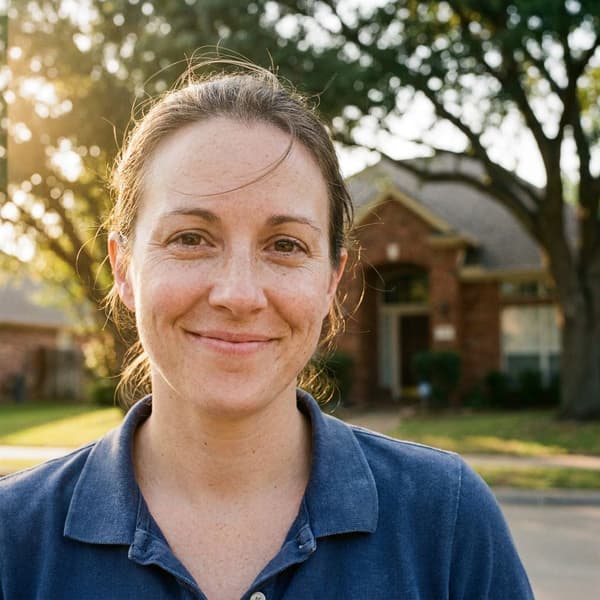
I am Sara Bannat. My husband Mahmoud and I started Roof Raiders in Plano in 2022 after I was laid off at 40 weeks pregnant. Since then we have walked hundreds of DFW homeowners through claims from the May 28 2023 Frisco hailstorm, the April 9 2024 Allen/Plano cell, and the June 17 2024 derecho that hammered Wylie and Garland. The same question comes up on almost every kitchen table: why is the check smaller than the estimate? This post is the answer in plain English, with the math, the timeline, and the paperwork that gets the rest of the money released.
 Reviewing an insurance scope of loss at the kitchen table. The Net Claim line is the ACV check and the Recoverable Depreciation line is the second check.
what acv and rcv actually mean.
Forget the textbook definitions for a second. Here is how it works in the real world on a Texas hail claim.
Replacement Cost Value (RCV) is the total cost to tear off your damaged roof and install a new one at today’s labor and material prices. On a typical 2,400 sq ft Plano two-story with architectural shingles, RCV runs $18,000 to $32,000 depending on pitch, stories, decking condition, code upgrades, and whether you have synthetic underlayment or felt.
Actual Cash Value (ACV) is the RCV minus depreciation. Depreciation is the dollar value your roof has lost from age and wear since the day it was installed. A 12-year-old roof has burned through 12 years of its useful life, so the carrier subtracts that wear before cutting the first check.
Recoverable Depreciation (RCD) is the depreciation amount your carrier is willing to pay back to you once the work is actually completed. This is the line that turns an ACV policy into an RCV policy in practice.
The formula every adjuster uses:
RCV minus Depreciation = ACV ACV minus Deductible = First Check Recoverable Depreciation (released after install) = Second Check
a real example from a may 23 2024 mckinney claim.
Numbers make this click faster than definitions. Here is a real Stonebridge Ranch claim from the May 23 2024 hailstorm, with the homeowner’s permission and the address scrubbed.
| Line item | Amount |
|---|---|
| Replacement Cost Value (RCV) | $26,840.00 |
| Less depreciation (11-year roof) | ($7,920.00) |
| Actual Cash Value (ACV) | $18,920.00 |
| Less deductible (1% of $485k dwelling) | ($4,850.00) |
| First check (ACV minus deductible) | $14,070.00 |
| Recoverable depreciation (released after install) | $7,920.00 |
| Total carrier pays at completion | $21,990.00 |
| Homeowner out of pocket (the deductible) | $4,850.00 |
The homeowner’s first reaction was “the check is $12,770 short.” It was not. The check was correct. The remaining $7,920 was sitting in the recoverable depreciation bucket, waiting on a final invoice and a Certificate of Completion. We installed a CertainTeed Landmark Pro system, submitted the documents, and the supplement check landed 18 days later.
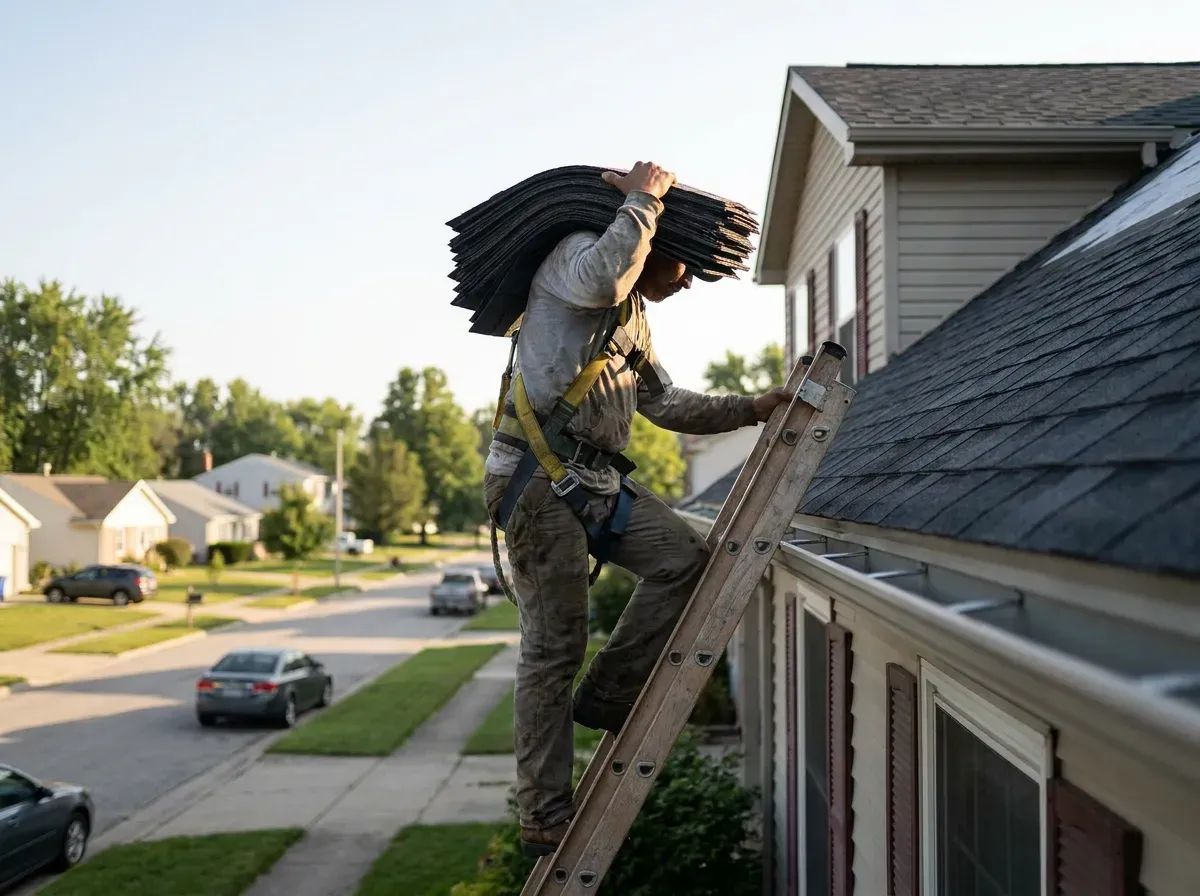 CertainTeed Landmark Pro in Weathered Wood with synthetic underlayment and ice-and-water shield in the valleys, an illustrative install photo.
how depreciation gets calculated.
Carriers use a depreciation table that assigns shingles a useful life and ages them month by month. The big three baselines you will see on a Texas claim:
- 3-tab asphalt: 20 to 25 year useful life. Loses about 4% to 5% per year.
- Architectural (laminated) asphalt: 25 to 30 year useful life. Loses about 3.3% to 4% per year.
- Impact-resistant (Class 4) asphalt: 30 year useful life. Loses about 3.3% per year, and many Texas carriers give you a premium discount for installing one.
So a 12-year-old architectural shingle roof is roughly 40% to 48% depreciated. On a $26,000 RCV, that is $10,400 to $12,480 sitting in the depreciation column. It looks scary on the scope, but if your policy is RCV, that money comes back when you complete the project.
A few wrinkles Texas homeowners hit constantly:
- Decking, fascia, and gutters depreciate separately. Your shingle depreciation rate is not your fascia depreciation rate. Adjusters sometimes use one blanket rate, and that is a supplement worth fighting.
- Code upgrades are usually non-depreciated. Texas adopted the 2021 IRC in most cities. Drip edge, synthetic underlayment in some jurisdictions, and ice-and-water on low-slope sections are code items that should be paid at full RCV, not depreciated.
- Labor is sometimes depreciated, sometimes not. This is policy-by-policy and state-by-state. In Texas, most major carriers depreciate labor on roofs. If yours does not, your ACV check will be noticeably higher.
how to read your scope of loss.
When your adjuster emails the scope of loss (also called the estimate or the summary by category), scroll to the last page. There is always a financial summary block. Look for these four lines:
- Replacement Cost Value (the full job)
- Less Non-Recoverable Depreciation (you will not get this back, ever)
- Less Recoverable Depreciation (you will get this back when the work is done)
- Less Deductible (your share, never paid by the carrier)
- Net Claim (this is what the first check will be)
If you see a non-recoverable depreciation line and you are on an RCV policy, ask why. It usually means the carrier classified part of the loss as cosmetic or assigned a higher depreciation rate than the shingle warranty supports. That is a conversation worth having before you sign anything.
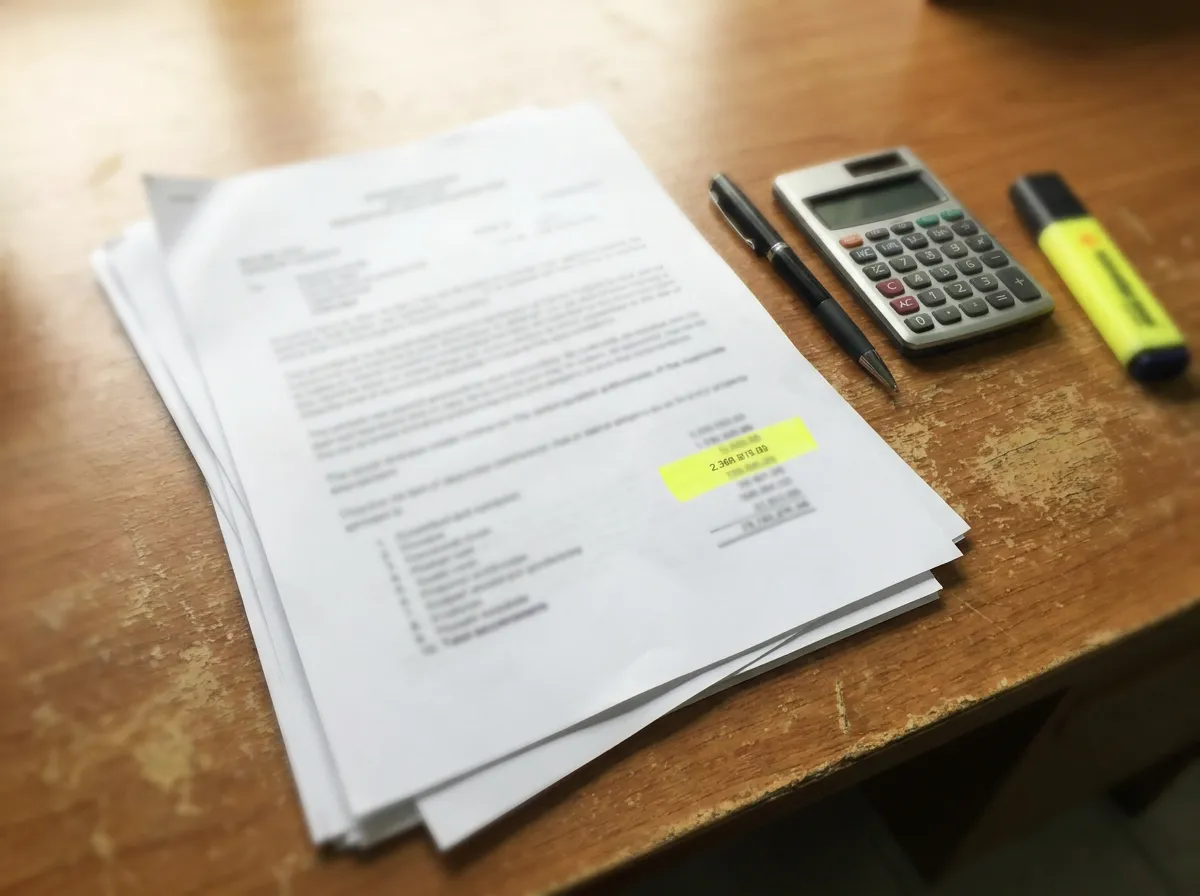 Sample scope of loss financial summary. The Net Claim line is what hits your mailbox first.
acv vs rcv policy: how to tell which one you have.
Pull out your declarations page (the cover sheet of your policy) and look at the dwelling coverage section. You are looking for one of two phrases:
- Replacement Cost or RCV or Cost of Repair or Replacement. This means RCV. You get the depreciation back.
- Actual Cash Value or ACV. This means the depreciation is gone. The first check is the only check.
Most Texas homeowner policies are RCV by default on the dwelling, but a growing number of carriers (especially after the 2023-2024 hail cycle) are pushing ACV roof endorsements for older roofs. These endorsements are sometimes called:
- Roof Surfacing Schedule (Allstate)
- Roof Payment Schedule (State Farm in some states, not yet broadly in Texas)
- Cosmetic Damage Exclusion (various carriers)
- Wind/Hail ACV Endorsement (Travelers, some Liberty Mutual policies)
If you see any of those phrases on your declarations page, your roof is on ACV even if the rest of your dwelling is on RCV. The check you get is the only check. Read the renewal letter every year. Carriers are quietly moving customers to ACV roof schedules at renewal across Plano, Frisco, McKinney, and Allen right now.
the timeline from claim to recoverable depreciation check.
Here is the realistic timeline on a clean DFW hail claim, the kind we run every week:
- Day 0: Storm hits. You file the claim with your carrier the same day or the next morning.
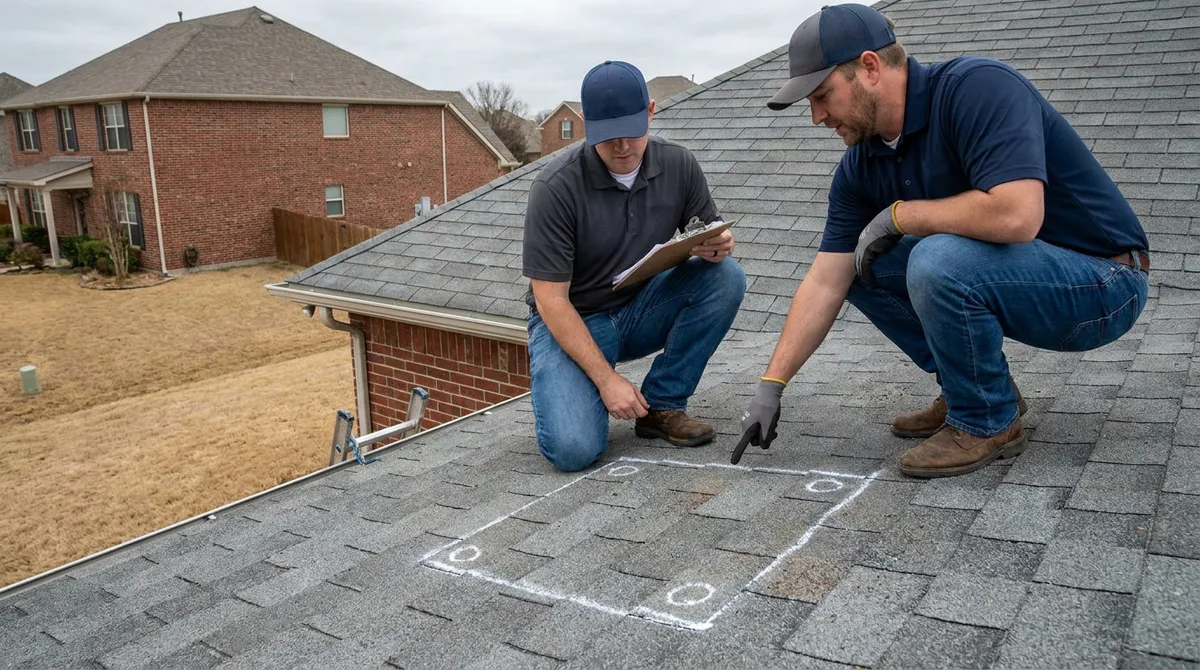
- Day 3 to 14: Adjuster meets us on the roof. We walk the damage together. Adjuster writes the scope of loss within 48 to 72 hours after the inspection.
- Day 7 to 21: First check arrives. This is the ACV check (RCV minus depreciation minus deductible). Deposit it. It is yours to use toward the install.
- Day 14 to 45: We sign the contract, order material, and schedule the install. On a typical 2,500 sq ft home in Plano or Frisco, tear-off and install is a one-day job.
- Day 30 to 60: We send the carrier the final invoice, the Certificate of Completion, and photo documentation. This is the “release the depreciation” packet.
- Day 45 to 90: Recoverable depreciation check arrives. Endorse it to us, we close the file.
If you are inside this window, you are on track. If you are at day 90 and the second check has not arrived, the supplement packet is usually missing something. Common culprits are a missing permit close-out, a missing material invoice, or a carrier that wants the final invoice on letterhead with a specific line item breakdown. Our guide to recoverable depreciation on a Texas roof claim walks through that exact packet.
supplements: the third bucket most homeowners do not know about.
Here is the part that surprises people. The original scope of loss is almost never the final number. We submit supplements on roughly 70% of insurance jobs we run. A supplement is an additional payment for items the adjuster missed, mispriced, or did not have visibility into until tear-off.
Common Texas supplement items in 2025-2026:
- Decking replacement (rotted or cracked OSB found at tear-off). Standard allowance is 1 to 2 sheets per claim. We routinely find 8 to 14 sheets on 1990s Garland and Mesquite homes.
- Ice-and-water shield in valleys and around penetrations, required by 2021 IRC.
- Drip edge on eaves and rakes if not on the original estimate.
- Ridge vent or off-ridge vent count mismatch (adjusters often write 3 vents when there are 7).
- Step flashing replacement where it ties into siding.
- Detach and reset for solar, satellite, lightning protection.
- Code upgrades specific to your city. Plano, Frisco, McKinney, and Allen all enforce slightly different versions of the IRC.
A clean supplement on a hail claim runs $1,800 to $6,400 in extra payment from the carrier. It does not come out of your pocket. It is a conversation between our office and your carrier’s desk adjuster. You see it as a third check or an addition to the recoverable depreciation release.
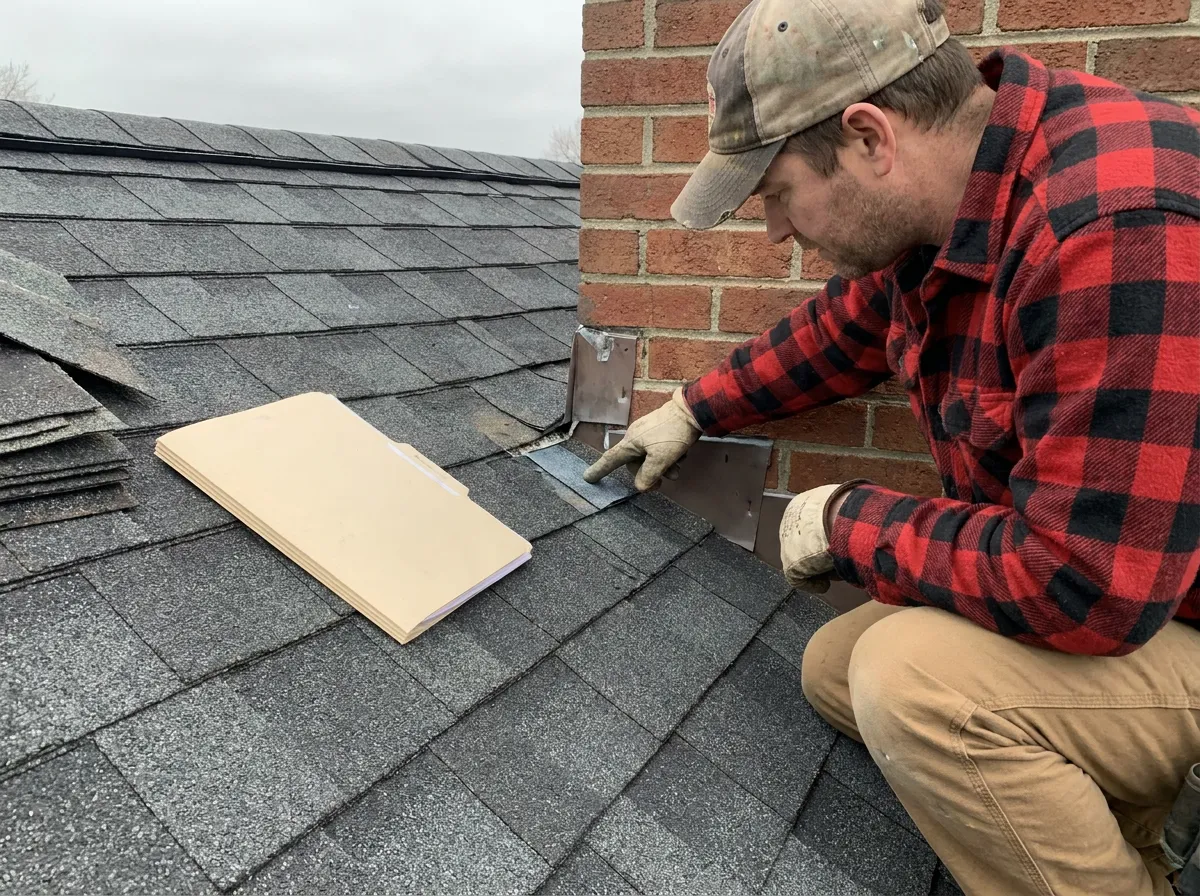 Documenting decking replacement and new step flashing, both common insurance supplement items.
what to do (and not do) before signing anything.
A short list of moves that save Texas homeowners thousands every storm season:
- Do not cash the first check until you have a roofer under contract. You do not have to sign over the first check on day one, but if your lienholder is on the check (most are over $10,000), you will need their endorsement too. Start that paperwork early.
- Do not sign with a door knocker on the spot. The red flags worth watching for are out-of-state license plates, a contingency contract or assignment of benefits pushed at your doorstep, no verifiable local address, and pressure to sign before your adjuster has even seen the roof.
- Do get a second opinion if your claim was denied or partial-approved. Adjusters miss damage every day, especially on darker shingles where bruising is hard to see in flat light. A free re-inspection is worth the hour.
- Do ask whether your roof is on RCV or ACV at every renewal. If your carrier moved you to ACV without telling you, you want to know before the next storm, not after.
- Do read our payment plans page if you are between the first check and the second check and cash flow is tight. We offer an in-house payment plan on qualified projects, with a larger upfront deposit to get the work started and the balance split over flexible terms depending on the size of the project.
frequently asked questions.
Why is my insurance check so much smaller than the roofer’s estimate? Because the first check is ACV, not RCV. It is the replacement cost minus depreciation minus your deductible. If you are on an RCV policy, the depreciation comes back to you as a second check after the roof is installed and the carrier receives a final invoice and Certificate of Completion.
Can I keep the difference if the roof costs less than the insurance estimate? No. In Texas, the carrier pays based on the actual cost to complete the work. If the final invoice is lower than the scope, the depreciation released is the lower amount. Pocketing the difference is insurance fraud. If the final invoice is higher than the scope, that is a supplement and the carrier pays the difference (minus your deductible, which is already accounted for).
Do I have to pay my deductible? Yes. On a covered claim, your deductible is your share of the project. We accept it by check or card, and you can price out the full project ahead of time with our free roof cost calculator.
How long do I have to file a hail claim in Texas? Most Texas homeowner policies give you up to one year from the date of loss to file. Some carriers have tightened this to 180 days. Check your policy. We have customers from the May 28 2023 Frisco storm still filing claims in early 2024 because the damage did not become obvious until a leak appeared months later.
What happens if I never do the work? The recoverable depreciation expires. Most Texas carriers give you one year from the date of loss (some give you 180 days from the first check) to complete the work and submit the final invoice. If you miss the window, the depreciation goes back to the carrier. You keep the ACV check, but the second check evaporates.
Will filing a claim raise my premium? In Texas, a single weather-related claim usually does not raise your individual premium, but it can affect your eligibility for renewal if your carrier is shrinking its roof exposure. A more common outcome in 2025-2026 is that your carrier renews you on an ACV roof endorsement instead of dropping you. That is the version of “consequence” most Plano and Frisco homeowners are seeing right now.
If you are sitting at the kitchen table with a scope of loss and a check that does not match the estimate, call us at (214) 326-3106 and read the numbers out loud. We will tell you in five minutes whether the carrier paid correctly, what is missing, and what the path to a clean roof replacement or storm damage repair looks like. No pressure and no door-knocking. Just the math, the timeline, and the paperwork.