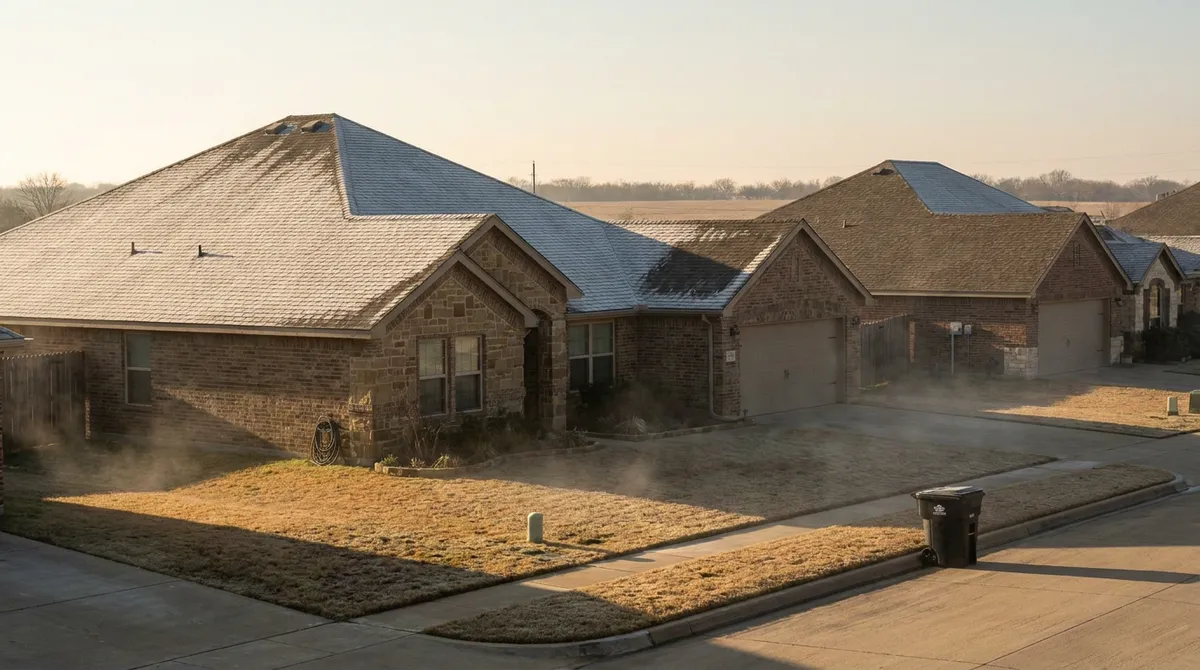
If you only do one thing for your Dallas roof before December, walk the perimeter of your house and look up. The fastest way to catch winter trouble is a 15-minute ground-level check for missing shingles, sagging gutters, and exposed flashing. North Texas doesn’t get Buffalo-style snow loads, but we do get the freeze-thaw cycle that turns small leaks into ceiling stains by February. Between the January 2024 ice storm and the back-to-back freezes we’ve seen every winter since 2021, the roofs that hold up are the ones owners checked in October and November. This is the 12-point list I give every Plano and Dallas homeowner who calls before the holidays.
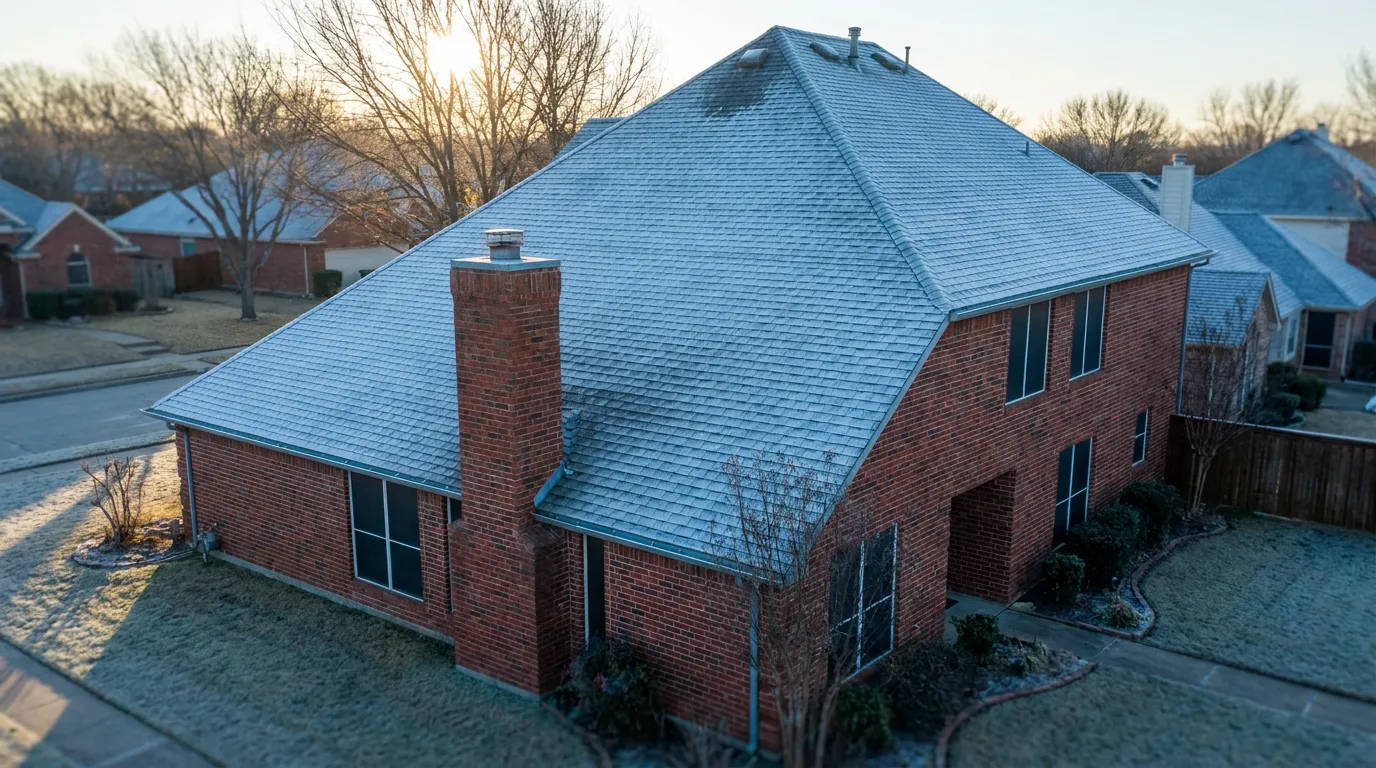 Early morning frost on a North Texas roof. The shaded north slope is where ice dams tend to start.
why dallas winters are harder on roofs than people think.
We don’t get the snow that Chicago or Denver does. What we get is worse for asphalt shingles in some ways: temperature swings from 70 degrees on a Tuesday to 22 degrees by Thursday night. That expansion and contraction loosens sealant strips, cracks aging shingles, and pulls flashing away from chimneys and walls. The February 2021 freeze damaged thousands of DFW roofs that had been fine for years. The January 2024 ice storm did the same thing on a smaller scale across Plano, Frisco, and McKinney.
The point isn’t to scare you. The point is that a 30-minute check in November can prevent a $4,800 repair in February. Here’s the checklist I use on my own house in Plano.
the 12-point winter roof checklist.
I broke this into ground-level checks (safe to do yourself) and roof-level checks (call us or a roofer you trust). Don’t climb a wet or frosty roof. Ever.
ground-level checks (do these yourself).
1. Walk the perimeter and look up. You’re looking for shingles that are curled, cracked, lifted at the edges, or just plain missing. Bring binoculars if you have them. Pay extra attention to the south and west slopes, which take the most UV damage in summer and crack first in winter.
2. Check the gutters for shingle grit. Open your downspout splash blocks and look for piles of black or gray granules. A small amount is normal. A coffee cup’s worth from one downspout means the shingles are losing their protective coating and are within a year or two of needing replacement.
3. Look at every gutter seam and downspout joint. Sagging gutters in November turn into ice-loaded gutters in January, and ice-loaded gutters rip fascia boards off houses. If a gutter is pulling away from the house more than a quarter inch, it needs to be re-secured. Our gutters service in Dallas handles re-hangs and full replacements.
4. Check the soffits and fascia for paint failure or soft spots. Peeling paint on the underside of the roof overhang means water is getting in from above. Soft fascia means rot. Both get worse in winter when ice traps moisture against the wood.
5. Look at the chimney from the ground. Cracked mortar joints, missing chimney cap, or visible gaps between the chimney and the roof are red flags. Chimney flashing is the single most common leak source on Dallas homes built before 2010.
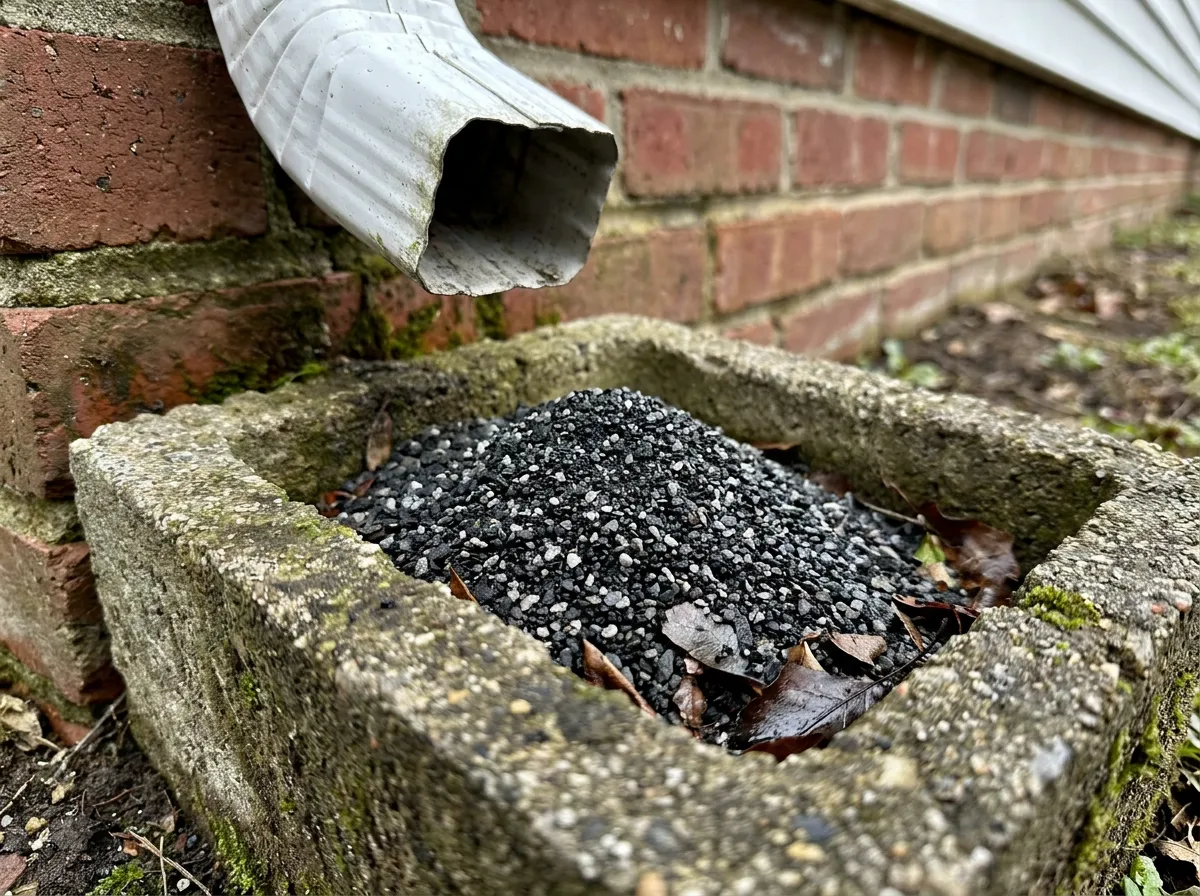 Granule loss collected in a downspout splash block, a sign the shingles are nearing the end of their life.
6. Check the attic from inside. Go up with a flashlight on a sunny afternoon. If you see daylight through the roof deck, you have a hole. If you see dark stains on the underside of the plywood, you have an active or recent leak. If you smell musty air, you have a ventilation problem that winter will make worse.
roof-level checks (call a roofer for these).
7. Inspect every piece of flashing. That’s the metal around chimneys, skylights, vent pipes, and where the roof meets a wall. Flashing is what fails first on most DFW roofs. Re-sealing or replacing flashing on a typical Plano home runs $350 to $900 depending on how many penetrations there are.
8. Check the condition of pipe boots. Rubber pipe boots crack from UV exposure usually within 8 to 12 years in Texas. A cracked pipe boot dumps water directly into your attic. Replacement is cheap if you catch it early, around $75 to $150 per boot. Replacing the ceiling drywall it ruined is not cheap.
9. Inspect ridge vents and turbine vents. Loose ridge cap shingles and rusted turbine bases are common on homes 15 years and older. Winter wind exposes both.
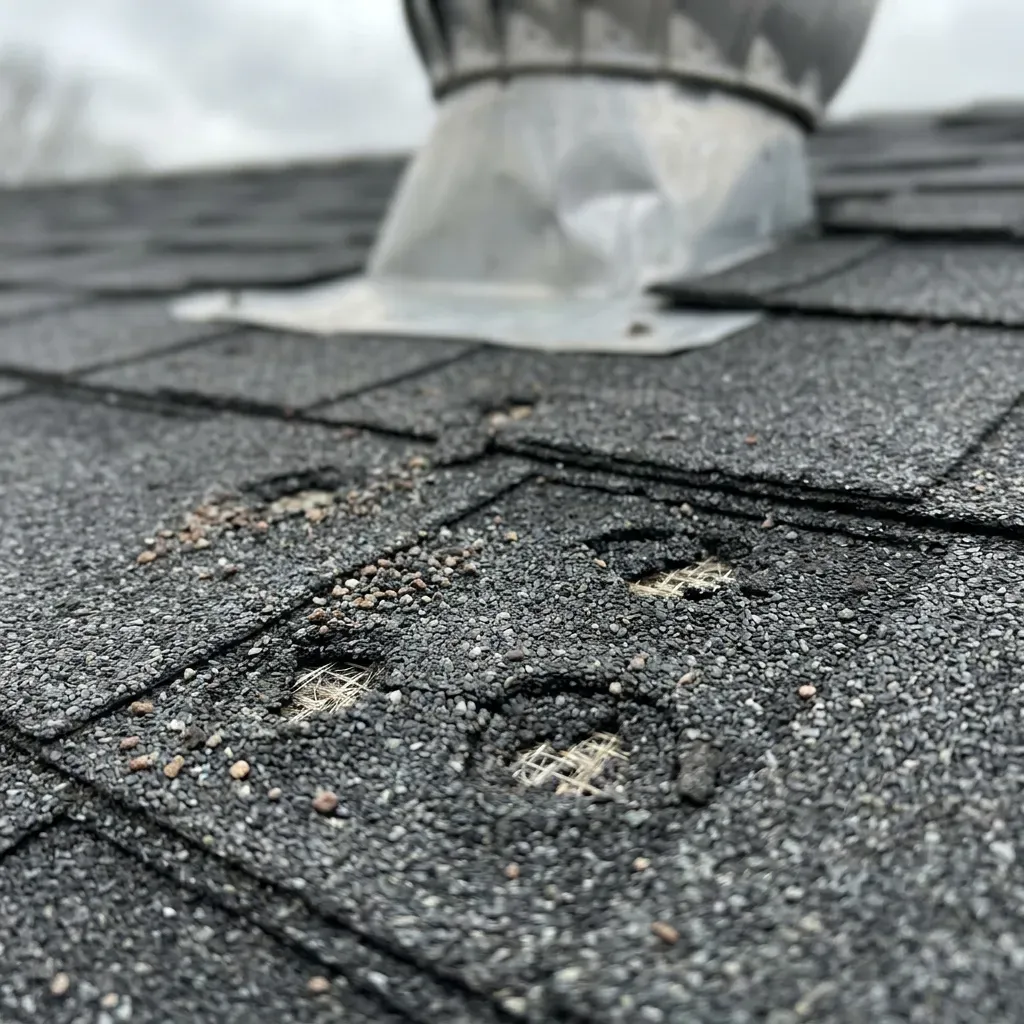
10. Check the valleys. Roof valleys (where two slopes meet) collect debris, ice, and water. Closed-cut valleys on aging shingle roofs are usually the first place we find granule loss and exposed mat.
11. Look at the drip edge. Drip edge is the L-shaped metal at the bottom edge of the roof. If it’s bent, rusted, or missing entirely (common on Dallas homes built before 2000), water runs behind the fascia instead of into the gutter. Adding drip edge during a re-roof is standard. Adding it as a standalone project on a 2,400 sq ft home is around $600 to $1,100.
12. Get a documented inspection on file. This is the one most homeowners skip and regret. If a hail or wind event hits in spring, having a dated pre-storm inspection report makes your insurance claim cleaner. The adjuster can see the roof’s condition before the storm and won’t argue that damage was pre-existing. We charge nothing for inspections in Dallas and Plano and you get a written report with photos.
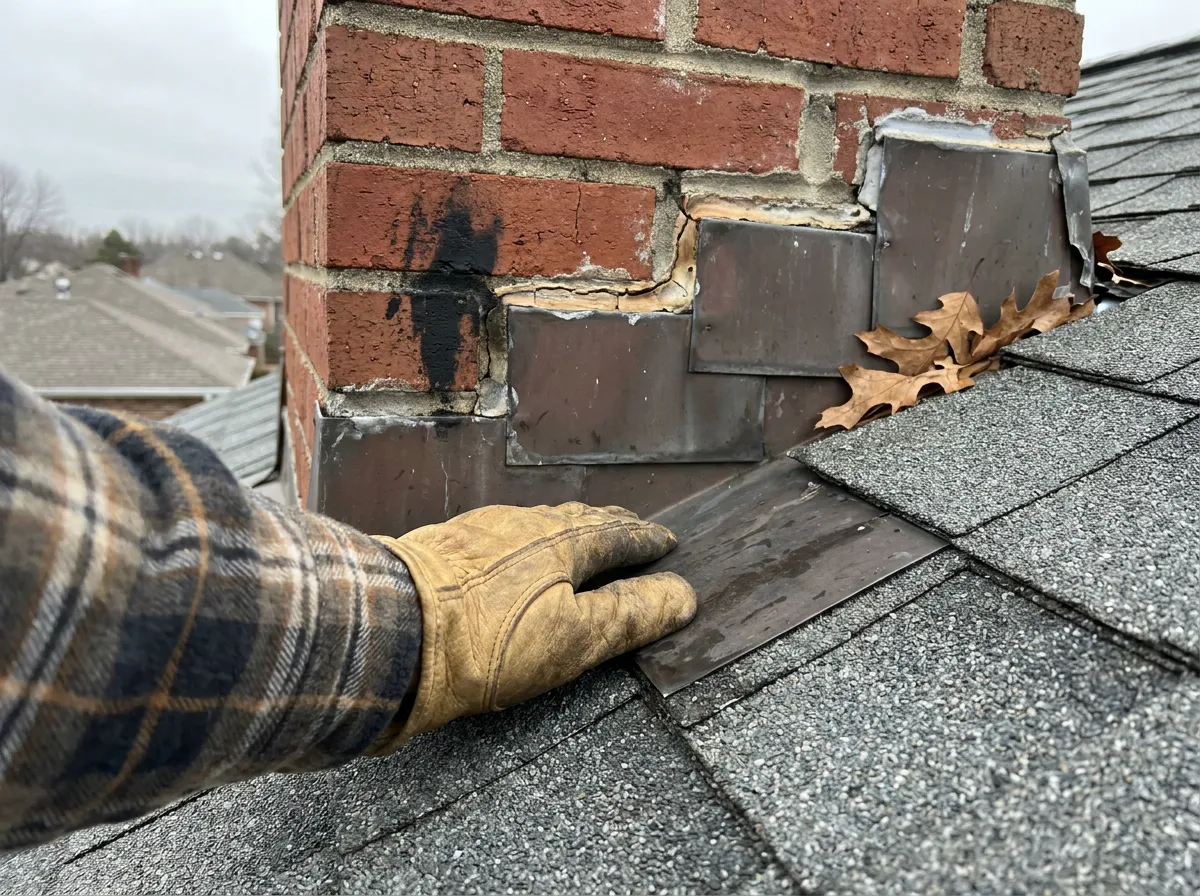 A flashing inspection around a brick chimney on an older North Texas home.
what each item actually costs to fix.
Here’s a real DFW range based on what we charged Plano, Frisco, and Dallas customers in 2025. Your house will vary based on size, pitch, and access, but this gives you a benchmark.
| Issue | Typical DFW cost | Urgency before winter |
|---|---|---|
| Missing or damaged shingles (small area) | $250 to $650 | High |
| Cracked pipe boot replacement | $75 to $150 per boot | High |
| Flashing re-seal or replacement | $350 to $900 | High |
| Gutter re-hang (per section) | $125 to $300 | Medium |
| Full gutter replacement (2,400 sq ft home) | $1,800 to $3,400 | Medium |
| Soffit or fascia repair | $400 to $1,200 | High |
| Drip edge install | $600 to $1,100 | Medium |
| Ridge vent replacement | $450 to $850 | Low |
| Full roof replacement (3-tab to architectural) | $11,500 to $19,000 | Depends on condition |
If your roof is over 18 years old and you’re seeing three or more items on this list, the math usually favors replacement over patching. Our roof repair service in Dallas handles everything under $5,000. Above that, we run the numbers on replacement and let you decide.
when to call a roofer instead of doing it yourself.
I’m a big believer in DIY for the right tasks. Roof work in November is usually not one of them. Here’s my rule of thumb:
- Do yourself: ground-level inspection, gutter cleaning if you’re comfortable on a ladder, attic check from inside.
- Call a roofer: anything that requires walking the roof, anything involving flashing or sealant, anything on a roof older than 15 years.
The reason isn’t liability theater. It’s that a roofer who’s been on 200 roofs this year can tell in 10 minutes what would take you an hour to figure out, and they’ll catch things you’d walk right past. Our roof inspection service in Dallas takes about 45 minutes for a typical 2,400 sq ft home and you get a written report with photos.
 A roofer documenting shingle damage on a tablet during an inspection, with photos compiled into a report you can email to your insurance carrier.
what to do if you find a problem.
If you find one or two small issues, schedule the repair before mid-December. Most Dallas roofers (us included) book out 2 to 3 weeks in early winter because everyone calls at once after the first cold snap.
If you find three or more issues or you’re not sure what you’re looking at, get an inspection on the books. We come out, document everything, and give you a written report whether you hire us or not. No pressure, no sales pitch. If your roof needs nothing, we tell you that. If it needs $400 of work, we tell you that too.
If the damage is from a recent storm (we had wind events on May 28 2023, April 9 2024, May 23 2024, and June 17 2024), call us before you call your insurance carrier. Walking into a claim with a documented scope from a CertainTeed ShingleMaster makes the adjuster meeting go a lot smoother.
the one thing I’d add if you’re in an older neighborhood.
If your house is in Lakewood, M Streets, Bishop Arts, or any of the older Plano sections built before 1985, check your attic insulation while you’re up there. Old fiberglass batts compress over decades and lose R-value. Adding 6 inches of blown-in insulation on top of existing batts is the single highest-ROI winter project in DFW. It cuts heating bills, reduces ice dam risk on the few days we get ice, and extends roof life by reducing attic temperature swings.
a quick word on payment plans.
If your inspection turns up a $3,000 to $8,000 repair you weren’t expecting in November, we offer an in-house payment plan on qualified projects. A larger upfront deposit gets the work started and the balance is split over flexible terms depending on the size of the project. Details are on our payment plans page.
frequently asked questions.
When is the best time to inspect a Dallas roof for winter? Mid-October through mid-November. The weather is mild enough for safe roof work, repair crews aren’t fully booked yet, and you have time to schedule fixes before the first hard freeze (usually mid-December in DFW).
How often should I have my roof professionally inspected in Dallas? Once a year minimum, ideally in fall. Every 6 months if your roof is over 15 years old or if you’ve been through a major hail event in the last 24 months. We do free inspections in Dallas, Plano, Frisco, McKinney, and surrounding cities.
Can I clean my own gutters? Yes, if you’re comfortable on a ladder and the gutters are accessible. Use a sturdy ladder on level ground, never lean off to the side, and have someone home. If your house is 2 stories or has steep terrain, hire it out. Falls are the most common serious DIY injury in winter.
Do I need to remove leaves from my roof? If you have trees overhanging the roof, yes. Wet leaves trap moisture against shingles and accelerate granule loss. A leaf blower from the ground works for light coverage. For heavy buildup in valleys or around chimneys, get a roofer up there.
What happens if I skip winter prep entirely? Usually nothing dramatic. But if a freeze-thaw cycle catches an existing weak spot, you can wake up to a ceiling stain in the master bedroom in January. That ceiling stain is often a $2,500 to $5,000 fix once you account for the roof patch, drywall repair, paint, and the dehumidifier rental.
How long does a Dallas roof last on average? A standard architectural asphalt shingle roof in DFW lasts 18 to 25 years. Heat and hail shorten that. Good ventilation extends it. The Landmark and Presidential Shake lines from CertainTeed (what we install most often) carry lifetime warranties when installed by a ShingleMaster, which means the manufacturer stands behind the roof for as long as you own the house.
If the checklist turns up more than two problems on a roof already past 18 years, stop budgeting for one-off repairs and price the full replacement instead. At that age each fix buys months, and the replacement resets the whole system with a registered warranty behind it.
If you’d rather have someone else walk the roof, we’ll come out, do the 12-point check, and give you a written report with photos. No charge in Dallas, Plano, Frisco, McKinney, and surrounding cities. Call us at (214) 326-3106 or book an inspection at our free roof cost calculator and we’ll be there within 48 hours. Catching problems in November is the cheapest roof work you’ll ever pay for.