Short answer: skylights leak because of the flashing and the seal around them, not the glass, and the fix in Dallas costs $400 to $1,200 for a flashing rebuild or $1,400 to $3,200 for a full replacement with a new flashing kit. A ceiling stain around a skylight in DFW is almost always one of four things: a failed flashing kit, a dried-out curb seal, condensation, or a cracked dome. Each one looks a little different from inside the house, and this post shows you how to tell them apart before you call anyone.
I’m Mahmoud. Skylight flashing rebuilds are the single repair we do most weeks across Dallas, Plano, and Richardson, because a skylight is a hole in the roof with a metal frame around it, and every one of them eventually needs attention.
the four reasons dallas skylights leak.
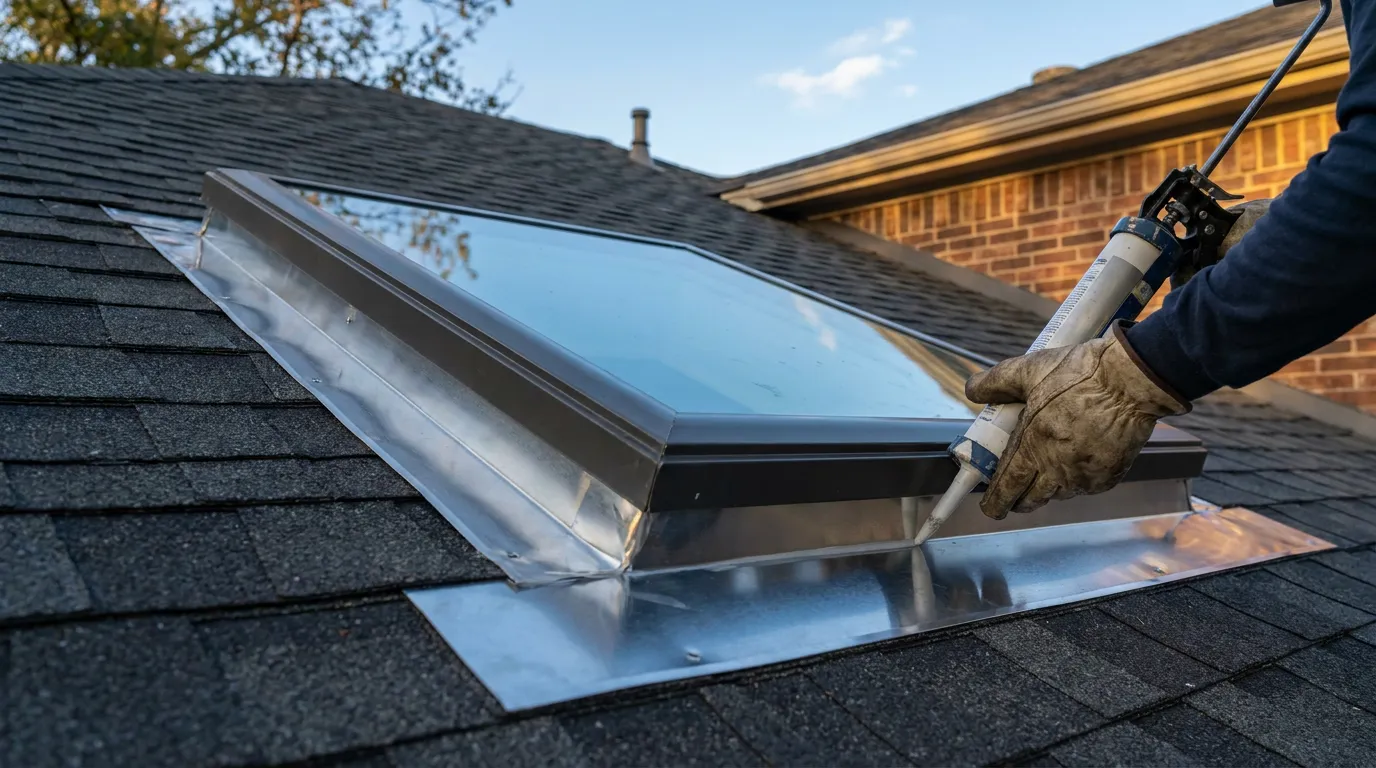
1. Failed flashing. Flashing is the layered metal that ties the skylight curb into the shingles. It is the last line of defense against water, and on skylights installed before manufacturers started shipping engineered flashing kits, it is often just bent aluminum and roofing cement. Cement dries and cracks in Texas heat inside ten years. Water then runs down the uphill side of the curb and drips out at the interior corner. This is the majority of the leaks we see.
2. Curb seal failure. Between the skylight frame and the curb sits a gasket or a bead of sealant. Sun and 100-degree days bake it until it shrinks and pulls away. The leak shows up as a wet spot along one edge of the skylight well, not at a corner.
3. Condensation. Not a leak at all, but it looks like one. Warm indoor air hits cold glass on a winter morning, water beads, runs down, and stains the drywall. If the “leak” appears on clear cold mornings and never during rain, it is condensation, and the fix is ventilation or a better-insulated unit, not roofing work.
4. A cracked dome or failed glass seal. Older acrylic bubble skylights craze and crack from UV and hail. Double-pane glass units can lose their seal and fog between the panes. Both let water in through the unit itself, and both mean replacement.
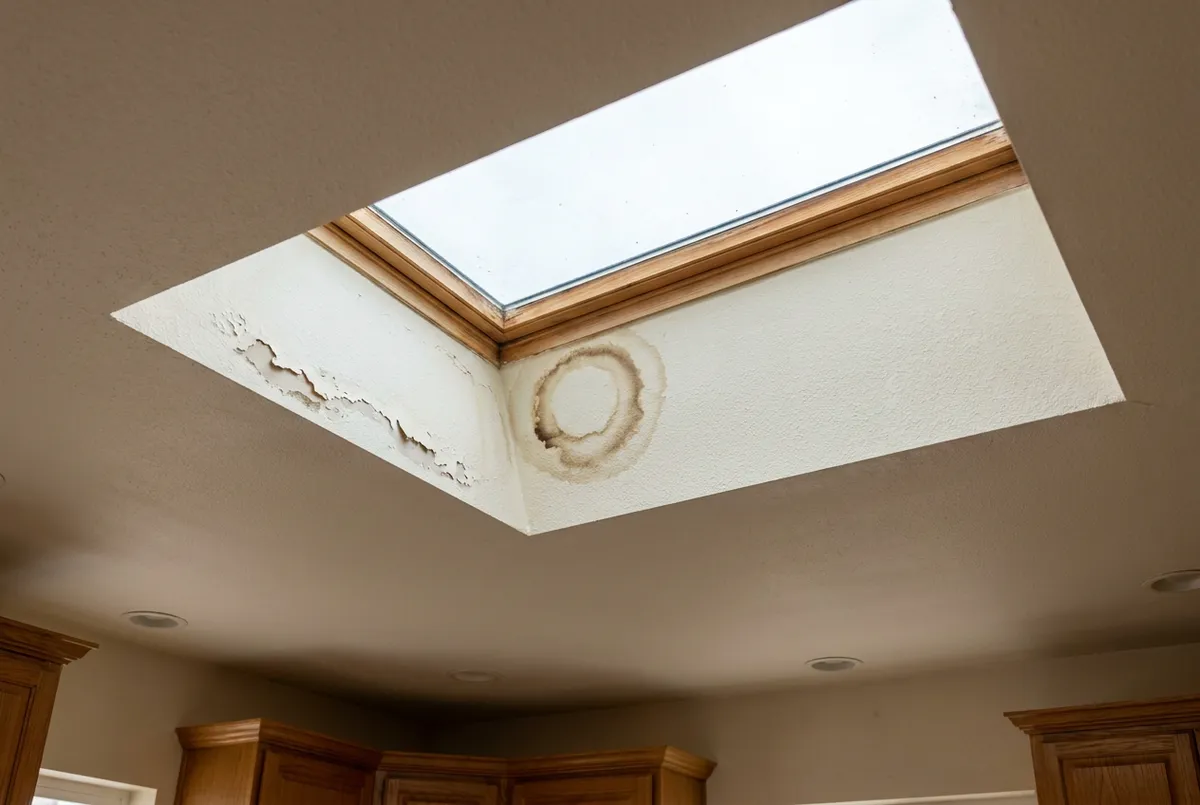
Here is the quick diagnosis from inside the house:
| What you see | Most likely cause | Fix |
|---|---|---|
| Stain at one corner, worse after storms | Flashing failure at the uphill edge | Flashing rebuild |
| Wet line along one edge of the well | Curb seal failure | Reseal or flashing rebuild |
| Water beads on the glass on cold clear mornings | Condensation | Ventilation, or a better-insulated unit |
| Fog or haze between the panes | Failed glass seal | Glass unit swap or replacement |
| Cracks or yellowing in a plastic dome | UV or hail damage | Replacement |
| Stain appears and shingles nearby are bruised | Hail damage to flashing and roof | Insurance claim, replacement in the roof scope |
why “only in heavy rain” is the tell.
A lot of skylight leaks only show up during a real Texas storm. Light rain runs harmlessly past a hairline gap in the flashing. A downpour backs water up against the uphill edge of the curb faster than the roof can shed it, and the gap becomes a funnel.
DFW gets 37.01 inches of rain in a normal year according to NWS Fort Worth, and much of it arrives in bursts. Our skylight calls spike after the same storms that generate our tarp calls: the May 28, 2023 hail across east Plano, the May 23, 2024 event that hit pipe boots and skylight flashing across central DFW. If your skylight leaks only when it pours, the flashing is the suspect.
repair or replace: what it costs in dfw.
Real numbers from our skylight repair service, as of this year:
| Repair | DFW cost range | When it is the right call |
|---|---|---|
| Sealant touch-up | $150 to $300 | Buying a few months before a planned reroof; not a permanent fix |
| Curb flashing rebuild | $400 to $1,200 | Sound unit, failed flashing, roof has 5 plus years left |
| Insulated glass swap | $650 to $1,800 | Foggy double-pane on a unit with a good frame and flashing |
| Full deck-mount replacement with new flashing kit | $1,400 to $3,200 installed | Unit over 10 years old, cracked dome, or reroof in progress |
| Replacement as part of a full reroof | Incremental cost of the unit plus kit | Any skylight over 10 years old when the roof comes off |
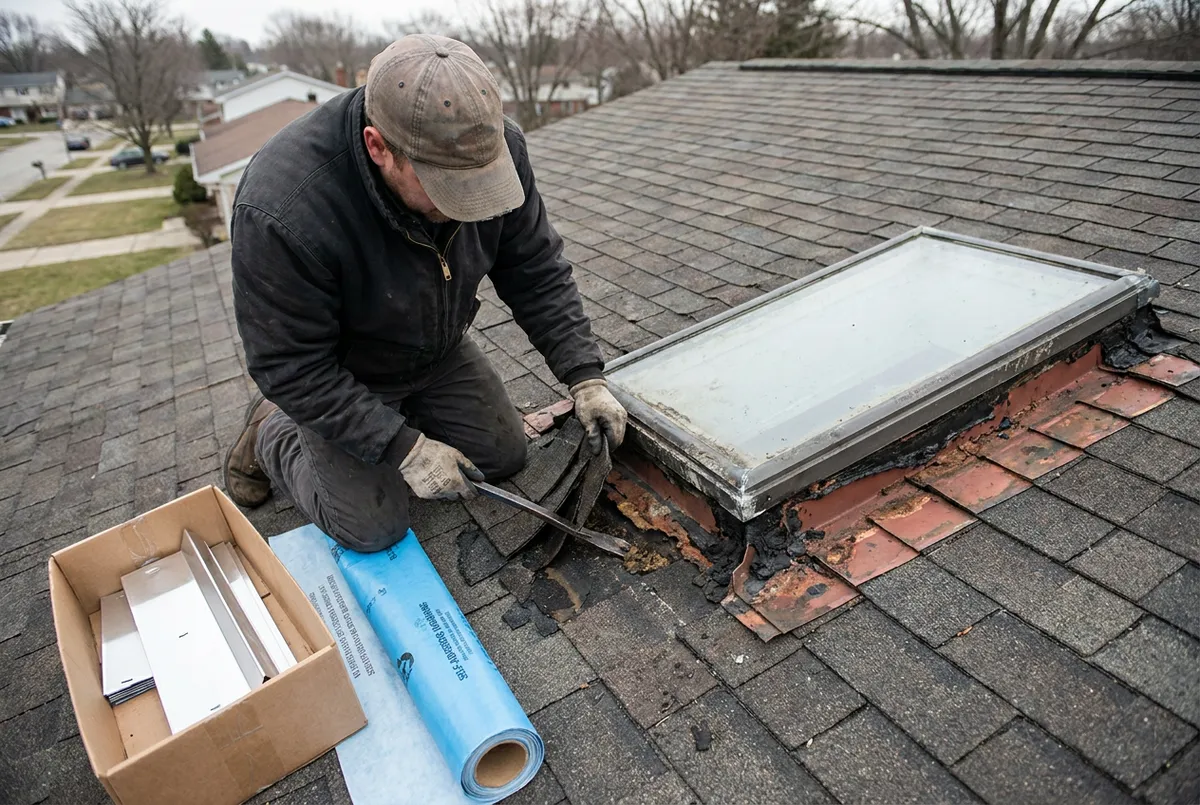
The flashing rebuild is the repair we do most. Here is what it actually involves: lift the shingles around the curb, strip the old flashing and cement, lay ice and water membrane up the curb and onto the deck, install a new step-and-head flashing kit with the pieces layered so each course sheds onto the one below, and re-shingle. It takes a morning and it lasts as long as the roof.
Full replacement makes sense more often than homeowners expect. InterNACHI puts skylight life expectancy at 10 to 20 years. Modern deck-mounted units ship with a matched flashing kit and, in VELUX’s case, a 10-year installation warranty against leaks built on three layers of water protection: a deck seal, an adhesive underlayment, and the flashing itself. A VELUX deck-mount replacement in DFW runs roughly $2,800 installed, and you stop thinking about it for a decade.
the reroof rule: replace the skylight while the roof is off.
This is the advice that saves the most money, and it is the one homeowners push back on. If you are replacing the roof and the skylight is more than ten years old, replace the skylight in the same job.
The reasoning is simple. During a tear-off, the shingles around the skylight come up anyway. The flashing kit gets replaced anyway. The crew is on the roof anyway. The only added cost is the unit itself, and you avoid paying for a separate flashing rebuild in three years when the 15-year-old unit’s seal lets go on a roof that is otherwise new. We say this to every roof replacement customer with an older skylight, and the ones who skip it are the ones who call us back.
when insurance pays for a skylight.
Homeowners insurance covers sudden damage from a covered peril. In DFW that means hail and wind. If a hailstorm cracks the dome, dents the flashing, or bruises the shingles around the curb, the skylight is a line item in the roof claim and a new unit with a new flashing kit is part of the scope. That is a very common outcome after a major hail event, and it is why our inspection photographs every skylight with a scale ruler.
Insurance does not cover a leak from dried sealant or worn flashing. That is maintenance, and carriers deny it consistently. It also does not cover condensation. If you are not sure which bucket your leak falls in, get the roof inspected before you call the claims line. A denied claim still goes on your loss history. Our guide to filing a roof insurance claim in Texas covers the order of operations.
what to do while water is coming in.
If the skylight is actively dripping during a storm:
- Put a bucket down and move anything below it. Skylight wells drip onto floors, counters, and furniture.
- Photograph the stain, the drip, and the sky through the skylight with timestamps on.
- Do not climb on a wet roof to caulk it. That is how skylight leaks become ER visits.
- Call us. An emergency tarp over a leaking skylight is a 30-minute job and stops the interior damage until we can do the rebuild in daylight.
Our post on roof leaks during rain covers the full first-ten-minutes checklist, and our emergency roof repair crew runs seven days a week during storm season.
frequently asked questions.
Can a leaking skylight be repaired? Usually, yes. Most skylight leaks come from failed flashing or a dried-out curb seal, not the glass, and both are repairable. A curb flashing rebuild runs $400 to $1,200 in DFW. The exceptions are a cracked acrylic dome, a failed glass seal on a fogged unit, or a skylight so old that no flashing kit fits it.
How much does it cost to fix a leaking skylight? In Dallas, a curb flashing rebuild runs $400 to $1,200, an insulated glass swap on a foggy double-pane runs $650 to $1,800, and a full deck-mount replacement with a new flashing kit runs $1,400 to $3,200 installed. A sealant-only touch-up is cheaper but rarely lasts more than a summer.
Does homeowners insurance cover skylight leaks? It covers sudden storm damage, such as hail cracking the glass or wind tearing the flashing, and the interior damage that follows. It does not cover a leak from old sealant or worn flashing, which carriers classify as maintenance. If a hailstorm damaged the skylight and the shingles around it, the skylight is usually written into the roof claim.
Why does my skylight leak only in heavy rain? Because the flashing is failing at the uphill edge or the sides, where water only backs up when it falls faster than the roof can shed it. DFW thunderstorms routinely drop an inch or more in an hour. Light rain runs past the weak spot. A downpour finds it.
How long do skylights last? InterNACHI lists skylights at 10 to 20 years. In DFW heat, older acrylic domes and their sealants land at the low end. Glass units with a factory flashing kit last longer, and the flashing itself usually needs attention around year 15 to 20 when the roof is replaced.
Should I replace my skylight when I replace my roof? If it is more than 10 years old, yes. The skylight comes out anyway during a tear-off, the flashing kit is replaced regardless, and the incremental cost of a new unit is a fraction of doing it separately later. We tell every reroof customer with a 15-year-old skylight to replace it in the same job.
And if the roof around that skylight is 18-plus years old, price a full roof replacement before paying for a standalone skylight fix. The flashing kit gets replaced during a tear-off anyway, so the repair money often does double duty inside a replacement scope.
If there is a stain growing around your skylight, call (214) 326-3106. We will get on the roof, tell you which of the four causes you have, and give you a fixed price for the fix. The inspection is free, and if the answer is “that’s condensation, not a leak,” we will tell you that and save you the invoice.